
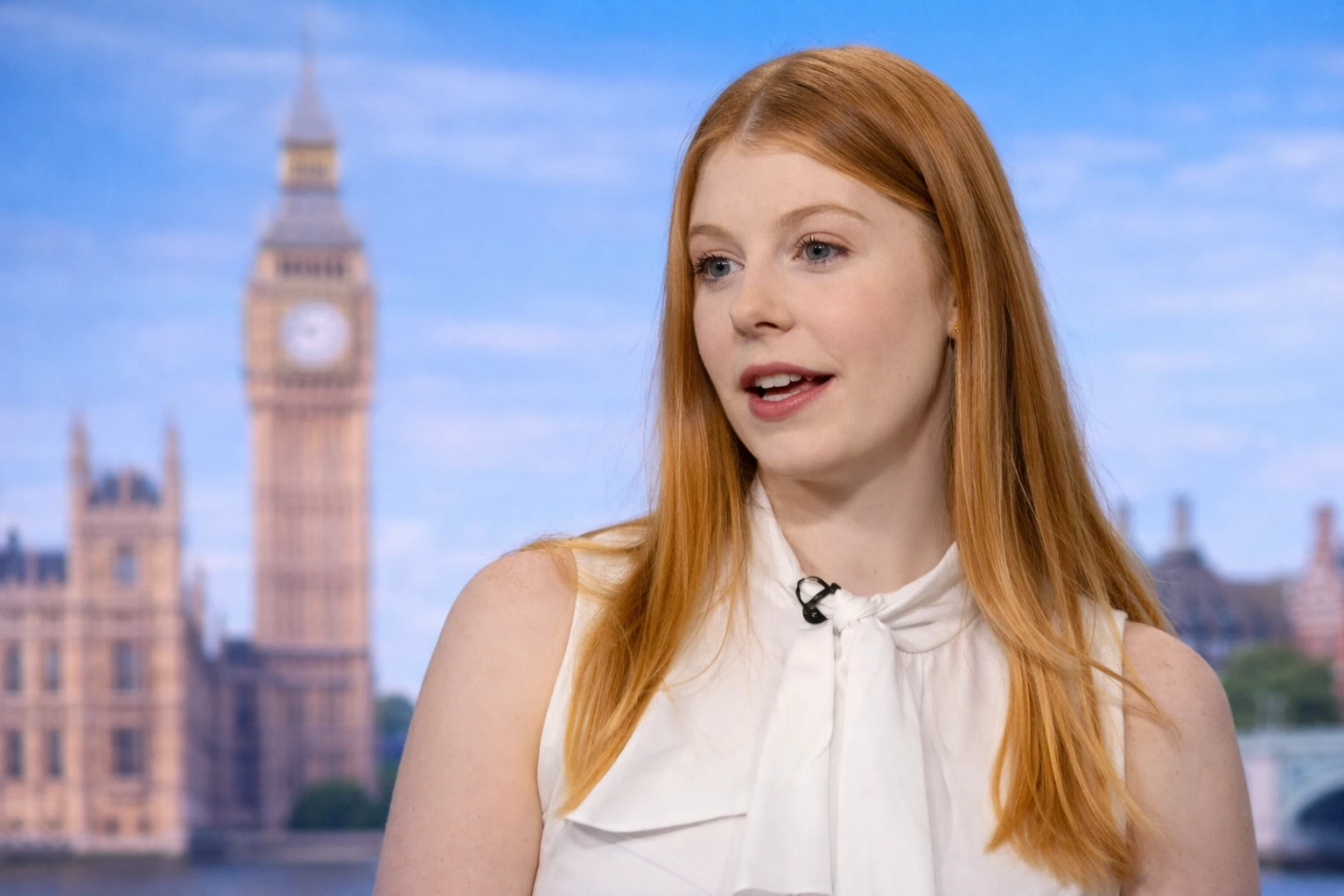
Ailbhe Rea has built a reputation in British political journalism not by chasing attention, but by steadily placing herself where power is negotiated and explained. Her byline appears on stories that unpack Westminster’s internal tensions, and her voice has guided listeners through the mechanics of British politics on widely followed podcasts. Yet for all her visibility, many readers still arrive at the same search: “ailbhe rea wikipedia,” expecting a neat summary that doesn’t quite exist in one place.
That gap between public presence and formal biography makes her story more interesting, not less. Rea belongs to a generation of journalists whose careers unfold across print, podcasts, newsletters, and live political coverage, often faster than traditional reference pages can keep up. To understand who she is, you have to piece together a career that moves from Belfast to Oxford, through London newsrooms, and into some of the most closely watched political conversations in the United Kingdom.
Early Life and Family Background
Ailbhe Rea was born and raised in Belfast, Northern Ireland, a detail that appears consistently in reliable reporting about her career. Growing up in Belfast carries its own context, shaped by a history of political tension, identity debates, and evolving civic life. While there is no extensive public record detailing her childhood or family, that geographical starting point is often seen as relevant to her later interest in politics and power structures.
The truth is, much of Rea’s early personal life remains private. Unlike public figures who share detailed family histories, she has kept her background largely out of the spotlight. That restraint is common among journalists, who are trained to observe rather than become the subject. What can be said with confidence is that her Northern Irish upbringing forms part of the perspective she brings to British political reporting, particularly in how she approaches questions of identity and governance.
Education and Academic Path
Rea studied at the University of Oxford, where she read English and French. That academic path points to a strong grounding in language, literature, and critical analysis, skills that translate naturally into journalism. Oxford has long been a training ground for British media and political figures, and its influence often extends beyond formal education into networks and career pathways.
While specific details about her time at Oxford are not widely documented, the degree itself signals a combination of intellectual discipline and cultural awareness. Students in that field are trained to interpret complex texts and arguments, an ability that shows up clearly in her later reporting style. Her work often moves beyond surface-level political coverage, focusing instead on motivations, internal dynamics, and the human elements behind policy decisions.
Early Career and First Byline Work
Rea’s early professional steps are most visible through her bylines rather than through formal career summaries. By 2019, she was writing for The Standard in London, which places her firmly in the city’s media environment during a period of intense political change. Britain was navigating Brexit, leadership shifts, and deep party divisions, all of which created opportunities for emerging journalists to prove themselves.
These early bylines matter because they show how careers in journalism actually develop. There is rarely a single breakthrough moment at the beginning. Instead, there is a steady accumulation of reporting experience, editorial trust, and subject expertise. Rea’s presence in London media by 2019 suggests she had already begun building the relationships and instincts that would define her later work.
Rise at the New Statesman
Rea’s association with the New Statesman marked a turning point in her visibility. The magazine, known for its political analysis and commentary, positioned her as a political correspondent covering Westminster. That role placed her in the middle of British political reporting, where access, timing, and interpretation all matter.
Her work at the New Statesman extended beyond written journalism. She became a co-host of the publication’s podcast, a platform that allowed her to explain political developments in a more conversational format. The podcast went on to win Best Political Podcast at the Publisher Podcast Awards in 2021 and 2022, which reflects both audience reach and industry recognition.
Here’s where it gets interesting. Podcasting requires a different kind of authority than print journalism. It demands clarity, timing, and a sense of narrative that keeps listeners engaged. Rea’s success in that space suggests she was not only reporting politics but also shaping how it was understood by a broader audience.
Expanding Influence Through Political Podcasting
In May 2022, Rea moved to POLITICO Europe, where she became the host of Westminster Insider, one of the outlet’s flagship UK political podcasts. The show focuses on the inner workings of Westminster, often exploring how decisions are made behind closed doors rather than just what is announced publicly.
Hosting Westminster Insider placed her at the center of a format that blends reporting with storytelling. Each episode typically unpacks a specific aspect of British politics, from party strategy to institutional culture. Rea’s role was not simply to present information but to guide listeners through complex systems in a way that felt accessible and informed.
The move to POLITICO also signaled a shift in her career from contributor to central voice. Being the host of a major political podcast means shaping editorial direction and tone, as well as representing the publication’s approach to political coverage. For many listeners, her voice became closely associated with explanations of how Westminster actually works.
Bloomberg and the Transition to Editorial Leadership
In early 2024, Rea joined Bloomberg in London as an associate editor covering politics and finance. This move marked another step forward, placing her within a global news organization that connects political developments to financial markets and economic policy.
At Bloomberg, she contributed to The Readout, a newsletter focused on UK politics and its broader implications. Writing for that audience requires a slightly different focus, as readers are often interested in how political decisions affect markets, business confidence, and economic strategy. Rea’s work in that role reflected a growing ability to connect political narratives with real-world outcomes.
What’s surprising is how naturally that transition fits her career. Her earlier reporting had already shown an interest in the structures behind political decisions. At Bloomberg, that interest expanded to include how those decisions ripple outward into the economy. It’s a shift that often signals a journalist moving toward a more senior editorial perspective.
Return to the New Statesman as Political Editor
By late 2025, Rea returned to the New Statesman in a more senior role, becoming its political editor. This position places her at the forefront of the magazine’s political coverage, responsible not only for writing but also for shaping editorial priorities.
As political editor, she has been closely involved in covering the Labour government under Keir Starmer, as well as internal party tensions, policy debates, and broader questions about the direction of British politics. Her bylines frequently appear on stories that analyze the balance of power within Labour and the challenges facing its leadership.
This role represents a culmination of her earlier work. It combines reporting, analysis, and editorial judgment in a way that defines how readers understand current political developments. For many in the industry, becoming political editor at a publication like the New Statesman marks a significant professional milestone.
Public Recognition and the Stanley Johnson Episode
Rea’s name entered wider public discussion in 2021 when she wrote about an allegation involving Stanley Johnson, the father of former Prime Minister Boris Johnson. In her account, she described an incident she said had taken place years earlier, adding her voice to a broader conversation about conduct and accountability in political circles.
The story received attention across British media, in part because it intersected with ongoing debates about behavior in positions of power. Rea explained that she spoke out in part to support others who had raised similar concerns. The episode became a moment when she was not only reporting on politics but also part of the story.
That said, it is only one part of her public profile. While it increased recognition of her name, her career has continued to be defined primarily by her work as a journalist. A balanced view keeps that distinction clear, acknowledging the episode without allowing it to overshadow her broader contributions.
Personal Life and Privacy
One of the most striking aspects of Rea’s public profile is how little is known about her personal life. There is no widely confirmed information about her marital status, partner, or children. This is not unusual for journalists, who often maintain a clear boundary between their professional and private lives.
Various online profiles attempt to fill in these gaps with estimates or unverified claims, particularly regarding her age or relationships. These should be treated with caution. Reliable reporting focuses on her work and professional background rather than speculative personal details.
This approach aligns with a broader trend in journalism, where credibility often depends on maintaining a degree of personal privacy. By keeping the focus on her reporting, Rea has built a public image centered on her work rather than her personal circumstances.
Earnings and Net Worth
There is no publicly confirmed figure for Ailbhe Rea’s net worth. Estimates that appear on some websites are speculative and should not be treated as reliable. What can be said is that her roles at publications like Bloomberg and the New Statesman place her within the upper tier of political journalism in the UK.
Journalists in senior editorial positions at major outlets can earn competitive salaries, particularly when their work spans multiple formats such as print, podcasts, and newsletters. However, without direct confirmation, any attempt to assign a specific net worth would be guesswork.
For readers, the more useful takeaway is her professional standing rather than a precise financial figure. Her career trajectory suggests a steady rise within the industry, marked by increasing responsibility and influence.
Public Image and Industry Standing
Rea’s public image is shaped by her reporting style and her ability to explain complex political dynamics. She is often seen as part of a younger generation of political journalists who combine traditional reporting with newer formats like podcasts and newsletters.
Colleagues and industry observers tend to view her as a serious reporter rather than a commentator driven by personality. Her work focuses on analysis and explanation rather than opinion-led broadcasting, which has helped her build credibility across different audiences.
That said, visibility in modern journalism often comes with scrutiny. As her profile continues to grow, so does public interest in her background and career. The search term “ailbhe rea wikipedia” is one example of how that interest manifests, reflecting a desire for clear, reliable information about her life and work.
Where Ailbhe Rea Is Now
As of 2026, Ailbhe Rea is serving as political editor of the New Statesman. Her reporting focuses on the current state of British politics, particularly the Labour government and its internal dynamics. She continues to write, edit, and contribute to discussions that shape how political developments are understood.
Her role places her in a position of influence within British media. Political editors are not just reporters; they help determine which stories are told and how they are framed. In that sense, Rea’s work extends beyond individual articles to the broader narrative of UK politics.
Looking ahead, her career appears to be on a continued upward path. Whether through print, audio, or other formats, she is likely to remain a prominent voice in political journalism.
Frequently Asked Questions
Does Ailbhe Rea have a Wikipedia page?
As of now, there is no widely recognized standalone Wikipedia page dedicated to Ailbhe Rea. This absence is one reason why many people search for her name alongside the word “Wikipedia.” Her career details are instead spread across employer profiles, podcast listings, and media coverage.
What is Ailbhe Rea’s current job?
She is currently the political editor of the New Statesman. In this role, she oversees political coverage and contributes reporting and analysis on major developments in British politics.
Where is Ailbhe Rea from?
Ailbhe Rea is from Belfast, Northern Ireland. This background is consistently mentioned in reliable reporting about her career and is often seen as part of her perspective on political issues.
How do you pronounce Ailbhe Rea?
Her name is commonly pronounced “Alva Rea.” This aligns with the pronunciation of the Irish name “Ailbhe,” and her social media handle also reflects this pronunciation.
Is Ailbhe Rea married?
There is no publicly confirmed information about her marital status or relationships. She has kept her personal life private, and reliable sources focus primarily on her professional work.
What is Ailbhe Rea’s net worth?
There is no confirmed net worth figure. Any numbers found online are estimates and should be treated with caution, as they are not based on verified financial disclosures.
Conclusion
Ailbhe Rea’s career offers a clear example of how modern journalism works. It is built piece by piece, across different platforms, and shaped by both reporting skill and the ability to explain complex systems. Her path from Belfast to Westminster coverage reflects a steady commitment to understanding how power operates.
The lack of a formal Wikipedia page does not diminish her presence. If anything, it highlights how quickly careers can evolve compared to the pace of traditional reference writing. Readers searching for her are responding to a growing influence that is already visible in her work.
Her story is still unfolding. As political editor and an active reporter, she remains part of the conversation she covers, helping to interpret events as they happen. That ongoing role is what keeps her relevant, and it is why interest in her biography continues to grow.
For now, the most accurate picture comes not from a single page but from the body of work she continues to produce. That, more than any entry, is what defines who Ailbhe Rea is.
