
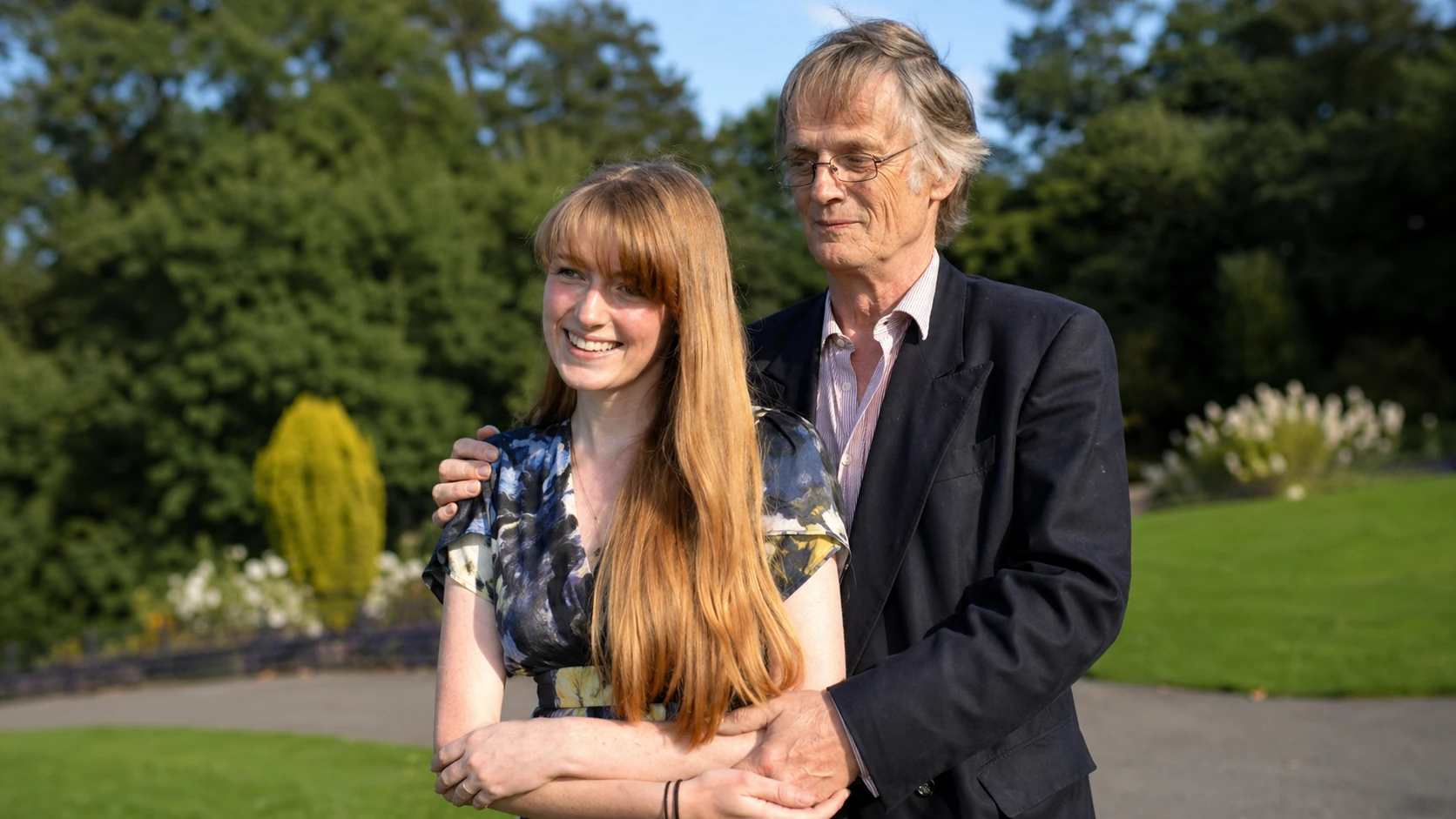
John Fareham became known to many people outside Hull because of a televised marriage, a large age gap, and his connection to Dehenna Davison, the Conservative politician who later became MP for Bishop Auckland. But that is only one small part of his public story. Long before his name appeared in national media searches, Fareham had spent decades in the slower, less glamorous world of local government. His biography is really the story of a Hull Conservative who built a public life through council work, ward politics, civic institutions, and local heritage.
The public record identifies him as John Logan Fareham, born in June 1958, and closely associated with Hull City Council and the Conservative Party. Council records and political profiles show that he was first elected in 1983, making him a long-serving figure in a city where Conservative politics often meant working from a minority position. He was later known as a Conservative group leader on Hull City Council and as a councillor for Bricknell ward. His career also included roles linked to Pearson Park, Hull History Centre, and council-connected companies.
Because Fareham is not a celebrity in the usual sense, reliable information about his private life is limited. That matters. A responsible biography has to say what can be confirmed, avoid turning thin online claims into fact, and resist making his life sound more documented than it is. What can be said with confidence is that John Fareham’s public life sits at the crossing point of local politics, civic service, media attention, and a changing political city.
Early Life and Background
John Fareham’s early life is not extensively documented in reliable public sources. Official company records give his month and year of birth as June 1958, but they do not provide a full date, family history, school record, or childhood biography. Many online profiles try to fill those gaps, but much of that material is not backed by primary records. For that reason, the most accurate account begins with what is firmly visible: his adult public life in Hull.
Hull is central to understanding Fareham. The city has a strong civic identity, a long maritime and fishing history, and a political culture shaped by local loyalties as much as by national party labels. For a Conservative politician, Hull could be difficult ground, because Labour and the Liberal Democrats have often been stronger forces on the council. Fareham’s long presence in that setting suggests a career built less on easy partisan advantage and more on persistence, visibility, and ward-level recognition.
His middle name, Logan, appears in Companies House and election-related records, helping distinguish him from people with similar names. That distinction matters because “John Fareham” is sometimes confused online with “John Farnham,” the Australian singer. Fareham’s story belongs to British local politics, not music or entertainment. The public record places him firmly in Hull civic life.
First Steps in Local Politics
The clearest marker in Fareham’s political biography is 1983. Hull City Council records identify him as first elected on 5 May 1983, and later Conservative profiles repeat that point. That date places the start of his council career during Margaret Thatcher’s premiership, a period when Conservative politics nationally was highly visible but local political conditions varied sharply from city to city. In Hull, being a Conservative councillor meant operating in a civic environment where the party was not always dominant.
Local government work rarely creates national headlines, but it shapes public life in direct ways. Councillors deal with housing issues, planning disputes, parks, local services, community complaints, licensing, public safety, and committee scrutiny. The work can be repetitive and deeply local, but it is also where residents often meet politics most directly. Fareham’s long career suggests he understood that kind of politics well.
His later record shows a close association with Bricknell ward, a residential area in Hull that became central to his public identity. In local politics, ward association matters because voters often judge councillors by presence and accessibility rather than party messaging alone. A councillor who survives for years in one area usually does so by becoming a familiar civic figure. Fareham’s career fits that pattern.
A Conservative in Hull
Fareham’s political identity is strongly tied to the Conservative Party. Election records list him as a Conservative and Unionist Party candidate, and ConservativeHome described him in 2020 as leader of the Conservative group on Hull City Council. That title points to his standing within a small local party group, even when Conservatives did not control the council. In local government, group leadership often means handling committee positions, public messaging, internal discipline, and opposition strategy.
Hull’s political balance gives that role extra context. The city has often been contested mainly between Labour and the Liberal Democrats, with the Conservatives holding fewer seats. A Conservative group leader in that environment would not usually be directing council policy from a majority position. Instead, the job would involve scrutiny, argument, negotiation, and trying to keep a smaller party presence visible.
That kind of role can be thankless. National politics rewards television performance and ministerial office, while local opposition politics rewards patience and stamina. Fareham’s significance comes from the length of his involvement rather than from a single famous campaign. He represents a type of political figure found in many British cities: locally known, party-rooted, institutionally experienced, and largely invisible to national audiences until a separate event pulls the name into wider view.
Bricknell Ward and Election Record
Bricknell ward is the most important electoral setting in Fareham’s recent career. In the 2018 Hull local elections, John Logan Fareham stood as a Conservative and Unionist Party candidate in Bricknell and was elected with 1,172 votes. Fellow Conservative John Abbott was also elected in the same ward with 1,141 votes. Those results show that, at least at that point, the Conservatives had real strength in Bricknell even if they were weaker across the city overall.
The picture changed by 2022. Labour gained the Bricknell seat from the Conservatives, with Sarah Harper receiving 1,188 votes and Fareham receiving 806. Hull’s wider council politics also shifted in that period, with the Liberal Democrats taking control of the council and the Conservatives losing their remaining foothold. For Fareham, the result marked the end of his time as a sitting councillor.
He returned to the ballot paper in the Bricknell by-election of 21 September 2023. Labour’s Sharon Hofman won with 919 votes, Liberal Democrat Lucy Lennon came second with 647, and Fareham finished third with 418. That result confirmed that he remained active in local Conservative politics after leaving the council, even though the ward had moved away from him electorally. It also showed how quickly local political fortunes can change after years of familiarity.
Work Beyond Party Politics
Fareham’s public life was not limited to election results. One of the most concrete examples of his civic work was his involvement with Pearson Park, one of Hull’s historic public spaces. Hull City Council identified him as chairman of the Pearson Park Trust during a major restoration project completed in 2020. The project was funded by The National Lottery Heritage Fund and The National Lottery Community Fund and was valued at £3.8 million.
The restoration began in 2017 and focused on returning important Victorian features to the park. Work included the entrance gateway, bowling pavilion, East Lodge, a bandstand, a conservatory based on original designs, the bridge over the lake, planting schemes, mature trees, and improvements to the ice cream kiosk. For residents, these details are not decorative extras. Parks are part of a city’s everyday social life, and restoration work can shape how families, older residents, children, and community groups use public space.
Fareham’s role as chairman of the trust gives a fuller picture of his public identity. It shows him connected to heritage, place, and long-term civic maintenance rather than only to party conflict. Local politics often works through these quieter responsibilities, where committee decisions and funding partnerships matter more than speeches. In that sense, Pearson Park may be one of the better examples of what Fareham actually did in public life.
Hull History Centre and Civic Memory
Another documented role connects Fareham with Hull History Centre. In 2021, Hull City Council identified him as deputy chair of the Hull History Centre Board during coverage of Dr Alec Gill MBE’s gift of research on Hessle Road fishing culture. That role placed Fareham near another important civic institution: the preservation of local memory. Hull’s history is deeply tied to fishing, shipping, working-class communities, wartime damage, and regional identity.
The Hull History Centre matters because archives shape how a city remembers itself. They preserve photographs, documents, records, family histories, institutional papers, and research that might otherwise disappear. A board role connected to such an institution is not the kind of position that turns someone into a national figure, but it adds weight to a local biography. It shows involvement in the structures that protect civic memory.
This is also where biography should be careful. Some online accounts describe Fareham as an author or historian, but the stronger public evidence confirms governance and civic heritage roles rather than a fully documented literary career. That does not mean he has never written or researched. It means a careful profile should not overstate what the record proves.
Company Appointments and Public Bodies
Companies House records list John Logan Fareham as having held several company appointments. These include roles connected to Hull Investment Fund Limited, Hull Investment Limited, Kingstown Works Limited, Hull Culture and Leisure Limited, and The Victoria Dock Company Limited. Some of these entities are dissolved, while others remain active, though Fareham’s appointments are recorded as resigned. The filings help show how his public life extended into council-linked or civic-adjacent company structures.
Two appointments stand out because of their dates. Fareham was appointed as a director of Kingstown Works Limited on 23 June 2008 and resigned on 9 May 2022. He was also appointed as a director of Hull Culture and Leisure Limited on 20 February 2015 and resigned on 8 May 2022. Those resignation dates closely follow the 2022 local election period, when he ceased to be a sitting councillor.
Company appointments do not automatically explain a person’s influence or day-to-day responsibilities. They do, however, show the formal public roles that often come with council service. Local authorities frequently use companies, trusts, and arm’s-length bodies to manage services, property, leisure, culture, repairs, or investment. Fareham’s appointments place him inside that civic machinery.
Public Writing and Political Views
Fareham’s own writing gives some insight into his political outlook. In a 2020 ConservativeHome article, he wrote about Hull, Humberside, and the politics of local government identity. His argument opposed what he called the “Humberside mindset,” reflecting a long-running local sensitivity around administrative boundaries and regional identity. The issue has deep roots because Humberside was abolished in 1996 and replaced by unitary authorities, including Kingston upon Hull and the East Riding of Yorkshire.
That article suggests a politician with strong views about local identity. Fareham’s argument was not only about maps or bureaucracy. It was about who gets to define a place, how local government should be organised, and whether regional structures respect the identities of the communities they claim to serve. For a Hull councillor, those questions are not abstract.
The piece also shows Fareham’s style as a local Conservative voice. He was not writing as a minister or national campaign figure, but as someone steeped in local political history. That distinction matters because it explains the scale and character of his public contribution. Fareham’s politics were rooted in place.
Marriage to Dehenna Davison
For many readers, John Fareham’s name first appears in connection with Dehenna Davison. Davison later became Conservative MP for Bishop Auckland after winning the seat in the 2019 general election, one of the most discussed Conservative gains of that campaign. Before that, she and Fareham appeared in the public eye through Channel 4’s 2018 series Bride & Prejudice. The programme followed couples facing family objections to their relationships and weddings.
Media coverage identified Davison, then in her twenties, and Fareham, then in his late fifties, as one of the couples featured on the show. The age gap became part of the public framing, and reviews noted family concern about the relationship. Later reporting described Fareham as a Conservative councillor and Davison as his wife at the time. The relationship drew attention because it combined personal drama, politics, age difference, and television exposure.
The marriage later ended. Reporting in 2021 described Davison as being in the process of divorcing Fareham. Since then, Davison’s public life has moved in a different direction, including her parliamentary career, ministerial service, and later departure from the House of Commons in 2024. Fareham’s public profile, by contrast, returned mainly to Hull politics and local records.
Family and Private Life
Much of Fareham’s family life is not publicly documented, and that should be respected. Aside from his former marriage to Dehenna Davison, reliable sources do not provide a full account of his parents, siblings, children, or household history. Some profile websites attempt to present personal details in a confident tone, but many do not show where those claims come from. A serious biography should not turn private uncertainty into public fact.
What is public is that Fareham’s marriage to Davison became a media subject because the couple appeared on television. That does not make every part of the relationship fair game. The available reporting supports the broad facts of the marriage, the age gap, the Channel 4 appearance, and the later divorce process. It does not support a detailed psychological account of the relationship.
Public figures with local careers often occupy an uncomfortable space. They are public enough for scrutiny of offices, elections, appointments, and statements, but not always public enough to justify deep intrusion into private family matters. Fareham fits that category. The most respectful approach is to focus on the record he created in public life.
Money, Work, and Net Worth
There is no credible public net worth estimate for John Fareham. Any website that gives a precise figure without explaining its evidence should be treated with caution. Local councillors in Britain are not usually high earners from council allowances alone, and a person’s company appointments do not automatically reveal personal wealth. Without verified financial disclosures, property records, or reliable reporting, a firm estimate would be guesswork.
Fareham’s known public roles suggest several possible sources of income or professional activity across his life, but the details are not fully documented. He held council office, company directorships, and civic appointments connected to Hull institutions. Some online pages describe consultancy or other work, but those claims are not strong enough to present as established fact. The responsible answer is that his net worth is not publicly confirmed.
That uncertainty is itself useful for readers. Search results often promise celebrity-style answers about money, but local political biographies rarely produce reliable wealth figures. Fareham is not a film star, Premier League footballer, or public-company chief executive with widely tracked earnings. His public identity is tied to civic service and local politics, not a verified fortune.
Public Image and Media Attention
Fareham’s public image has two very different sides. In Hull, he appears mainly as a long-serving Conservative councillor connected with Bricknell, Pearson Park, Hull History Centre, and local-government debates. In wider media, he appears mostly through his former marriage to Davison and the Channel 4 programme that featured their wedding. Those two images do not always sit comfortably together.
The television story made Fareham searchable beyond his local base. Viewers and later political observers were drawn to the age gap, Davison’s rise, and the contrast between personal television exposure and national politics. That kind of attention can flatten a person into a single storyline. For Fareham, it risks making a decades-long local career look like a footnote to someone else’s biography.
A fuller view is more balanced. Fareham’s political career began long before Davison became nationally known. His council and civic roles are independently documented and deserve treatment as the main body of his public life. The marriage is relevant, but it is not the whole story.
Where John Fareham Is Now
As of the current public record, John Fareham is best described as a former Hull councillor and former Conservative group leader. He is not listed among current Hull City Council councillors for Bricknell ward. His 2023 by-election candidacy shows that he remained politically active after losing his seat in 2022, but it did not return him to the council. Current records place Bricknell representation elsewhere.
His company appointments listed at Companies House show several resigned roles, including resignations from Kingstown Works Limited and Hull Culture and Leisure Limited in May 2022. That timing matches the broader shift in his public position after the 2022 election. It suggests a move away from the formal civic roles that often accompany elected office. The record does not show a new equivalent public office replacing them.
Fareham remains a searchable public figure because of the unusual combination of long local service and national-media curiosity. His present status is quieter than the moment when his name circulated through television and political profiles. But his public footprint in Hull remains part of the city’s recent political record. For readers, the most accurate current frame is former councillor, Conservative local figure, civic trustee, and public appointee.
Frequently Asked Questions
Who is John Fareham?
John Fareham, formally John Logan Fareham in public records, is a former Conservative councillor in Hull. He is most closely associated with Hull City Council, Bricknell ward, the Pearson Park Trust, Hull History Centre, and local Conservative politics. He is also known to wider audiences because of his former marriage to Dehenna Davison.
His public career began in 1983, according to Hull council records. He later served as a Conservative group leader on Hull City Council and stood again for Bricknell ward after leaving office. The strongest available evidence presents him as a local political figure rather than a national celebrity.
Is John Fareham still a councillor?
No, John Fareham is not currently listed as a Hull City Council councillor. He lost his Bricknell seat in the 2022 local elections and later stood unsuccessfully in the 2023 Bricknell by-election. Current council records do not show him as a sitting member.
That point matters because some older or recycled online profiles still describe him in the present tense as a councillor. The more accurate wording is former councillor. He remains part of Hull’s recent political history, but he does not currently hold that council seat.
Was John Fareham married to Dehenna Davison?
Yes, John Fareham was married to Dehenna Davison, the Conservative politician who later became MP for Bishop Auckland. Their relationship became publicly known through Channel 4’s Bride & Prejudice in 2018. Media coverage at the time and later reporting identified Fareham as a Conservative councillor and Davison as his wife.
The marriage later ended. Reporting in 2021 described Davison as being in the process of divorcing Fareham. Since then, Davison’s public career and Fareham’s public record have followed separate paths.
How old is John Fareham?
Companies House records list John Logan Fareham’s date of birth as June 1958. That means he turned 67 in June 2025 and will turn 68 in June 2026. Some online pages give a specific birth date, but the most reliable public company record confirms only the month and year.
This is a good example of why biography writing needs care. A precise date may be repeated online, but repetition is not the same as verification. The safest confirmed wording is that he was born in June 1958.
What is John Fareham’s net worth?
John Fareham’s net worth is not publicly confirmed. There is no reliable public financial estimate supported by strong evidence. Any exact figure on low-quality biography sites should be treated as speculation unless it shows credible sourcing.
His known public record includes council service, company appointments, and civic roles. Those facts do not allow a responsible estimate of personal wealth. A careful profile should say clearly that his finances are private and not reliably documented.
What was John Fareham’s role in Pearson Park?
John Fareham was identified by Hull City Council as chairman of the Pearson Park Trust during the park’s major restoration project. The £3.8 million restoration was completed in 2020 after work that began in 2017. The project restored historic features and improved one of Hull’s important public spaces.
That role is one of the clearest examples of his civic work beyond electoral politics. It connected him to heritage, public space, and local stewardship. For Hull residents, that kind of work often matters more directly than national political headlines.
Is John Fareham the same as John Farnham?
No, John Fareham and John Farnham are different people. John Fareham is the Hull Conservative political figure discussed in this biography. John Farnham is the Australian singer famous for “You’re the Voice.”
The confusion is understandable because the names are close. But their lives, careers, countries, and public records are entirely separate. Anyone searching for the Hull councillor should use the spelling “Fareham.”
Conclusion
John Fareham’s biography is best understood as a local public life that briefly intersected with national curiosity. He spent decades in Hull politics, worked within civic institutions, and became associated with projects that mattered to the city’s heritage and public spaces. That career began long before television audiences or Westminster watchers encountered his name.
The more sensational parts of his public profile are easier to find, but they are not the strongest measure of the man. His former marriage to Dehenna Davison explains much of the search interest, yet it does not explain the years of council service, the Bricknell campaigns, or the institutional work behind the scenes. A fair account has to hold both truths at once.
Fareham’s place now is quieter than it once was. He is no longer a sitting councillor, and his recent public record points to a former local officeholder rather than an active front-line politician. Still, his career remains a useful window into the kind of civic life that rarely dominates national attention but helps shape a city over time.
The lasting picture is of a Hull Conservative formed by local politics, public boards, ward contests, and civic identity. His story is not large because it changed Britain. It matters because it shows how public service often works at ground level, through long memory, local argument, institutional patience, and a city that keeps its own record.
