
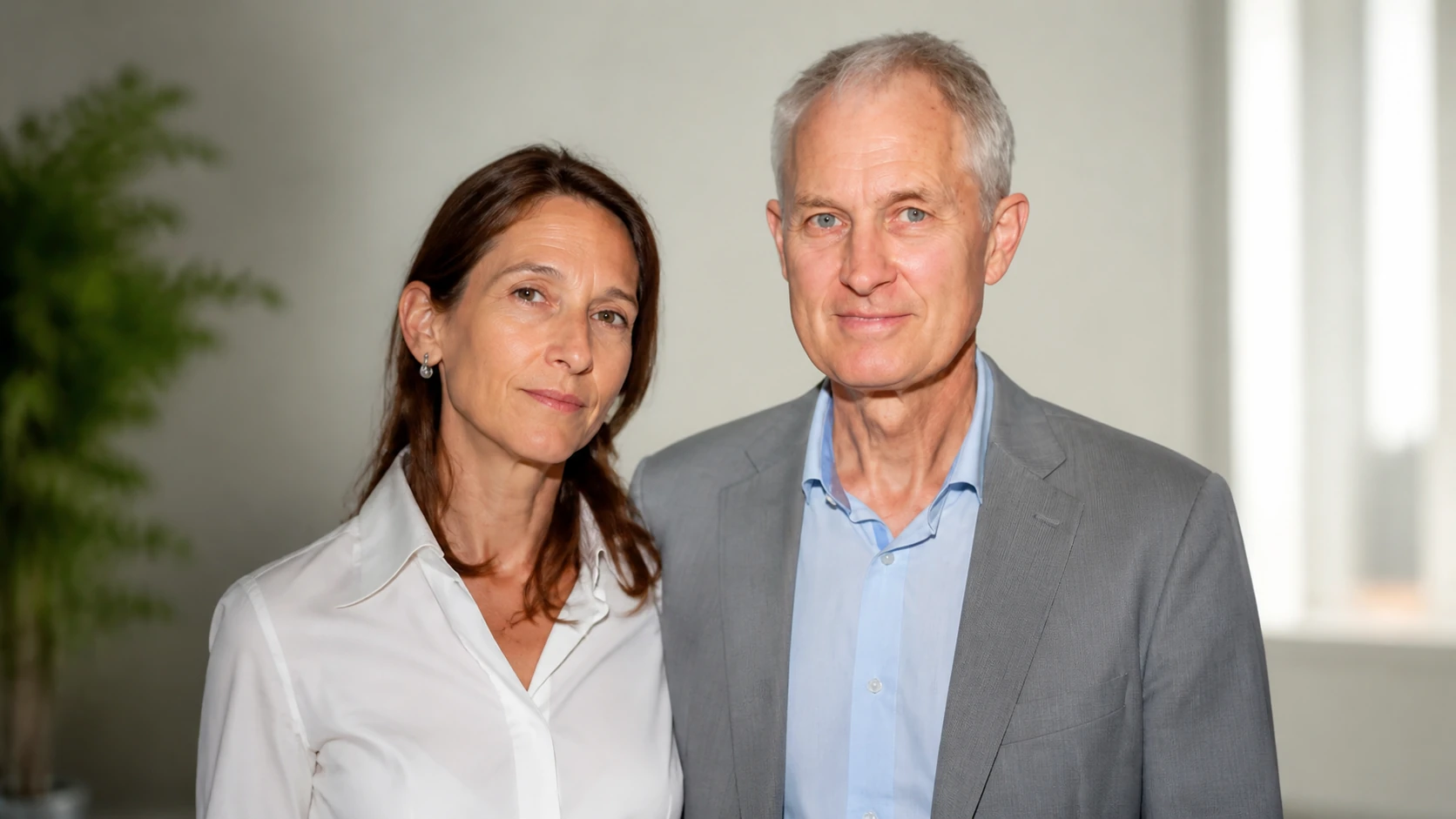
Leopold Stanislaus Stokowski was born into a family that had already learned how to live with attention. His mother, Gloria Vanderbilt, had been in the public eye since childhood, while his father, Leopold Stokowski, was one of the most recognizable figures in classical music. Yet Stan Stokowski, as he has long been known, grew into adulthood by choosing distance from that spotlight rather than stepping into it. That decision, quiet and consistent, has defined the way the world understands him.
For many readers, his name surfaces while tracing the Vanderbilt family story or while learning about Anderson Cooper, his younger half-brother. But Stan’s life does not follow the familiar arc of inherited fame. Instead, it unfolds as a study in restraint, privacy, and selective visibility. He is connected to some of the most famous American names of the 20th century, yet remains largely absent from the public narratives built around them.
Early Life and Family Background
Leopold Stanislaus Stokowski was born on August 22, 1950, in the United States, at a time when his mother’s life was already widely documented. Gloria Vanderbilt’s early years had been shaped by a highly public custody battle that made her a national figure before she reached adolescence. By the time Stan was born, she was still young but already experienced in navigating scrutiny, reinvention, and expectation.
His father, Leopold Stokowski, brought a very different kind of fame into the household. Born in London in 1882, he had built a towering reputation as a conductor, particularly through his leadership of the Philadelphia Orchestra and his role in popularizing classical music for broader audiences. His work on Disney’s Fantasia helped cement his cultural presence beyond concert halls, making him recognizable even to those unfamiliar with orchestral music.
Stan was the first of two sons from that marriage, followed by his younger brother Christopher in 1952. The marriage itself ended in divorce in 1955, when Stan was still a young child. That early separation meant he grew up largely within his mother’s orbit, though always connected to the legacy of his father’s artistic influence.
The family structure expanded further when Vanderbilt remarried writer Wyatt Cooper. From that marriage came two more sons: Carter Vanderbilt Cooper and Anderson Cooper. This blended family would later become central to public fascination, especially as Anderson rose to prominence in journalism and began reflecting openly on family history and loss.
Growing Up Around Fame
Stan Stokowski’s childhood was shaped by proximity to attention rather than participation in it. Photographs from the late 1950s show him and his brother Christopher captured by well-known photographers, including Carl Van Vechten, placing them within a cultural circle that extended far beyond ordinary family life. These images suggest a childhood where artistic and social elites were part of the background, even if not the focus.
But here’s the thing. Being near fame does not automatically translate into embracing it. Many children of highly visible parents move toward public careers, whether in entertainment, business, or media. Stan appears to have taken the opposite path, building his identity away from the pressures that defined his mother’s and later his brother’s public roles.
Accounts of his upbringing remain limited, and that limitation is meaningful. Unlike his younger brother Anderson, who has spoken and written extensively about family dynamics, Stan has not provided a public narrative of his early life. What remains are outlines rather than detailed stories, shaped more by context than by direct testimony.
Education and Early Direction
There is little publicly confirmed information about Stan Stokowski’s formal education, and this absence has often been filled with speculation in less reliable sources. Some online profiles list schools or degrees, but many of those claims lack verifiable backing. A careful reading of available material suggests that he pursued a more conventional path compared to the artistic and media-oriented careers in his family.
What is clearer is the direction he eventually chose. Rather than entering the arts, fashion, or journalism, Stan moved toward work that kept him grounded in private enterprise. Reports indicate that he developed a career connected to landscaping and outdoor design, operating businesses in New York and New England.
That choice reflects a broader pattern. While his mother built a career across multiple creative fields and his brother became a global media figure, Stan pursued work that did not depend on public recognition. It allowed him to maintain independence from the expectations that often accompany a well-known surname.
Career and Professional Life
Public descriptions of Stan Stokowski’s career are brief but consistent. He is most often described as a businessman involved in landscaping and outdoor design. These ventures reportedly took place in parts of New York and New England, suggesting a regional focus rather than a national or international brand.
The truth is, his professional life has never been framed as a public story. There are no widely documented interviews, major press profiles, or high-visibility projects tied to his name. That does not diminish the legitimacy of his work, but it does shape how it is understood. His career exists largely outside the media economy that often defines success in public families.
What’s surprising is how rare that choice can be. Many individuals connected to well-known families either capitalize on that connection or actively reject it in visible ways. Stan’s approach appears quieter. He neither trades on the Vanderbilt name nor publicly distances himself from it. Instead, he seems to have treated it as background rather than identity.
Relationship with Gloria Vanderbilt
Stan Stokowski remained connected to his mother throughout her life, though the details of their relationship were not frequently discussed in public. Gloria Vanderbilt’s later years included a renewed public presence through her collaboration with Anderson Cooper, particularly in the documentary Nothing Left Unsaid.
Stan’s presence at the 2016 premiere of that film offered a rare glimpse of his role within the family. He appeared alongside his mother and brother, signaling support without stepping into the narrative itself. This kind of participation aligns with the broader pattern of his public life: present, but not central.
Vanderbilt’s own reflections on her children often emphasized individuality. She lived through profound personal loss, including the death of her son Carter in 1988, and her relationship with each of her sons evolved over time. Stan’s place within that family story is less documented, but his continued presence suggests a stable, if private, connection.
The Vanderbilt Legacy and Inheritance
The question of inheritance brought Stan Stokowski’s name back into public conversation following Gloria Vanderbilt’s death in June 2019. For decades, the Vanderbilt name had been associated with immense wealth, though much of that fortune had dissipated long before Stan’s lifetime.
Reports on Vanderbilt’s will revealed a more modest estate than many expected. The most widely cited accounts indicated that Stan received her Midtown Manhattan co-op apartment, while the remainder of her estate went to Anderson Cooper. Christopher Stokowski was not named in the will, a detail that drew some media attention.
The numbers themselves were revealing. Estimates of Vanderbilt’s wealth had often been exaggerated in popular media, with figures reaching into the hundreds of millions. More grounded reporting suggested that the actual estate was far smaller, challenging assumptions about inherited wealth within the family.
For Stan, the inheritance did not redefine his public identity. It confirmed his place within the family structure, but it did not transform him into a public figure. His life had already been shaped by privacy, and that did not change after Vanderbilt’s death.
Relationship with Anderson Cooper
Stan Stokowski is best known to many readers as Anderson Cooper older half-brother. The age difference between them, nearly two decades, meant they experienced different phases of family life under very different circumstances. By the time Anderson was born in 1967, Stan was already approaching adulthood.
Public appearances suggest a cordial relationship, though neither brother has extensively documented their personal bond. Anderson Cooper’s work often centers on his mother, his late brother Carter, and his own experiences with grief and family history. Stan remains part of that story but not its narrator.
That distinction matters. In a media environment that often seeks complete family narratives, Stan’s limited public presence creates gaps that are sometimes filled with speculation. A more responsible view accepts that not every family relationship is meant for public consumption.
Public Image and Media Presence
Stan Stokowski’s public image is defined as much by absence as by presence. He is occasionally photographed at family events, mentioned in profiles of the Vanderbilt-Cooper family, and included in discussions of inheritance. Beyond that, he remains largely outside the media cycle.
There are no social media platforms associated with him, no regular interviews, and no personal brand built around his name. This lack of visibility can make him seem elusive, but it is more accurately described as intentional privacy.
The media often struggles with figures like Stan because they resist narrative framing. He is neither a celebrity nor an anti-celebrity. He does not offer the kind of access that fuels modern profile writing, and that forces a different kind of biography—one that respects limits rather than trying to overcome them.
Personal Life and Privacy
Details about Stan Stokowski’s personal life, including relationships, marriage, and children, are not widely confirmed in reliable public sources. Some reports suggest he has been married and has children, but these claims are not consistently documented and should be treated with caution.
This level of privacy is unusual in the context of a family that has often been the subject of public interest. It suggests a deliberate boundary between his private life and the broader narrative of the Vanderbilt family.
The truth is, that boundary is part of his identity. It shapes not only what is known about him but also how he is understood. In a culture that often equates visibility with relevance, Stan Stokowski’s life offers a different perspective.
Where Leopold Stanislaus Stokowski Is Now
As of recent years, Stan Stokowski continues to live outside the public spotlight. Reports suggest he remains connected to the regions where he built his business interests, particularly in the northeastern United States. Beyond that, his current activities are not widely documented.
He has appeared occasionally at family-related events, maintaining a visible but limited connection to the public aspects of the Vanderbilt-Cooper legacy. These appearances reinforce the idea that he has not withdrawn entirely but has chosen careful engagement.
Not many people know this, but that balance is difficult to maintain. It requires navigating recognition without embracing exposure, and participating without becoming a subject. Stan Stokowski has managed that balance for decades.
Frequently Asked Questions
Who is Leopold Stanislaus Stokowski?
Leopold Stanislaus Stokowski, often called Stan, is the eldest son of Gloria Vanderbilt and conductor Leopold Stokowski. He is also the older half-brother of journalist Anderson Cooper. He is known primarily through his family connections rather than a public career.
What does Stan Stokowski do for a living?
Stan Stokowski has been described in reliable reports as a businessman involved in landscaping and outdoor design. His work has been based in New York and New England, though detailed information about his businesses is limited.
Is Stan Stokowski related to Anderson Cooper?
Yes, Stan Stokowski is Anderson Cooper’s older half-brother. They share the same mother, Gloria Vanderbilt, but have different fathers. Their relationship has remained largely private.
Did Stan Stokowski inherit money from Gloria Vanderbilt?
Public reports indicate that Stan inherited his mother’s Midtown Manhattan apartment, while the rest of her estate went to Anderson Cooper. The total value of the estate was smaller than many public estimates of Vanderbilt wealth.
Why is there so little information about him?
There is limited information about Stan Stokowski because he has chosen to live a private life. Unlike other members of his family, he has not pursued a public career or media presence, which naturally limits available information.
Did Stan Stokowski appear in public events?
Yes, he has occasionally appeared at family-related public events, including the premiere of the documentary Nothing Left Unsaid in 2016. These appearances are rare and usually tied to family support rather than personal publicity.
Conclusion
Leopold Stanislaus Stokowski’s life does not follow the usual script attached to famous names. He was born into visibility but chose distance from it, growing up within one of America’s most recognizable families while avoiding the roles that often come with such a legacy.
His story is not defined by headlines, major public achievements, or media presence. Instead, it is shaped by consistency. He built a life outside the spotlight, maintained connections to his family without turning them into public narratives, and allowed his name to remain a reference point rather than a brand.
What stays with readers is the contrast. In a family where public identity has often been central, Stan Stokowski represents a quieter path. That path may leave fewer records, but it offers something equally valuable: a reminder that not every life connected to fame is lived in front of it.
In the end, his significance lies not in what is publicly known, but in how deliberately he has chosen what remains unknown. That choice, sustained over decades, is the most defining feature of Leopold Stanislaus Stokowski’s life.
