
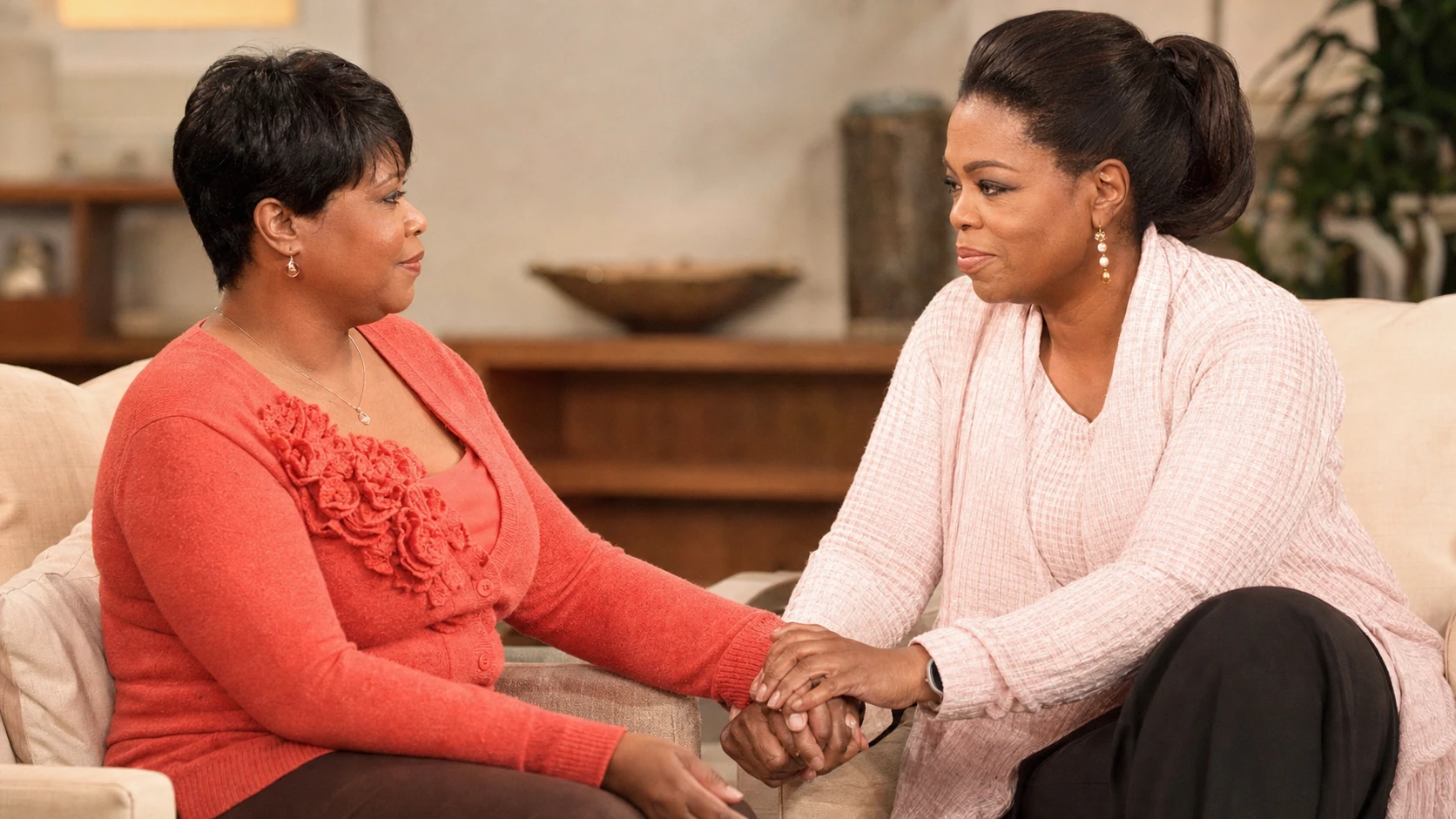
Patricia Lofton entered public life through a story she never treated like a publicity opportunity. In January 2011, Oprah Winfrey told her television audience that she had recently discovered a younger half-sister, a woman born to the same mother and placed for adoption decades earlier. For viewers, it was a stunning family revelation. For Patricia, it was the end of a long search for identity and the beginning of a relationship that had been delayed by secrecy, poverty, and time.
Patricia’s name is often searched because of Oprah, but her story is not only about being related to a famous person. It is about adoption, patience, dignity, and the complicated way families sometimes find one another after years of silence. The public record around her life is limited because she has chosen privacy, yet the facts that are known form a moving biography. She was born into one family, raised in another, searched for the truth as an adult, and eventually became part of one of the most widely discussed family reunions in daytime television history.
Who Is Patricia Lofton?
Patricia Lofton is best known as Oprah Winfrey’s younger maternal half-sister. She and Oprah share the same mother, Vernita Lee, who gave birth to Patricia in Milwaukee, Wisconsin, in 1963. Patricia was placed for adoption shortly after birth, and Oprah did not know she existed until late 2010. The relationship became public on The Oprah Winfrey Show in January 2011, during the program’s final season.
Unlike many people who become publicly known through a famous relative, Patricia did not build a public career around the connection. She was introduced to the world as part of Oprah’s family, but she did not become a regular television personality or entertainment figure. The most widely reported chapters of her life involve her adoption, her search for her biological family, her reunion with Oprah, and her later college graduation. That restraint has shaped how many people remember her.
Her story matters because it offers a rare look at fame from the outside. Patricia had information that tabloids would have paid for, but she did not sell it. That choice deeply affected Oprah, who had experienced painful family disclosures in the media before. In the public telling, Patricia’s discretion became almost as important as the biological connection itself.
Early Life and Adoption
Patricia Lofton was born in Milwaukee in 1963, at a time when her birth mother, Vernita Lee, was raising children under difficult circumstances. Vernita had already given birth to Oprah in 1954, and the family’s early years were marked by financial strain and separation. Patricia was placed for adoption as an infant, and she grew up without knowing the full story of her birth family. Oprah, who spent parts of her childhood in Mississippi, Milwaukee, and Nashville, was not told that she had another sister.
Public accounts have said Patricia spent time in foster care before she was adopted. That early experience became one of the defining facts of her biography, not because every detail is public, but because Patricia later connected it to her adult goals. She spoke about wanting to help foster children, a wish that made sense in light of her own childhood. Her life before the Oprah reunion was not lived in the spotlight, and much of it remains properly private.
The adoption decision belongs to a painful part of the family’s history. Vernita Lee later said she did not believe she could care for another child at the time Patricia was born. That explanation does not erase Patricia’s loss, but it does give the story context. It was not a case of a child mislaid by accident; it was a choice made under pressure, with consequences that lasted for decades.
Growing Up Outside the Winfrey Family
Patricia grew up apart from the Winfrey family and outside the public story of Oprah’s rise. While Oprah became a local news anchor, talk-show host, producer, actor, and media owner, Patricia lived a life unknown to Oprah and unknown to Oprah’s audience. That contrast is one reason the 2011 revelation carried such emotional force. Two sisters had been living in the same country, eventually not very far from one another, without either fully understanding the connection.
The public does not have a detailed record of Patricia’s childhood schools, early jobs, or private relationships. That absence should not be treated as a gap to fill with guesswork. She was not a public figure during those years, and her personal history belongs first to her and her family. What is known is that she became an adult still carrying questions about her origins.
For many adopted people, those questions are not casual curiosity. They can involve medical history, ancestry, siblings, and the desire to understand the circumstances of birth. Patricia’s eventual search was part of that broader human need. It was not originally a celebrity hunt, even though it led to one of the most famous women in America.
The Search for Her Birth Family
Patricia’s search for her biological family unfolded through adoption records and careful attention to family details. She learned information that suggested her birth mother had other children. Over time, those details began to point toward Vernita Lee. The discovery was extraordinary because one of Vernita’s daughters was Oprah Winfrey.
Accounts of the search describe Patricia seeing Vernita Lee speak in a television interview about her children. The details reportedly matched what Patricia had learned from her records, including the number and gender of siblings. That moment helped her understand that the missing pieces of her story were connected to a very public family. It was the kind of realization that could have been exploited instantly.
But here’s the thing. Patricia did not take the discovery to the tabloids. She tried to reach the family privately, even though the story would have had obvious media value. That choice later became central to Oprah’s public reaction, because it suggested Patricia was seeking connection rather than money or attention.
Oprah Winfrey’s Family Before Patricia
To understand the meaning of Patricia Lofton’s arrival, it helps to understand Oprah’s known family history. Oprah was born to Vernita Lee and Vernon Winfrey in 1954 and spent her early childhood moving between relatives and households. Her family story was never simple, and Oprah often spoke publicly about poverty, trauma, ambition, and the adults who shaped her. By the time Patricia entered the picture, Oprah had already lived much of her family history in public.
Vernita Lee also had other children, including Patricia Lee Lloyd and Jeffrey Lee. Patricia Lee Lloyd, often called Pat, died in 2003, and Jeffrey Lee died in 1989. This creates confusion for readers because Oprah had two maternal half-sisters named Patricia. Patricia Lee Lloyd was the sister Oprah knew earlier in life; Patricia Lofton was the sister placed for adoption and discovered later.
That shared name has led to mistaken online claims and muddled timelines. Some summaries refer only to “Patricia,” without making clear which sister they mean. The distinction matters because Patricia Lofton is alive in the public record after the 2011 reunion, while Patricia Lee Lloyd died years before Oprah learned about Lofton. A careful biography must keep those identities separate.
The 2011 Television Reveal
Oprah revealed Patricia Lofton to viewers on January 24, 2011, during the final season of The Oprah Winfrey Show. It was presented as a major personal announcement, and the episode carried the emotional weight of a family secret finally spoken aloud. Oprah explained that she had learned about Patricia only months earlier, around Thanksgiving 2010. She described the discovery as one of the most surprising events of her life.
The episode included the basic family history: Patricia had been born in Milwaukee, placed for adoption, and raised without knowing Oprah. Oprah said her mother had not told her about the child. Patricia had found the family through her own search, but had chosen not to expose the story publicly before reaching them. That restraint shaped the tone of the reunion.
For longtime viewers, the episode felt different from a standard daytime television reveal. Oprah had spent years guiding guests through family secrets and emotional confrontations. This time, she was not just the interviewer. She was the daughter, the sister, and the person trying to make sense of a hidden chapter in her own family.
Meeting Oprah and Vernita Lee
Patricia and Oprah met privately before the story became public. Their first meeting took place after Oprah learned of Patricia’s existence and after the family had begun to verify the connection. The emotional stakes were high because the discovery involved not only two sisters, but also their mother, Vernita Lee. For Patricia, it meant meeting the woman who had given birth to her and the sister she had watched from afar.
The reunion with Vernita was especially delicate. Vernita had placed Patricia for adoption and had kept that fact private for decades. Public accounts suggest there was pain, shock, and a measure of healing in the meeting, though no outside observer can fully know what each person felt. Family reunions after adoption often carry both joy and grief, and this one was no exception.
Oprah’s response was cautious but open. She expressed admiration for Patricia’s character and made clear that the relationship would take time. That honesty made the story more believable. Families do not become whole overnight simply because a camera captures a reunion.
Patricia Lofton’s Public Image
Patricia Lofton’s public image has always rested on restraint. She did not come forward through scandal media, did not give a string of sensational interviews, and did not try to compete with Oprah’s fame. Instead, she appeared as someone who wanted answers and family connection. That helped the public receive her with warmth.
Her conduct also mattered because Oprah’s family history had included painful public betrayals. Oprah had spoken in the past about relatives who revealed private information to the press. Against that backdrop, Patricia’s silence before the reunion was powerful. Oprah herself emphasized that Patricia had known valuable information and had not sold it.
That is one reason Patricia’s story has remained unusually respectful in mainstream coverage. The public fascination is real, but so is the sense that she deserves privacy. She became known through an intimate family matter, not through a chosen career in entertainment. The best writing about her keeps that boundary clear.
Education and Later Ambitions
One of the most meaningful chapters in Patricia’s public life came after the reunion. She had long wanted to go to college, and Oprah helped support that dream. Reports from 2014 described Oprah assisting Patricia financially so she could focus on school. The goal was not simply to obtain a degree, but to build a path toward helping others.
Patricia studied sociology at the University of Wisconsin-Milwaukee. That subject fit what had been reported about her interests, especially her desire to work with children connected to foster care. Her own early experience gave that ambition emotional weight. She understood, in a personal way, what instability and separation could mean for a child.
In December 2017, Patricia graduated from the University of Wisconsin-Milwaukee with a bachelor’s degree. Oprah attended the ceremony with Stedman Graham and celebrated the achievement publicly. The moment showed that the reunion had led to more than one emotional television episode. It had become part of a practical, ongoing relationship.
Money, Support, and Reported Net Worth
There is no credible public net worth figure for Patricia Lofton. Any website claiming to know her precise wealth should be treated with caution unless it explains its sourcing. Patricia has not been a public executive, entertainer, or business owner whose finances can be reliably tracked. Most of what is reported about money in her story concerns Oprah’s support after the reunion.
In 2014, several outlets reported that Oprah bought Patricia a home in Wisconsin. Reports also described financial help connected to Patricia’s education and living expenses. Those accounts were widely circulated, but the full private arrangement has never been publicly documented in detail. It is safest to say Oprah reportedly provided major financial support, including help with housing and college.
That support should not be mistaken for Patricia’s personal net worth. A gift, a house, or education funding does not create a clear public accounting of a person’s assets. Patricia’s income sources and current finances are not publicly confirmed. Respecting that uncertainty is part of writing accurately about someone who has not chosen a public business life.
Family, Children, and Private Life
Patricia Lofton has been described in public accounts as a mother, and some reporting has referred to her having children. Details about her children, relationships, and household life are limited, and that privacy is appropriate. She became known because of her biological family, not because she invited public examination of every part of her personal life. Responsible coverage should not turn unconfirmed fragments into firm biography.
Her most public family relationship is with Oprah Winfrey. The two women are half-sisters, and their connection began late in life rather than in childhood. That makes the bond different from a sibling relationship formed through shared upbringing. It had to be built after decades of absence, with both women bringing separate histories to the relationship.
Patricia’s relationship with Vernita Lee was also shaped by time and loss. Vernita died in 2018, several years after the reunion became public. Patricia had the chance to know her birth mother as an adult, but not to recover the years that were gone. That is one of the quiet sorrows beneath the public story.
What Patricia Lofton Is Doing Now
Patricia Lofton appears to live a private life away from constant media attention. Since her 2017 graduation, there has been little reliable public reporting about her daily work, residence, or personal activities. That does not mean something dramatic happened; it more likely means she chose not to live as a public figure. Many relatives of famous people make that choice.
The most accurate current description is that Patricia is Oprah Winfrey’s younger half-sister, an adoptee who reunited with her biological family and later completed a sociology degree. She is not known for a public entertainment career or a major social media presence. Her story remains relevant because of the family revelation and because of the way she handled it. The absence of constant updates should be read as privacy, not mystery.
Public curiosity will likely continue because Oprah remains one of the best-known media figures in the world. Search users still ask where Patricia is now, whether she and Oprah are close, and what happened after the reunion. The honest answer is that some parts are known and some are not. Patricia’s decision to keep much of her life private may be the clearest sign of who she is.
Why Her Story Still Resonates
Patricia Lofton’s biography resonates because it contains a rare combination of ordinary and extraordinary elements. Adoption searches happen in many families, but few lead to a sister as famous as Oprah Winfrey. Family secrets are common, but few are revealed on one of the most watched talk shows in American television. The scale was unusual, yet the emotions were recognizable.
The story also asks readers to think about what family means when biology and upbringing do not match. Patricia and Oprah shared a mother, but they did not share childhood memories, holidays, schools, or daily life. Their relationship had to begin with truth rather than nostalgia. That makes it more complicated than a simple reunion headline.
What’s surprising is how much of the story depends on patience. Patricia searched, waited, and protected the information she had. Oprah listened, verified, and responded with care. In a media culture built to reward exposure, both women allowed the story to unfold with a measure of dignity.
Common Misunderstandings About Patricia Lofton
The first major misunderstanding is that Oprah knew about Patricia all along. Public accounts say Oprah did not know she had this younger half-sister until 2010. The secret was kept by Vernita Lee, who had placed Patricia for adoption in 1963. That fact changes the emotional meaning of the story.
A second misunderstanding is that Patricia Lofton and Patricia Lee Lloyd are the same person. They are not. Patricia Lee Lloyd was another of Oprah’s maternal half-sisters and died in 2003. Patricia Lofton is the half-sister who was placed for adoption and publicly introduced in 2011.
A third misunderstanding concerns Patricia’s motives. Because celebrity-family stories often involve money or publicity, some readers assume Patricia came forward for fame. The public record points in a different direction. Oprah herself praised Patricia for not selling the story, even though she could have done so.
Another common mistake is to treat reported financial support as a complete picture of Patricia’s life. Oprah’s help with housing and education was important, but it does not define Patricia as a person. Her biography also includes foster care, adoption, motherhood, education, and the long search for identity. The money is one part of the public story, not the whole story.
Patricia Lofton and Oprah’s Legacy of Family Storytelling
Oprah built much of her career around honest conversation, especially about pain that families often hide. Her show gave public space to estrangement, abuse, reunion, grief, and forgiveness. Patricia’s arrival in Oprah’s life placed those themes inside Oprah’s own household. It was a striking reversal for a host who had often helped others speak difficult truths.
The 2011 reveal also came near the end of The Oprah Winfrey Show, which gave it extra weight. Oprah was closing a defining chapter of American television and looking back on a life that had been both public and deeply personal. Learning about Patricia during that final season made the discovery feel like unfinished family history arriving at the last possible moment. It was a private event that became part of a public farewell.
Still, Patricia’s life should not be seen only through Oprah’s legacy. She had her own search, her own childhood, and her own ambitions. The connection to Oprah made the story famous, but Patricia’s choices gave it shape. Without her discretion, the story might have become a scandal rather than a reunion.
Frequently Asked Questions
Is Patricia Lofton Oprah Winfrey’s real sister?
Yes, Patricia Lofton is Oprah Winfrey’s maternal half-sister. They share the same mother, Vernita Lee, but they had different upbringings and did not grow up together. Patricia was placed for adoption as an infant, and Oprah learned about her only in late 2010.
The relationship became public in January 2011 on The Oprah Winfrey Show. Oprah described the discovery as a major family revelation. The story drew wide attention because it involved a hidden sibling, adoption records, and a reunion late in life.
Why was Patricia Lofton placed for adoption?
Patricia was placed for adoption after her birth in Milwaukee in 1963. Public accounts say Vernita Lee felt unable to care for another child at that time. The decision was kept private within the family for many years.
That choice shaped Patricia’s life and Oprah’s family history. Patricia grew up outside the Winfrey family, while Oprah did not know she had another younger sister. The two women only connected as adults after Patricia searched for her birth family.
How did Oprah find out about Patricia Lofton?
Oprah learned about Patricia after Patricia had already gathered information about her biological family. Patricia used adoption records and family details to trace her connection to Vernita Lee. Once the information reached Oprah, the family began to process and verify the relationship.
Oprah later said she was moved by the fact that Patricia had not sold the story to the media. That decision helped establish trust between them. It also shaped the public’s understanding of Patricia as someone seeking family rather than fame.
Did Oprah Winfrey help Patricia Lofton financially?
Yes, public reporting has said Oprah helped Patricia after their reunion, especially with education and housing. Several outlets reported that Oprah bought her a home in Wisconsin and supported her while she pursued college. The full details of any private financial arrangement have not been publicly confirmed.
What is clear is that Patricia completed a major personal goal. She graduated from the University of Wisconsin-Milwaukee in 2017 with a sociology degree. Oprah attended the ceremony and celebrated the achievement publicly.
What did Patricia Lofton study?
Patricia Lofton studied sociology at the University of Wisconsin-Milwaukee. She graduated in December 2017, years after the public learned she was Oprah’s sister. Her academic path was connected to her interest in helping children and families.
Sociology made sense given the public details of her life. Patricia had experience with foster care and adoption, and she had spoken about wanting to help foster children. Her degree represented both personal achievement and a step toward that broader goal.
Is Patricia Lofton famous?
Patricia Lofton is publicly known, but she is not famous in the same way Oprah is. Her name became widely recognized because of the 2011 family revelation. She did not turn that attention into a major media career.
Her public profile has remained limited. Most people know her through Oprah’s announcement, reports about Oprah’s support, and Patricia’s college graduation. She appears to have chosen a private life rather than sustained celebrity exposure.
Where is Patricia Lofton now?
Patricia Lofton’s current day-to-day life is not widely reported. After graduating from college in 2017, she largely stayed out of the public eye. There is no reliable evidence that she is pursuing a major entertainment career or public platform.
The best current answer is that she remains known as Oprah Winfrey’s younger half-sister and as a woman whose life story touched many people because of its adoption and reunion themes. Some details about her family and work are private. That privacy should be respected.
Conclusion
Patricia Lofton’s life became public through a dramatic revelation, but the heart of her biography is quieter than the headline. She was born into a family that could not keep her, raised outside the world that later made her sister famous, and driven as an adult to find the truth of her origins. That search changed her life and added a hidden chapter to Oprah Winfrey’s family story.
Her story also shows the limits of public knowledge. We know the major facts: her birth, adoption, search, reunion, educational goal, and college graduation. We do not know every private detail, and we do not need to. A respectful biography leaves room for a person to exist beyond what fame makes visible.
Patricia matters because she handled an extraordinary discovery with care. In a different version of the story, her connection to Oprah might have become a tabloid transaction. Instead, it became a story about restraint, trust, and the slow work of building family after decades apart.
That is why people still search her name. They are looking for Oprah’s sister, but they often find something more grounded. Patricia Lofton’s story reminds readers that identity is not only what we inherit, but what we choose to do once the truth arrives.
