
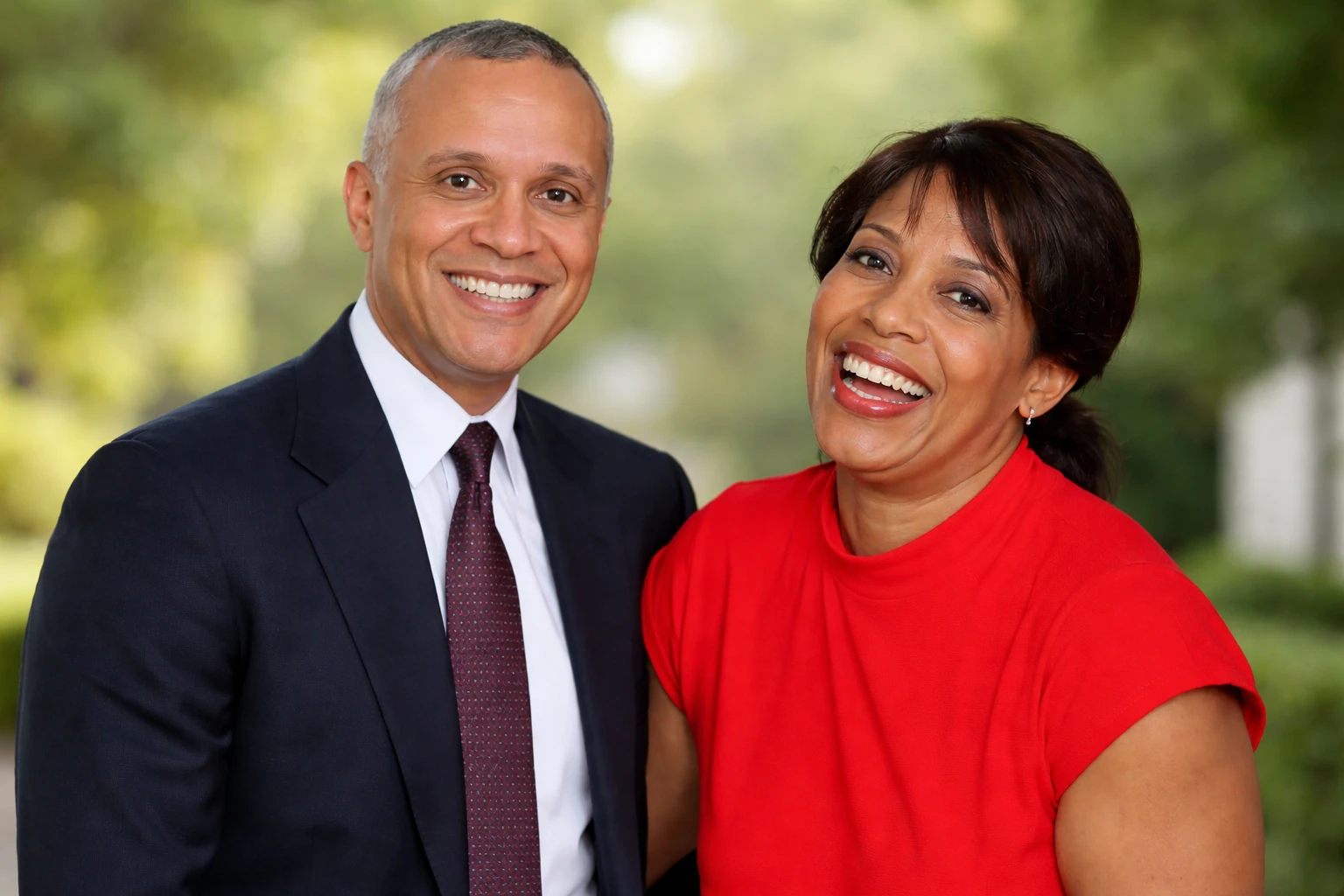
Dorothy Bowles Ford’s name appears most often in the margins of American political history—attached to a surname that has carried weight in Memphis and beyond for decades. Yet for all the public recognition of the Ford family, her own story remains largely private, surfacing in official records, family references, and the occasional biographical note. That contrast—between proximity to power and a life lived mostly out of view—is what makes her both intriguing and difficult to fully capture.
She is best known as the former wife of Harold Ford Sr., the first African American congressman from Tennessee in the 20th century, and the mother of Harold Ford Jr., who later followed his father into Congress. Those facts alone place her at the center of a rare political lineage. But beyond those markers, Dorothy Bowles Ford’s biography resists easy storytelling. The public record is sparse, and the woman herself has never sought to fill in the gaps.
What remains is a portrait assembled carefully from what can be verified: a marriage that coincided with a rising political career, a family that would become nationally recognized, and a personal life that stayed largely shielded from public scrutiny. In a media environment that often rewards speculation, Dorothy Bowles Ford stands as a reminder that not every life connected to power is fully documented—or fully understood.
Early Life and Background
Publicly available information about Dorothy Bowles Ford’s early life is limited, and that absence shapes how her story must be told. Unlike her former husband and son, whose careers required detailed public records, Dorothy Bowles Ford did not occupy an official position that generated extensive documentation. As a result, details such as her birth date, hometown, and early education are not widely confirmed in authoritative sources.
Some biographical references identify her as Dorothy Jean Bowles, suggesting a traditional naming pattern that aligns with mid-20th-century American records. However, beyond her name and later family connections, verifiable details about her upbringing remain scarce. This is not unusual for women of her era who did not pursue public-facing careers, particularly before the rise of digital recordkeeping.
What can be inferred, though cautiously, is that she came of age during a period of significant social change in the United States. The civil rights movement, shifts in federal employment, and the expansion of educational opportunities all formed the backdrop of her early adulthood. Whether or not she directly engaged in those movements, they would have shaped the environment in which she later built her family.
Marriage to Harold Ford Sr.
Dorothy Bowles entered the public record more clearly when she married Harold Eugene Ford Sr. on February 10, 1969. At the time, Ford Sr. was a young man on the rise, already active in Tennessee politics and soon to become a significant figure in Congress. Their marriage coincided with a period of ambition and change, both personally and professionally.
As Harold Ford Sr.’s political career advanced, Dorothy Bowles Ford became part of a household increasingly connected to public life. In 1974, Ford Sr. was elected to the U.S. House of Representatives, making history as Tennessee’s first African American congressman in nearly a century. His election marked a turning point not just for him, but for the family he was building.
The truth is, the role of a political spouse—especially in that era—was often demanding but rarely documented. Campaigns, community expectations, and the rhythms of Washington life would have shaped daily routines. Yet Dorothy Bowles Ford did not become a public political figure in her own right, and she largely remained outside the spotlight even as her husband’s profile grew.
Motherhood and Family Life
The marriage produced three sons: Harold Eugene Ford Jr., Newton Jake Ford, and Sir Isaac Ford. Their upbringing would become central to the Ford family’s story, particularly as one of those sons would later enter national politics. The available record confirms the children’s names and basic family structure, though it offers limited detail about their day-to-day life.
Harold Ford Jr. was born on May 11, 1970, in Memphis, Tennessee, a city that would remain central to the family’s identity. As his father’s political career developed, the family spent time both in Memphis and in Washington, D.C., reflecting the dual demands of congressional life. That kind of upbringing often requires careful balance, and while specifics are not widely documented, it is reasonable to understand Dorothy Bowles Ford as a central figure in maintaining that balance.
What’s striking is how consistently her name appears in official biographies of her son. Even brief congressional profiles include her as part of his identity, reinforcing her role within the family narrative. She may not have sought public recognition, but her presence is embedded in the story of a political lineage that spans generations.
Professional Life and Work
One of the few concrete details about Dorothy Bowles Ford’s professional life comes from a biographical reference that identifies her as an employee of the U.S. Department of Agriculture. This detail, while limited, places her within the federal workforce, suggesting a career connected to public service.
The available sources do not provide specifics about her role, tenure, or responsibilities within the department. That absence of detail makes it difficult to construct a full professional profile. Still, federal employment during that period often required stability, administrative skill, and a familiarity with bureaucratic systems, especially in Washington, D.C.
What’s important is that this information, though brief, adds dimension to her story. It suggests that Dorothy Bowles Ford was not only a spouse and mother within a political family but also an individual with her own professional path. Even if the public record does not fully document that path, its presence is worth acknowledging.
Life During a Political Era
Living within a political family carries unique pressures, and Dorothy Bowles Ford’s life intersected with a transformative period in American politics. Harold Ford Sr.’s congressional career spanned from 1975 to 1997, a time marked by debates over civil rights, economic policy, and the changing role of government.
During those years, Memphis itself was undergoing shifts shaped by post–civil rights era politics and urban development. The Ford family became part of that evolving landscape, representing a new generation of African American political leadership in the South. Dorothy Bowles Ford’s role within that environment was not publicly defined, but her proximity to it was undeniable.
But here’s the thing: proximity to political power does not always translate into public visibility. Many spouses of elected officials, especially in earlier decades, operated behind the scenes, supporting family life and navigating the demands of public scrutiny without seeking attention themselves. Dorothy Bowles Ford appears to have been one of those figures.
Divorce and Later Years
After three decades of marriage, Dorothy Bowles Ford and Harold Ford Sr. divorced in 1999. The timing is notable, coming after Ford Sr.’s long tenure in Congress had already ended. The available public sources confirm the divorce but do not provide detailed explanations or commentary about its circumstances.
This lack of detail has led to speculation in some corners of the internet, but credible reporting remains cautious. Without verified accounts, it is more responsible to acknowledge the event without attaching narratives that cannot be substantiated. Divorce, especially after a long marriage, is often complex, and the absence of public explanation suggests a degree of privacy maintained by both individuals.
Following the divorce, Dorothy Bowles Ford receded even further from public view. Unlike some figures connected to political families, she did not transition into media appearances, memoir writing, or public advocacy. Her later years remain largely undocumented in widely accessible sources.
Public Image and Privacy
Dorothy Bowles Ford’s public image is defined as much by what is not known as by what is. In an era when personal details are often widely shared, her relative privacy stands out. She has not been the subject of major interviews, public controversies, or widely circulated personal narratives.
This absence can be interpreted in different ways. It may reflect personal choice, a preference for privacy, or simply the historical context in which she lived. Women connected to political figures in the late 20th century were not always encouraged—or expected—to cultivate public identities separate from their families.
What’s surprising is how persistent interest in her remains, despite the limited information available. That interest speaks less to her public actions and more to the enduring curiosity about the Ford family and its role in American politics.
Financial Standing and Net Worth
There is no widely verified public estimate of Dorothy Bowles Ford’s personal net worth. Unlike her son, whose career in finance and media has generated public financial disclosures and estimates, Dorothy Bowles Ford has not been associated with publicly reported wealth figures.
Any claims about her net worth found online should be approached with caution. Without confirmed financial records or credible reporting, such figures are speculative at best. It is more accurate to say that her financial status is not publicly documented in a reliable way.
Her connection to a politically prominent family does not automatically translate into personal wealth, and without clear evidence, it is better to avoid assumptions.
Where Dorothy Bowles Ford Is Now
As of the most recent available information, Dorothy Bowles Ford’s current activities and residence are not publicly documented in detail. She has maintained a low profile, and there are no widely reported updates about her recent life.
This level of privacy is increasingly rare, especially for individuals connected to public figures. It suggests either a deliberate effort to remain out of the spotlight or simply a life lived away from media attention. Either way, it reinforces the central theme of her biography: a presence that is significant within a family context but largely private in its own right.
Frequently Asked Questions
Who is Dorothy Bowles Ford?
Dorothy Bowles Ford is the former wife of Harold Ford Sr. and the mother of Harold Ford Jr. She is part of a well-known political family from Memphis, Tennessee, though she has largely remained out of the public spotlight.
Is Dorothy Bowles Ford related to Harold Ford Jr.?
Yes, she is his mother. Harold Ford Jr., a former U.S. congressman, is one of three sons she had with Harold Ford Sr.
What did Dorothy Bowles Ford do for a living?
A biographical reference identifies her as an employee of the U.S. Department of Agriculture. However, detailed information about her role or career path is not widely available in public records.
When did Dorothy Bowles Ford and Harold Ford Sr. divorce?
They divorced in 1999 after approximately 30 years of marriage. The reasons for the divorce have not been publicly detailed in authoritative sources.
How many children does Dorothy Bowles Ford have?
She has three sons: Harold Ford Jr., Newton Jake Ford, and Sir Isaac Ford.
What is Dorothy Bowles Ford’s net worth?
There is no verified public estimate of her net worth. Any figures found online should be treated as unconfirmed and speculative.
Conclusion
Dorothy Bowles Ford’s life offers a different kind of biography—one shaped not by public speeches or high-profile achievements, but by proximity to a family that made history. Her marriage to Harold Ford Sr. and her role as the mother of Harold Ford Jr. place her within a narrative that spans decades of political change.
At the same time, her story resists the kind of full documentation that modern readers often expect. The gaps in the record are not failures but reflections of a life lived largely outside the public eye. That absence of detail can feel frustrating, but it also invites a more careful, respectful approach to telling her story.
What remains is a portrait defined by connection, context, and restraint. Dorothy Bowles Ford may not have sought recognition, but her place in a significant American political family ensures that her name continues to be remembered.
In the end, her biography is less about filling every gap and more about understanding the space she occupies in history. It is a reminder that some lives, even those close to power, are best understood through the roles they played rather than the headlines they never pursued.
