
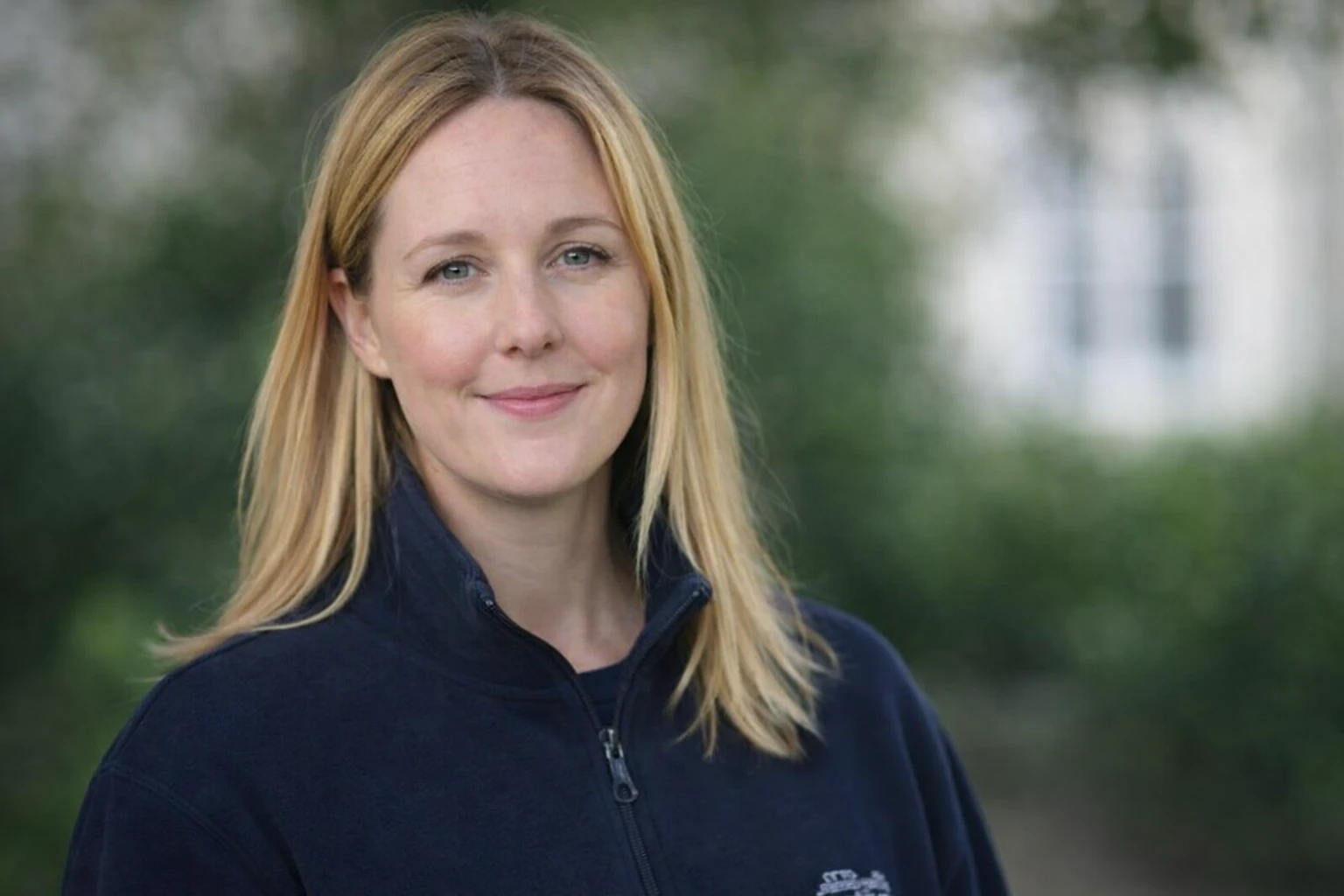
Felicity Tonkin has lived most of her life just outside the glare of public attention, yet her name continues to surface in searches tied to one of Britain’s most recognizable families. Her connection to Mark Phillips—the Olympic gold medal-winning equestrian and former husband of Princess Anne—placed her, from birth, in a story she did not choose. But the arc of her life has moved in a different direction, away from headlines and toward a career built quietly around horses, medicine, and a life rooted in New Zealand.
For many readers, the curiosity begins with that connection. Is she part of the royal family? What became of her? Why is there so little reliable information about her compared to others linked to the monarchy? The answers are more grounded than the speculation often found online. Felicity Tonkin’s life is not one of royal ceremony or public intrigue, but one shaped by a complex early chapter and a steady, private adulthood.
Early Life and Family Background
Felicity Tonkin was born in New Zealand in the mid-1980s, the daughter of Heather Tonkin, a New Zealand art teacher. Her early years unfolded far from the formal settings of British royal life, in a country where equestrian culture exists but without the same public spotlight attached to it. From the beginning, her upbringing was defined by a contrast that would follow her into adulthood: a local, grounded childhood paired with a family connection that attracted international attention.
The defining moment of her early life came not from personal choice, but from a legal dispute that drew media coverage across continents. In 1991, when Felicity was still a young child, her mother brought a paternity claim against Mark Phillips. At the time, Phillips was still legally married to Princess Anne, though the couple had separated publicly two years earlier. The case quickly became news not only in the United Kingdom but also in New Zealand, largely because of Phillips’s status as a prominent figure tied to the royal family.
Early reporting showed Phillips initially contesting the claim. The case, however, did not remain unresolved. Later references in established sources state that DNA testing confirmed Phillips as Felicity’s biological father. While the legal process itself was not widely documented in public detail, the outcome became accepted as part of the broader historical record surrounding Phillips and his family.
Growing up in the shadow of that dispute meant Felicity’s name entered the public record early, but her personal life did not. Unlike children raised within royal households, she was not subject to formal public roles or institutional expectations. Her childhood remained largely private, shaped more by her immediate environment than by the distant attention her father’s status brought.
A Childhood Away From Royal Life
Despite her biological connection to a high-profile British family, Felicity Tonkin was not raised within the structures or routines associated with royal life. Mark Phillips himself did not hold a royal title, even during his marriage to Princess Anne, and Felicity’s upbringing reflected that distance. There is no public evidence that she was integrated into the royal family’s daily life or ceremonial sphere during her childhood.
This separation matters because it shaped how her story developed. While her half-siblings, Peter Phillips and Zara Tindall, grew up within a context closely tied to royal events and public expectations, Felicity’s life followed a different path. She remained in New Zealand, where her identity was defined less by lineage and more by local community, schooling, and personal interests.
Not many people know this, but the absence of public visibility can be just as defining as presence. In Felicity’s case, it allowed her to develop outside the narrative that often accompanies those connected to monarchy. That distance from public scrutiny would later influence the choices she made as an adult, particularly in how she approached career and personal life.
Education and Early Interests
Details about Felicity Tonkin’s education are limited in the public domain, but what is known aligns closely with the path she would eventually take. She grew up in Whitford, a semi-rural area in Auckland known for its proximity to equestrian facilities and farmland. That environment likely played a role in shaping her early interests, especially her connection to horses.
Her academic journey eventually led her to Massey University, one of New Zealand’s leading institutions for veterinary science. She graduated in 2010 with a Bachelor of Veterinary Science (BVSc), earning recognition for her performance in equine studies. This achievement suggests not only academic ability but also a clear sense of direction early in her professional life.
Here’s where it gets interesting. While her father was known internationally for his success in equestrian sport, Felicity chose a path that intersected with that world in a practical, scientific way rather than a competitive one. Instead of riding for medals or public acclaim, she pursued the care and treatment of horses, a field that demands both technical expertise and long-term commitment.
Her time at university appears to have been focused and purposeful. Veterinary training in New Zealand is rigorous, combining theoretical study with hands-on clinical experience. By the time she graduated, Felicity had already positioned herself within a specialized field that would define her career.
Building a Career in Equine Veterinary Medicine
After completing her studies, Felicity Tonkin began her professional career in Auckland. She joined Veterinary Associates Equine, a well-regarded practice specializing in the care of racehorses and sport horses. Starting as a young veterinarian, she gradually developed expertise in areas such as lameness diagnosis, ophthalmology, and equine dentistry.
Over time, she became a director within the practice, a role that reflects both experience and trust within the field. Her work involves not only treating individual animals but also supporting trainers, owners, and breeders in maintaining the health and performance of their horses. This kind of veterinary work is demanding, often requiring long hours, travel, and a deep understanding of both medicine and equestrian sport.
The truth is, equine veterinary medicine is not a career that invites casual participation. It requires years of training, physical endurance, and a willingness to work in conditions that are far removed from the comfort of office environments. Felicity’s sustained presence in this field suggests a level of dedication that stands apart from the fleeting attention often associated with her name online.
Her professional profile also indicates ongoing education, including postgraduate study through the University of Liverpool. This continued learning reflects a broader commitment to staying current in a field where advances in diagnostics and treatment can significantly impact animal welfare and performance.
Personal Life and Family
In her adult life, Felicity Tonkin has been publicly identified as Felicity Wade. She is married to Tristan Wade, a polo player with ties to the equestrian community. Their relationship, while not widely covered in mainstream media, is acknowledged through public-facing sources connected to Wade’s professional activities.
The couple has at least one child, a son named James. Beyond these details, information about her personal life remains limited, which appears to be a deliberate choice rather than an absence of story. Unlike many individuals with even distant links to public figures, Felicity has not built a visible social media presence or engaged in interviews that would expand her public profile.
That restraint has contributed to the persistent curiosity around her. In a digital culture where personal details are often shared freely, the decision to maintain privacy can make a person seem more mysterious than they are. In Felicity’s case, it reinforces the sense that her life is defined by personal priorities rather than public perception.
Relationship to the Royal Family
Felicity Tonkin’s connection to the British royal family is indirect but undeniable. As the daughter of Mark Phillips, she is the half-sister of Peter Phillips and Zara Tindall, both of whom are well-known figures in British society. However, this connection does not extend to official recognition within the royal household.
Mark Phillips’s marriage to Princess Anne from 1973 to 1992 placed him within the royal orbit, but he did not receive a royal title. As a result, his children—including Felicity—are not part of the monarchy’s formal structure. This distinction is often misunderstood in online discussions, where proximity is sometimes mistaken for membership.
There is little publicly confirmed information about the nature of Felicity’s relationship with her half-siblings or with other members of the royal family. Some reports have suggested limited contact, while others imply distance, but these claims are rarely supported by direct evidence. The absence of confirmed detail makes it difficult to draw firm conclusions.
What can be said is that her life has unfolded largely outside the networks and expectations associated with royal status. While her name continues to appear in articles about the extended royal family, her day-to-day reality appears far removed from that world.
Public Image and Media Coverage
Felicity Tonkin’s public image is shaped as much by what is not known as by what is. She does not give interviews, attend public events tied to her family connection, or maintain a visible presence in media or entertainment circles. As a result, much of the content about her online comes from secondary or tertiary sources, many of which repeat unverified claims.
This has created a fragmented and sometimes misleading picture. Some websites present her as a hidden royal figure, while others attempt to construct detailed biographies based on minimal information. These portrayals often prioritize intrigue over accuracy, leading to inconsistencies in basic facts such as age, personal history, and financial status.
The more reliable sources, by contrast, are quieter. They focus on documented events, professional affiliations, and publicly verifiable information. These sources suggest a person who has consciously chosen to remain outside the narratives that others have tried to build around her.
But here’s the thing. The lack of public engagement does not mean a lack of substance. In Felicity’s case, it points to a different kind of life—one that values stability, professional identity, and privacy over visibility.
Financial Status and Net Worth
There is no publicly confirmed figure for Felicity Tonkin’s net worth. Estimates found online vary widely and are often unsupported by credible evidence. These figures should be treated with caution, as they are typically based on assumptions rather than verified financial disclosures.
What can be reasonably inferred is that her income is tied to her work as an equine veterinarian and her role within a veterinary practice. Veterinary medicine can provide a stable and respectable income, particularly for those in specialized fields or leadership positions. However, it is not generally associated with the high levels of wealth sometimes attributed to individuals connected to famous families.
The association with Mark Phillips does not necessarily translate into financial inheritance or shared wealth, especially given the complexities of family structures and legal arrangements. Without confirmed information, any detailed discussion of her financial status remains speculative.
Where Felicity Tonkin Is Now
Today, Felicity Tonkin—known professionally as Felicity Wade—appears to live and work in Auckland, New Zealand. Her career in equine veterinary medicine continues, with a focus on treating performance horses and supporting the local equestrian community.
Her life, as far as can be publicly observed, is rooted in her profession and family rather than in the public sphere. She operates within a network of colleagues, clients, and fellow equestrian professionals, contributing to a field that, while not widely covered in mainstream media, plays a vital role in the world of sport and agriculture.
What’s surprising is how consistent this picture has remained over time. Despite ongoing interest in her name, there has been no shift toward public visibility or engagement. Instead, her life has continued along a steady path defined by work, expertise, and personal choice.
Frequently Asked Questions
Who is Felicity Tonkin?
Felicity Tonkin is the daughter of Heather Tonkin and British equestrian Mark Phillips. She is known for her connection to Phillips, who was married to Princess Anne, but she has built her own career as an equine veterinarian in New Zealand.
Is Felicity Tonkin part of the royal family?
She is not a member of the royal family in an official sense. While she is related to Mark Phillips, she has no title or formal role within the British monarchy and has not participated in royal duties.
Was her paternity confirmed?
Yes, later references indicate that DNA testing in the early 1990s confirmed Mark Phillips as her biological father following a legal dispute that became public in 1991.
What does she do for a living?
Felicity works as an equine veterinarian in Auckland, New Zealand. She has developed expertise in treating racehorses and sport horses and holds a leadership role within a veterinary practice.
Is Felicity Tonkin married?
She is publicly identified as Felicity Wade and is married to Tristan Wade, a polo player. They have a son together, though details about their family life are kept private.
Why is there limited information about her?
Felicity has chosen to maintain a private life, avoiding media attention and public appearances. This has resulted in limited verified information and a reliance on secondary sources for much of what is known about her.
Conclusion
Felicity Tonkin’s life does not follow the script that many expect when they encounter her name. The initial draw may be her connection to a prominent British family, but that connection explains only a small part of her story. The rest is defined by choices that have kept her grounded, focused, and largely out of public view.
Her early years were shaped by a legal case that brought her into the spotlight before she could understand it. Yet her adult life reflects a clear departure from that narrative. By building a career in veterinary medicine and maintaining a private personal life, she has created an identity that stands on its own.
What stays with you after looking closely at her story is not the absence of information, but the clarity of what is known. Felicity Tonkin is not a mystery figure waiting to be uncovered. She is a person who has chosen a path that does not depend on public attention, even when that attention continues to find her.
That quiet consistency may be the most revealing detail of all.
