
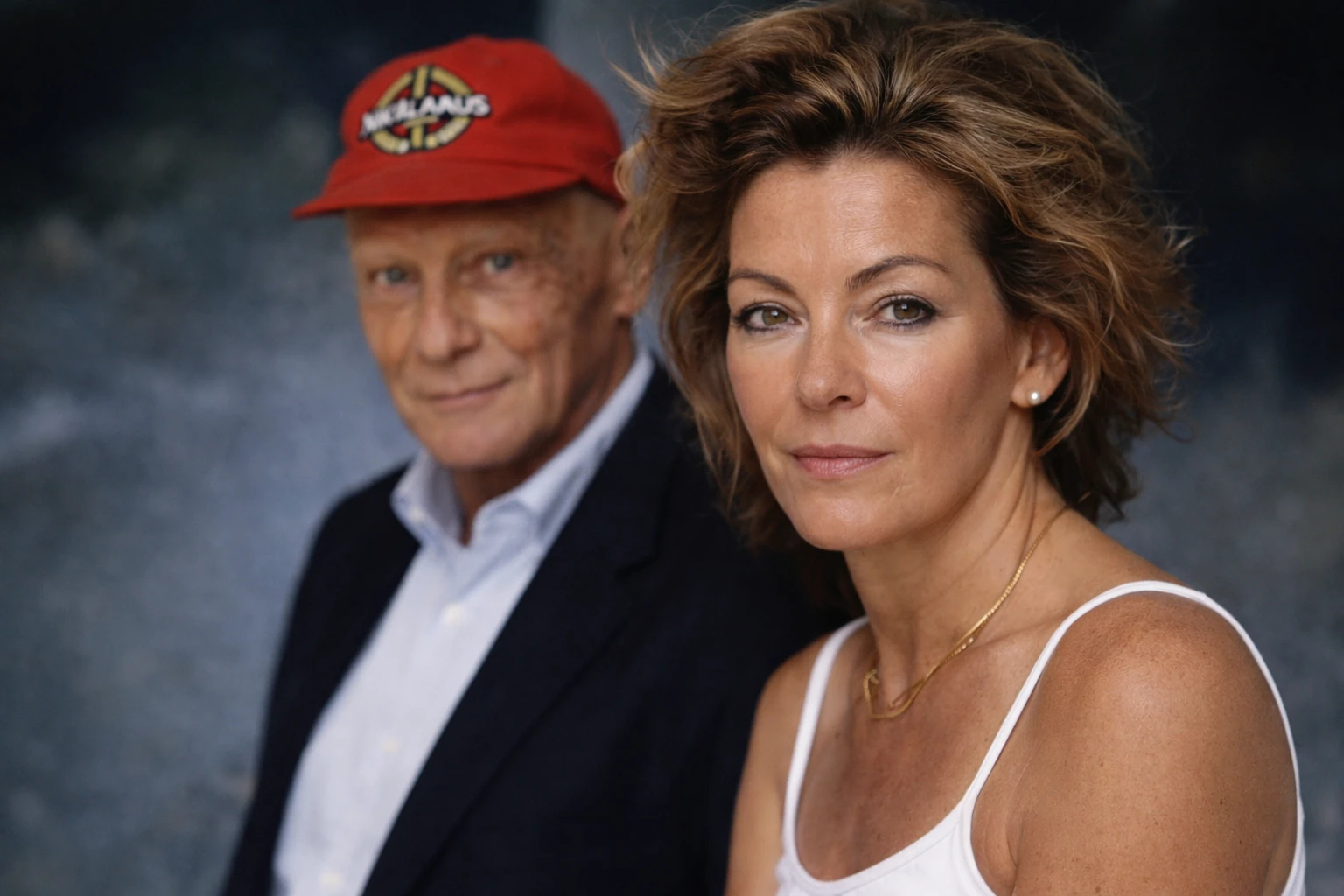
People still search her name, often expecting a neat biography filled with details. What they find instead is a life that resists easy packaging. Marlene Knaus was present during one of the most dramatic eras in Formula 1 history, yet she never turned that proximity into a career or a public persona. That contrast is what makes her story linger. It isn’t just about who she was married to. It’s about how she chose to live when the cameras stopped paying attention.
Early Life and Family Background
Marlene Knaus was born in Austria, though the exact date and place remain uncertain in public records. That lack of clarity is unusual in the age of searchable everything, but it reflects the kind of life she led before fame brushed past her. By all accounts, she grew up in a European setting that valued privacy and restraint, long before she would be associated with one of the most recognizable names in motorsport.
Details about her family are scarce, and that isn’t an accident. Unlike many public figures, Knaus never offered interviews that mapped out her childhood or personal history. What can be inferred is that she came of age in a period when fashion, social culture, and motorsport were beginning to overlap in Europe, especially in cities like Vienna and Munich. That environment likely shaped her early path, even if the specifics remain out of reach.
There’s a tendency to fill in the blanks with assumptions, but a careful look suggests something else. Her early life seems to have been ordinary enough that it didn’t attract attention, yet polished enough that she moved comfortably into high-profile social circles later. That balance often points to a background where presentation mattered, even if fame did not.
A Career That Stayed in the Background
Marlene Knaus is often described as a model, and there’s some visual evidence to support that reputation. Photographs from the 1970s show her at races, social events, and public appearances with a poise that matched the fashion standards of the time. She had a distinct look, one that photographers clearly noticed, and she fit naturally into the glamorous side of Formula 1 culture.
Still, her career never took center stage in the way modern celebrity careers do. She didn’t build a brand around herself, nor did she chase endorsements or media attention. That decision feels almost radical now, but it was consistent with the way she handled public life from the beginning. She appeared where she needed to be, then stepped back.
What’s surprising is how much that choice shaped her legacy. Many people from that era tried to extend their visibility into long-term fame, often with mixed results. Knaus didn’t follow that path, and it left her with a quieter kind of recognition. People remember her presence, not a list of achievements or headlines.
Meeting Niki Lauda
By the mid-1970s, Niki Lauda was becoming one of the most formidable drivers in Formula 1. Born in Vienna in 1949, he had pushed his way into racing despite family resistance, eventually earning a seat with Ferrari. His precision, discipline, and relentless focus made him stand out in a sport that was as dangerous as it was glamorous.
Marlene Knaus entered his life during this rise. Archival photographs place them together at major racing events as early as 1974, suggesting their relationship developed before his first world championship in 1975. Those early appearances show a couple already comfortable with each other, navigating the intensity of the racing world with a kind of shared rhythm.
Their relationship wasn’t built in isolation. It unfolded in front of cameras, reporters, and a global audience that was beginning to treat Formula 1 drivers like international celebrities. That setting added pressure, but it also made their partnership part of the sport’s wider story.
Marriage During a Defining Era
Marlene Knaus and Niki Lauda married in 1976, a year that would define his career forever. That same season, Lauda suffered his near-fatal crash at the Nürburgring, one of the most dangerous circuits in racing history. The accident left him with severe burns and lung damage, and he was given last rites while in a coma.
The story of his recovery has been told many times, often with a focus on his return to racing just six weeks later. What’s less often explored is what that period meant for his family. Knaus was not just a spectator. She was a wife facing the possibility of losing her husband, then watching him return to the same risks that nearly ended his life.
Anyone who knew Lauda would tell you he was driven by a level of determination that bordered on obsession. Living alongside that kind of intensity can be both inspiring and exhausting. Knaus experienced that reality firsthand, during a time when the sport offered little in the way of safety or emotional support for families.
Life as a Mother
Marlene Knaus and Niki Lauda had two sons, Lukas and Mathias, and their upbringing added another dimension to her life. Raising children while being connected to a global sports figure isn’t simple, especially in an era when travel schedules and media attention were constant. Knaus took on much of the responsibility for maintaining stability at home.
Mathias Lauda followed his father into motorsport, building a career in endurance racing and achieving success in the FIA World Endurance Championship. Lukas Lauda chose a different path, working behind the scenes as his brother’s manager. Their careers reflect both continuity and change, carrying the Lauda name into a new generation without replicating Niki’s exact journey.
Family life, by all appearances, remained a priority for Knaus even as public attention shifted elsewhere. She didn’t use her position to build a public identity as a celebrity mother or media figure. Instead, she stayed largely out of view, focusing on her role within the family.
The End of the Marriage
After fifteen years of marriage, Marlene Knaus and Niki Lauda divorced in 1991. The separation marked the end of a long chapter, one that had included some of the highest and lowest moments of Lauda’s career. Public explanations for the divorce exist, but they tend to rely on speculation rather than firmly documented accounts.
The truth is likely more complex than any single narrative suggests. High-pressure careers, constant travel, and the demands of public life can strain even the strongest relationships. Lauda’s later life included new ventures, a second marriage, and continued involvement in Formula 1, all of which reshaped his personal world.
What stands out about Knaus is how she handled the aftermath. She didn’t turn the divorce into a public spectacle. There were no tell-all interviews, no attempts to redefine herself through media exposure. She stepped back, maintaining a level of privacy that remains consistent to this day.
Financial Standing and Lifestyle
Estimating Marlene Knaus’s net worth is difficult, partly because she has never publicized her finances. Most available figures place her wealth between $5 million and $10 million as of 2026, likely influenced by divorce settlements, investments, and family assets. These estimates vary, and none are confirmed through official disclosures.
During her marriage, she lived within the financial orbit of one of Formula 1’s highest-earning drivers. Lauda’s career extended beyond racing into aviation and business ventures, including the founding of Lauda Air. That success would have shaped the financial environment of their family, even if Knaus herself remained outside those ventures.
After the divorce, she appears to have maintained a comfortable but private lifestyle. There is no evidence of major business projects or public investments under her name. That absence fits with the broader pattern of her life, where discretion takes priority over visibility.
Life Away from the Spotlight
In the years since her divorce, Marlene Knaus has remained largely out of public view. Reports occasionally place her in Europe, including Spain, but these claims are not consistently backed by strong sources. What can be said with confidence is that she has avoided the kind of media presence that often follows people connected to major public figures.
That decision has shaped how she is remembered. Instead of a steady stream of interviews or appearances, her image is frozen in a specific era. For many people, she exists as part of the 1970s Formula 1 story, rather than as a continuously visible figure.
There’s a certain discipline in that choice. Staying private requires effort, especially when your name continues to generate interest. Knaus seems to have managed that balance carefully, keeping her personal life separate from public curiosity.
Lesser-Known Aspects of Her Life
Not many people know this, but Marlene Knaus was present during some of the most defining moments in Formula 1 history, even if she rarely spoke about them. Her proximity to those events gives her a unique place in the sport’s narrative, one that isn’t fully captured in official records.
Another detail that stands out is how consistently she avoided the media, even when public interest was at its peak. That level of restraint is unusual, especially in an environment where visibility often leads to opportunity. It suggests a clear sense of boundaries, something that isn’t always easy to maintain.
What’s surprising is how her image continues to circulate decades later, often detached from context. Photographs from the 1970s still appear in articles and galleries, reinforcing her association with that era. It’s a reminder that visual memory can outlast detailed biography.
Frequently Asked Questions
Who is Marlene Knaus?
Marlene Knaus is best known as the first wife of Formula 1 champion Niki Lauda. She became a visible figure during the 1970s racing scene but later chose to live privately. Her connection to Lauda and their shared history keeps her name relevant today.
Was Marlene Knaus involved in Formula 1?
She was not a driver or official participant in the sport, but she was closely connected through her marriage to Niki Lauda. She attended races and was part of the social environment surrounding Formula 1 during its most dramatic years. Her presence made her a recognizable figure within that world.
How many children does Marlene Knaus have?
Marlene Knaus has two sons, Lukas and Mathias Lauda. Mathias pursued a career in racing, while Lukas worked as his manager. Their lives reflect a continued connection to motorsport, even after their parents’ divorce.
Why did Marlene Knaus and Niki Lauda separate?
They divorced in 1991 after a long marriage, though the exact reasons have not been fully detailed in reliable public sources. The pressures of Lauda’s career and lifestyle likely contributed, but much of the story remains private. Knaus chose not to discuss the separation publicly.
Where is Marlene Knaus now?
She appears to live a private life away from media attention. While some reports suggest she resides in Europe, there is no confirmed public record of her current location. Her absence from public life has only added to the curiosity surrounding her.
Conclusion
Marlene Knaus occupies a rare space in modern celebrity history. She was part of a world defined by speed, danger, and global attention, yet she never allowed that world to define her completely. Her story doesn’t follow the usual arc of fame leading to more fame. Instead, it moves in the opposite direction, toward privacy and distance.
The truth is, her life resists easy storytelling. There are gaps in the record, and those gaps matter because they reflect deliberate choices. She didn’t offer herself up for public consumption, even when it would have been easy to do so. That restraint gives her story a different kind of weight.
Looking back, it’s clear that her role in Niki Lauda’s life was significant, even if it wasn’t loudly documented. She was there during moments that shaped his legacy, and she helped build a family that continues to carry his name. That contribution doesn’t need embellishment to be meaningful.
As interest in Formula 1 history continues to grow, Marlene Knaus will likely remain part of the conversation. Not because she sought attention, but because her life intersects with one of the sport’s most compelling stories. And in a time when everything is shared, her decision to stay private feels more striking than ever.
