
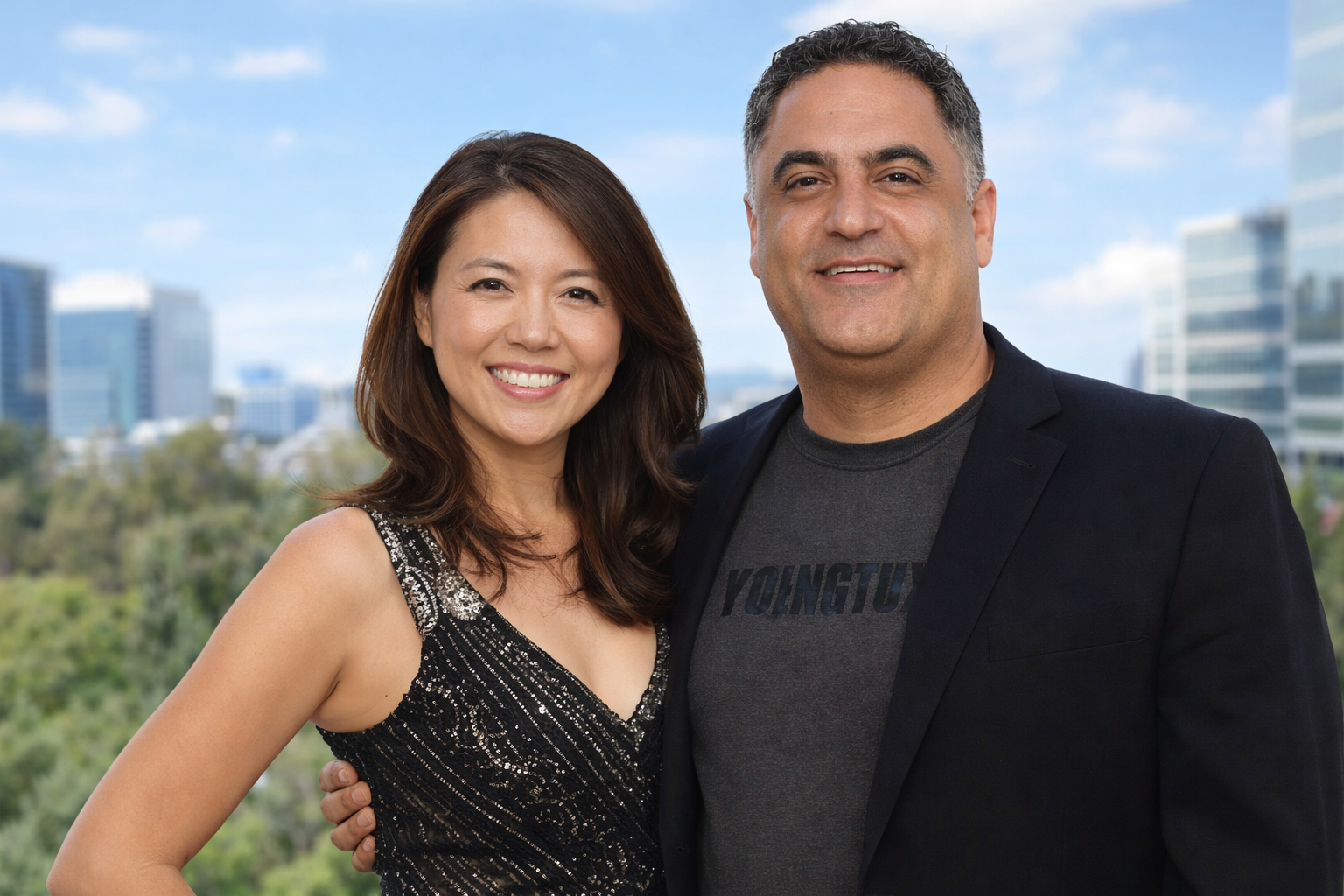
Wendy Lang has never built her life around attention, yet her name continues to surface in public searches with surprising regularity. The curiosity often begins with her connection to political commentator Cenk Uygur, but it rarely ends there. What emerges, on closer inspection, is not the story of a celebrity spouse but of a licensed therapist who has spent decades working quietly with families, children, and individuals navigating emotional and developmental challenges. In an age where visibility often defines relevance, Lang’s career offers a different model—one grounded in private impact rather than public performance.
That contrast—between a high-profile media figure and a clinician whose work depends on discretion—has shaped how Wendy Lang is perceived online. Much of what circulates about her mixes verifiable facts with loosely sourced details, making it difficult to separate substance from assumption. The clearer picture comes from professional records, clinical directories, and her own practice, all of which point to a steady career in mental health. Understanding Lang, then, requires shifting focus away from celebrity framing and toward the work she has actually done.
Early Life and Background
Publicly available information about Wendy Lang’s early life is limited, and that absence is itself telling. Unlike public figures who build careers through media exposure, Lang has maintained a largely private personal history. Details about her birthplace, childhood environment, and family background are not widely documented in reliable primary sources, and many online claims about these aspects appear to originate from secondary or loosely sourced profiles.
That said, what can be reasonably inferred is that her path into mental health work required years of structured education and clinical training. Her professional biography states that she earned a master’s degree from the University of Southern California, a well-regarded institution known for its programs in psychology and counseling. This academic foundation suggests a formal entry into the field rather than an informal or unconventional route.
The lack of detailed early-life documentation does not diminish her story; instead, it highlights the nature of her profession. Therapists are not typically public personalities, and many intentionally keep their personal histories separate from their clinical identities. In Lang’s case, the emphasis has always been on her role as a practitioner rather than her background as a private individual.
Education and Entry Into Therapy
Wendy Lang’s professional trajectory becomes clearer once she enters the academic and clinical sphere. According to her practice profile, she completed her graduate education at the University of Southern California in 2004. That date provides a useful anchor, placing the start of her professional life in the early 2000s, a period when awareness of child and adolescent mental health was expanding but still lacked the visibility it has today.
After completing her degree, Lang moved into clinical work that would eventually lead to private practice. Becoming a Licensed Marriage and Family Therapist (LMFT) in California involves a structured process that includes supervised clinical hours, licensing examinations, and ongoing professional oversight. This is not a casual credential; it reflects years of training and adherence to regulatory standards set by the California Board of Behavioral Sciences.
Her early clinical experience is not extensively documented in public sources, but her later statements indicate that she worked with a broad range of families and individuals. Over time, patterns in her client base appear to have shaped her specialization, particularly in working with children and adolescents facing complex emotional and developmental needs.
Building a Career in Family Therapy
Wendy Lang’s career developed steadily rather than through a single defining breakthrough. Her professional biography states that she has worked with more than 1,000 families over the course of her career, a figure that reflects both longevity and consistency in practice. While such numbers should be understood as self-reported, they align with the timeline suggested by her licensing and years in private practice.
Her work spans a range of issues commonly addressed in family therapy, including anxiety, depression, social challenges, and family dynamics. What distinguishes her approach, however, is a focus on the intersection between emotional health and learning differences. This area often requires a more tailored approach, as it involves not only psychological support but also an understanding of educational environments and developmental patterns.
In Beverly Hills, where her practice is based, Lang has established herself as a clinician serving both children and adults. Her practice model includes individual therapy as well as group sessions, which are designed to address shared experiences among clients. This combination reflects a broader trend in mental health care that emphasizes both personalized treatment and community-based support.
Founding Beverly Hills Child and Family Counseling
One of the most concrete markers of Wendy Lang’s career is her role as the founder and director of Beverly Hills Child and Family Counseling. The clinic serves as the central hub of her professional work and provides insight into her clinical priorities. Rather than positioning herself as a media personality or public intellectual, Lang has built an institution focused on direct client care.
The clinic offers services for children, teenagers, and adults, with an emphasis on emotional regulation, social skills, and family relationships. It also hosts group programs that address specific needs, including parent support groups and social-emotional learning sessions for young people. These offerings suggest a practice designed not only for treatment but also for education and prevention.
What’s striking is the consistency of this model over time. While many professionals in the mental health field expand into publishing, speaking, or media appearances, Lang appears to have remained focused on clinical work. That choice reinforces the idea that her impact is measured less by public recognition and more by the outcomes experienced by her clients.
Specialization in Gifted and Twice-Exceptional Children
A defining aspect of Wendy Lang’s work is her focus on gifted and twice-exceptional children. The term “twice-exceptional,” often abbreviated as 2e, refers to individuals who are both intellectually gifted and affected by learning or developmental challenges. This combination can create complex situations in which strengths and difficulties coexist in ways that are not always immediately recognized.
Lang’s practice materials indicate that her interest in this area developed through her clinical experience. As she worked with more families, she identified patterns among children who did not fit neatly into standard educational or psychological categories. This led her to study the needs of gifted and 2e individuals more closely and to incorporate that focus into her work.
Her clinic offers programs aligned with this specialization, including parent groups based on models developed by organizations like Supporting Emotional Needs of the Gifted (SENG). These programs address issues such as perfectionism, anxiety, social challenges, and misdiagnosis. By targeting both children and their parents, Lang’s approach acknowledges that family dynamics play a central role in supporting young people with complex needs.
Personal Life and Marriage to Cenk Uygur
Wendy Lang’s personal life enters public awareness primarily through her marriage to Cenk Uygur, a political commentator and media figure known for founding The Young Turks (TYT). Their relationship has been referenced across multiple secondary sources, and it is widely accepted that they are married, though detailed documentation of their private life remains limited.
Uygur’s public profile contrasts sharply with Lang’s reserved presence. As a media personality, he is known for his outspoken commentary and active engagement with audiences. Lang, by comparison, has maintained a low profile, rarely appearing in interviews or public discussions related to her personal life.
Information about their family, including children and household dynamics, is often mentioned in online biographies but not consistently supported by primary sources. As a result, these details should be approached with caution. What can be said with confidence is that Lang has chosen to keep her personal life largely separate from her professional identity, even as public curiosity continues to grow.
Public Image and Media Attention
Wendy Lang’s public image is shaped as much by absence as by presence. She does not maintain a prominent social media profile, nor does she frequently appear in press coverage or public events. This lack of visibility has contributed to a certain mystique, especially in contrast to the highly visible career of her husband.
The internet has responded to this gap with a proliferation of biographical pages that attempt to fill in missing details. Many of these pages repeat similar narratives, often without clear sourcing. This creates an illusion of consensus that can be misleading, as repetition does not necessarily equal verification.
For readers, this means that understanding Lang requires a degree of skepticism. The most reliable information comes from her professional listings and practice materials, while more personal details often remain speculative. This dynamic reflects a broader challenge in digital media, where the demand for information can outpace the availability of verified facts.
Career Impact and Professional Standing
Within the field of marriage and family therapy, Wendy Lang represents a category of professionals whose work is deeply influential on an individual level but less visible on a public stage. Her impact is measured in client relationships, therapeutic outcomes, and the ongoing operation of her practice rather than in awards or media recognition.
Her specialization in gifted and twice-exceptional populations places her within a niche area of mental health care that continues to gain attention. As awareness of these issues grows, clinicians with experience in this field are likely to become increasingly important. Lang’s long-term focus on this area suggests that she has been working ahead of broader trends.
At the same time, her career underscores the value of consistency. Rather than shifting focus or pursuing high-profile opportunities, she has maintained a steady commitment to her clinical work. This approach may not generate headlines, but it contributes to a sustained and meaningful professional presence.
Estimated Net Worth and Financial Standing
Reliable information about Wendy Lang’s net worth is not publicly available. Estimates that appear online are often speculative and based on assumptions about private practice income or her connection to a public figure. Without verified financial disclosures, any specific figure should be treated as an estimate rather than a confirmed fact.
That said, as a licensed therapist operating a private practice in Beverly Hills, Lang likely earns income through client sessions, group programs, and related services. Private practice earnings can vary widely depending on factors such as client volume, specialization, and pricing structures. Her role as a clinic founder suggests a level of professional stability, but it does not provide a clear basis for precise financial estimates.
Where Wendy Lang Is Now
As of the most recent available information, Wendy Lang continues to work as a licensed marriage and family therapist in Beverly Hills. Her practice remains active, offering both individual therapy and group programs for children, teens, and families. There is no indication that she has shifted away from clinical work or moved into a more public-facing role.
Her continued presence in therapy directories and clinic listings suggests that she remains engaged with her clients and her field. While her public profile has grown due to increased online searches, her professional focus appears unchanged. She continues to operate within the same framework that has defined her career for years.
Frequently Asked Questions
Who is Wendy Lang?
Wendy Lang is a licensed marriage and family therapist based in Beverly Hills, California. She is known for her work with children, families, and individuals dealing with emotional and developmental challenges. She is also recognized as the founder of Beverly Hills Child and Family Counseling.
What is Wendy Lang known for?
Professionally, she is known for her specialization in working with gifted and twice-exceptional children. Publicly, she is often searched because of her reported marriage to media personality Cenk Uygur.
Is Wendy Lang married?
Multiple sources indicate that Wendy Lang is married to Cenk Uygur. However, detailed information about their personal life is limited and not extensively documented in primary sources.
What does Wendy Lang do for a living?
She works as a Licensed Marriage and Family Therapist, providing therapy for children, adolescents, and adults. Her practice includes both individual sessions and group programs focused on emotional and social development.
Where does Wendy Lang live and work?
She is based in Beverly Hills, California, where she runs her private practice. Her clinic serves clients in the local area and offers a range of therapeutic services.
What is Wendy Lang’s net worth?
There is no confirmed public figure for her net worth. Any estimates found online should be treated as speculative due to a lack of verified financial information.
Conclusion
Wendy Lang’s story is not one of public spectacle but of steady, sustained professional work. In a media environment that often rewards visibility above all else, her career stands out for its focus on private impact. She has built a practice centered on helping families navigate complex emotional and developmental challenges, and she has done so without relying on public attention.
Her connection to a well-known media figure has brought her name into wider circulation, but it does not define her professional identity. The available evidence points to a therapist who has spent years developing expertise in a specialized area of mental health, particularly in supporting gifted and twice-exceptional children.
What remains most striking is the balance she has maintained between public curiosity and personal privacy. She has allowed her work to speak for itself, even as others attempt to construct a more expansive narrative around her life. That choice reflects a commitment to her profession and to the principles that guide it.
As interest in her name continues, the most accurate way to understand Wendy Lang is through the work she does and the clients she serves. It is a quieter kind of influence, but one that carries its own lasting significance.
