
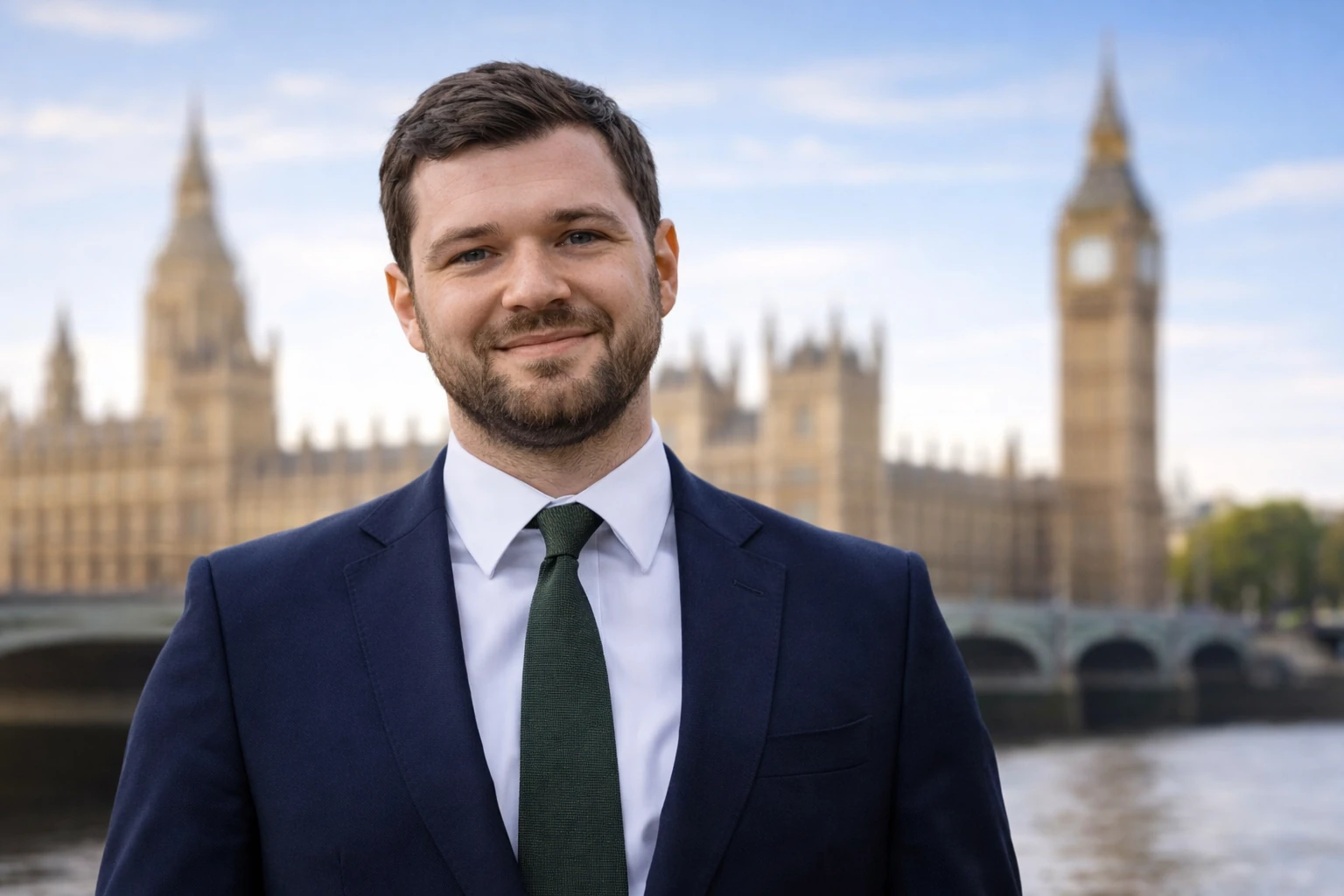
He is a familiar face in British political journalism, often appearing outside Westminster buildings or narrating the day’s most urgent developments. Yet for all the public visibility that comes with the job, Henry Zeffman remains an unusually private figure. That contrast explains why so many people search for “henry zeffman partner.” The curiosity is understandable. The answer, however, is more restrained than many expect.
Zeffman has built a career in one of the most scrutinized areas of public life—politics—while keeping his own personal life largely out of view. That balance is not accidental. It reflects both a professional culture in political reporting and a personal decision to separate the work from the rest of life. Understanding who he is, and what is known about him, requires stepping back from speculation and focusing on the record that can actually be confirmed.
Early Life and Family Background
Henry Zeffman was born in the United Kingdom into a family with strong cultural and intellectual interests. While detailed biographical accounts of his early childhood are limited in the public domain, there are credible references to his family that provide some context. His brother, Oliver Zeffman, is a conductor who has spoken publicly about his work in music, which offers a rare glimpse into the family environment.
That connection suggests a household where creativity and discipline were valued. Music and the arts require a certain kind of rigor, and it is not unusual for siblings raised in that environment to develop parallel strengths in different fields. Henry’s path led him into journalism rather than performance, but the intellectual curiosity and structured thinking that underpin both careers appear to be shared traits.
What stands out is how little of his family life has been turned into public narrative. Unlike many public figures whose early years are widely documented, Zeffman has not been the subject of extensive personal profiles. That absence is not necessarily unusual for journalists, who are trained to observe rather than become the subject of attention themselves.
Education and Early Ambitions
Zeffman studied at the University of Oxford, attending Brasenose College. He read Philosophy, Politics and Economics, a course that has produced many figures in British public life. PPE is known for blending analytical reasoning with political awareness, and it has long been a training ground for those interested in government, media, and policy.
During his time at Oxford, Zeffman was not only academically engaged but also active in student life. He served as president of the Junior Common Room, a role that involves representing student interests and managing aspects of college governance. That position points to an early willingness to engage with leadership and institutional structures.
He was also an organ scholar, which adds another layer to his profile. The discipline required for music at that level is significant, and it suggests a capacity for focus that would later serve him in journalism. Balancing academic work, leadership responsibilities, and musical commitments is not easy, and it hints at the work ethic that would define his early career.
Even at this stage, there were signs of his future direction. He won the Anthony Howard Award for Young Journalists, an early recognition that placed him on the radar within the profession. Awards like that are not handed out lightly, and they often mark the transition from student ambition to professional momentum.
Entering Journalism
Zeffman moved into journalism at a time when the industry was already undergoing rapid change. Traditional print outlets were adapting to digital platforms, and political reporting was becoming more immediate and more visible. He joined The Times, one of the UK’s most established newspapers, and quickly began to build a reputation.
His early roles included reporting assignments that required both accuracy and speed. Political journalism demands a particular skill set. It is not just about writing clearly but also about understanding complex policy issues, navigating sources, and working under constant time pressure. Zeffman appeared to adapt quickly to those demands.
He later worked as a Washington correspondent, which expanded his experience beyond UK politics. Covering American politics introduces a different set of dynamics, including a more polarized media environment and a different relationship between journalists and public officials. That international experience likely shaped his perspective and broadened his reporting approach.
By the time he returned to the UK, he had established himself as a serious political reporter. His work was not defined by flamboyance or personal branding. Instead, it was characterized by careful reporting and a focus on substance, which remains a defining feature of his public persona.
Career Breakthrough and Recognition
Zeffman’s rise within The Times was steady rather than sudden. He became associate political editor and later chief political correspondent, roles that placed him at the center of Westminster reporting. These positions involve covering major political events, analyzing policy decisions, and maintaining relationships with key sources.
Recognition followed. In 2019, he was named Young Journalist of the Year at the National Press Awards, an honor that highlighted his growing influence within the field. Awards of this kind are judged by peers and industry experts, which gives them weight beyond simple popularity.
What made his work stand out was not just access to information but the clarity with which he presented it. Political reporting can easily become dense or inaccessible, especially when dealing with legislation or procedural matters. Zeffman developed a style that translated complex developments into understandable narratives without oversimplifying them.
This period marked the point at which he became widely known among readers of political news. His bylines appeared regularly on major stories, and his analysis began to shape public understanding of key issues. It was a transition from rising talent to established voice.
Move to the BBC
In 2023, Zeffman made a significant career move by joining the BBC as chief political correspondent. The shift from a newspaper to a public broadcaster changes both the audience and the expectations placed on a journalist. The BBC’s reach is broader, and its role in public life carries a different set of responsibilities.
The move placed Zeffman in a more visible position. Television and radio appearances mean that journalists become recognizable in a way that print reporters often are not. Viewers and listeners begin to associate a face and voice with the reporting, which can increase public interest in the person behind the work.
At the BBC, his role involves covering major political developments, providing analysis, and contributing to live broadcasts. The pace is relentless, and the scrutiny is constant. Every statement is subject to public and editorial review, which requires a high level of precision and composure.
Despite the increased visibility, Zeffman has maintained the same professional tone that characterized his earlier work. He does not present himself as a personality first and journalist second. Instead, he remains focused on the reporting, which may explain why his personal life has not become part of his public identity.
Public Image and Professional Style
Zeffman’s public image is shaped by his work rather than by any deliberate effort to cultivate a personal brand. He is not known for dramatic commentary or attention-seeking behavior. Instead, he presents information in a measured, straightforward way, which aligns with the expectations of political journalism.
This approach has advantages. It builds trust with audiences who are looking for reliable information rather than opinion-driven content. It also allows him to move between different formats, from written analysis to live broadcasting, without losing credibility.
But there is a trade-off. Journalists who keep a low personal profile often become subjects of curiosity precisely because they reveal so little. The absence of personal detail can make even basic questions—such as relationship status—feel more pressing to an audience that has grown used to knowing everything about public figures.
Zeffman appears comfortable with that balance. He does not actively share personal information, and he does not appear to respond to speculation. That stance reinforces the boundary between his professional role and his private life.
Relationship Status and the Question of a Partner
The search for “henry zeffman partner” reflects a common pattern in the digital age. When a journalist becomes visible, audiences often look for personal details that go beyond their work. In Zeffman’s case, that curiosity has not been matched by confirmed information.
There is no widely verified public record that identifies a spouse or partner. He has not made public statements about his relationship status, and reliable biographies do not provide details on this aspect of his life. Some online sources make claims, but they often lack clear evidence and sometimes contradict each other.
That does not mean that Zeffman does not have a partner. It simply means that, if he does, he has chosen not to make that information public. This distinction is important. Privacy is not the same as secrecy, and the absence of information should not be treated as an invitation to speculate.
For readers, the most accurate position is to acknowledge that his relationship status is not publicly confirmed. Any claim beyond that requires stronger sourcing than what is currently available.
Personal Life and Interests
While his romantic life remains private, there are hints of broader personal interests. His background as an organ scholar suggests a lasting connection to music, even if it is no longer central to his public identity. Musical training often leaves a lasting imprint, shaping discipline and attention to detail.
His family connections also point to a life that extends beyond journalism. Having a sibling in the arts creates a different kind of perspective, one that balances the immediacy of political reporting with the longer rhythms of cultural work.
What’s striking is how little of this is foregrounded in his public presence. Many journalists share personal anecdotes or interests as part of their professional identity. Zeffman does not appear to do so. His focus remains firmly on the news, which reinforces the sense of separation between his work and his private life.
Net Worth and Financial Standing
There is no publicly confirmed figure for Henry Zeffman’s net worth. Estimates that appear online should be treated with caution, as they are often based on assumptions rather than verified data. Journalists, even those in senior roles, do not typically have publicly disclosed earnings in the way that corporate executives or entertainers might.
What can be said is that positions such as chief political correspondent at a major organization like the BBC are well-compensated within the context of journalism. They also come with stability and professional prestige, which contribute to overall financial standing.
That said, journalism is not generally a field associated with extreme wealth. It is a profession driven more by influence and public impact than by financial gain. Zeffman’s career reflects that reality, with his reputation built on reporting rather than commercial ventures.
Influence and Standing in British Journalism
Zeffman occupies a respected position within British political journalism. His career trajectory, from early recognition to senior roles at major outlets, reflects both talent and consistency. He is part of a generation of journalists who have adapted to a rapidly changing media environment while maintaining traditional reporting standards.
His work contributes to public understanding of political processes, which is a central function of journalism in a democratic society. By covering events accurately and clearly, he helps shape the way audiences interpret political developments.
While he may not be a household name in the way that some broadcasters are, his influence within the field is significant. Among colleagues and informed readers, he is recognized as a serious and reliable reporter.
Where He Is Now
As of recent reporting, Henry Zeffman continues to serve as the BBC’s chief political correspondent. His work involves covering major political events, analyzing policy decisions, and appearing across various BBC platforms.
The role keeps him at the center of national conversations. Whether reporting on elections, government decisions, or political crises, he remains a key voice in explaining what is happening and why it matters.
Despite the demands of the job, he has maintained the same approach that defined his earlier career. He focuses on the story, not on himself. That consistency has helped him navigate the increased visibility that comes with working at the BBC.
Frequently Asked Questions
Is Henry Zeffman married?
There is no publicly confirmed information that states Henry Zeffman is married. While some online sources make claims, they do not provide verifiable evidence. The most accurate answer is that his marital status has not been publicly confirmed.
Who is Henry Zeffman’s partner?
No reliable source has identified a partner by name. If he is in a relationship, he has chosen to keep it private. Readers should treat unverified claims with caution.
What is Henry Zeffman known for?
He is known as a British political journalist who has worked for The Times and the BBC. His reporting focuses on UK politics, and he is currently a chief political correspondent at the BBC.
Where did Henry Zeffman study?
He studied Philosophy, Politics and Economics at Brasenose College, Oxford. During his time there, he was also involved in student leadership and music.
Does Henry Zeffman share details about his personal life?
No, he maintains a clear boundary between his professional work and his personal life. His public presence is focused on journalism rather than private matters.
What awards has Henry Zeffman won?
He won the Young Journalist of the Year award at the National Press Awards in 2019. He also received the Anthony Howard Award for Young Journalists earlier in his career.
Conclusion
Henry Zeffman’s story is, in many ways, a reminder of what journalism used to look like before personal branding became the norm. He has built a career based on reporting, analysis, and professional credibility, rather than on cultivating a public persona.
The curiosity about his partner reflects a broader shift in how audiences relate to public figures. People expect access, even to aspects of life that were once considered private. Zeffman’s approach suggests that it is still possible to draw a line.
That line does not make him distant. It makes him focused. His work speaks clearly enough on its own, without the need for additional narrative about his personal life.
And that may be the most revealing detail of all. In a media environment that often rewards exposure, Henry Zeffman has chosen restraint. It is a choice that defines not only how much we know about him, but also how he does his job.
