
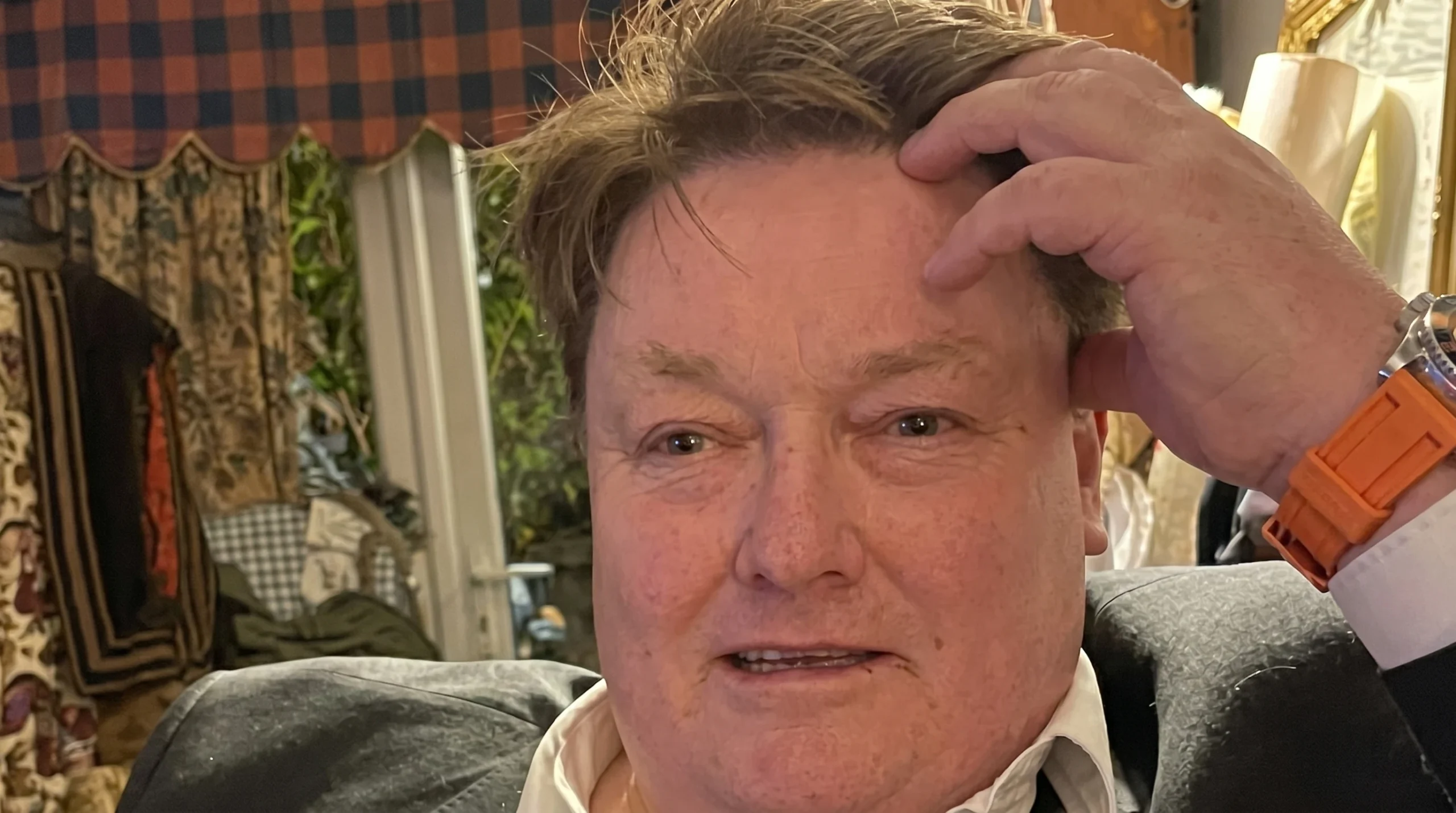
Adrian Higham became familiar to television viewers not through celebrity polish, but through the easy confidence of a man who knew the value of old things before anyone else in the room had made up their mind. On The Bidding Room, the BBC daytime antiques series fronted by Nigel Havers, Higham stood out as the dealer with a broad grin, a strong eye, and the kind of lived-in authority that comes from years spent buying, selling, hauling, restoring, and arguing over objects. That visibility also brought a different kind of attention. In recent years, searches for “adrian higham illness” have grown as viewers tried to understand his health, his absence from television, his weight-loss story, and his current life away from the regular rhythm of BBC appearances.
The honest answer is not a neat medical headline. Publicly available information links Higham to a dramatic past weight struggle, a fitness turnaround through cycling, a serious back injury that reportedly kept him away from one series of The Bidding Room, and mental strain connected to a long neighbour dispute. None of that should be stretched into a single confirmed diagnosis. Higham’s story is better understood as the life of a working antiques dealer whose public image has been shaped by television, personal hardship, and a long career built far from the usual celebrity path.
Who Is Adrian Higham?
Adrian Higham, widely known as Adi Higham, is a British antiques dealer and television personality best known for appearing on BBC One’s The Bidding Room. The programme brings members of the public face to face with dealers who bid against one another for antiques, collectables, curiosities, and decorative pieces. Higham’s appeal on the show came from his warmth as much as his trade knowledge. He looked like someone who had spent more time in barns, fairs, warehouses, and old houses than in green rooms.
His professional identity sits firmly in the world of antiques and brocante, the French term often used for vintage, decorative, and second-hand pieces with character. Higham has been associated with Hoof Brocante, a business on the Kent and East Sussex border connected with French antiques, decorative interiors, vintage furniture, and unusual objects. That background gave him a natural fit for a show built around instinct and negotiation. He was not playing the part of a dealer; he already was one.
Higham’s television profile introduced him to viewers who may not follow the antiques trade closely. For many, he became one of the memorable faces of The Bidding Room, the kind of contributor who seemed to bring his whole personality into a deal. That is why questions about his health gained traction. Viewers who feel they know a television regular often notice when the pattern changes.
Early Life and Family Background
Exact details about Adrian Higham’s early life are limited in the public record, and that should be stated clearly. Unlike actors, politicians, or sports figures with heavily documented biographies, antiques dealers often become known after years of private work. Higham’s public story begins less with childhood records and more with the working culture of buying and selling. His path appears to have been shaped by hands-on experience rather than a carefully staged media rise.
Higham has been linked in public profiles to the south of England, including Kent and East Sussex, areas with a strong antiques and interiors culture. Rural fairs, market towns, reclamation yards, and house clearances all form part of that ecosystem. A dealer from that world learns by looking, touching, comparing, and making mistakes. That kind of education is rarely formal, but it can be demanding.
What can be said with confidence is that Higham’s public personality reflects a trade built on social skill. Antiques dealing is not only about knowing what something is worth. It is also about reading people, understanding taste, sensing demand, and trusting judgment under pressure. Those qualities later made him a strong fit for television.
Building a Career in Antiques
Higham’s career belongs to the practical side of the antiques business. Dealers in his field often spend years moving through fairs, auctions, private sales, clearance work, and continental buying trips before becoming known to a wider audience. The work is physically demanding and financially unpredictable. A dealer may spend long hours on the road, invest heavily in stock, and wait months before the right buyer appears.
The brocante style associated with Higham is less about museum pieces and more about objects that carry atmosphere. French furniture, decorative signs, architectural fragments, worn textiles, garden pieces, and unusual household objects can all belong in that world. Buyers are not always looking for pristine condition. They often want age, surface, patina, and a story.
That taste helped shape Higham’s screen presence. On The Bidding Room, he did not need to sound like a lecturer to show knowledge. He could respond to an object as a trader, asking whether it had charm, whether it would sell, and whether the price left enough room for risk. That gave his appearances a grounded quality.
The Bidding Room Breakthrough
The Bidding Room gave Adrian Higham the kind of platform many dealers never seek but can benefit from enormously. The BBC series, launched in 2020, turned the antiques negotiation process into accessible daytime television. Members of the public brought in objects, received an expert valuation, and then entered a room of dealers who could make offers. The format worked because it made the tension of a private deal visible.
Higham’s role was not simply to bid. He had to explain taste, risk, and instinct in a way viewers could follow. He brought energy to the room, sometimes playful and sometimes shrewd, but rarely cold. That mix made him a recognisable figure among fans of the show. He seemed less like a television creation than a working dealer who had wandered into a studio and decided to enjoy himself.
Television also changes the way audiences relate to a person’s private life. A dealer who once dealt mainly with customers and trade contacts becomes someone viewers search for online. They want to know about family, age, money, business, and health. In Higham’s case, that curiosity sharpened around one phrase: “adrian higham illness.”
Adrian Higham Illness: What Is Publicly Known
The most responsible way to answer questions about Adrian Higham’s illness is to separate confirmed public information from online assumption. Higham has been publicly linked to serious weight-related health concerns in the past. Reports have described him reaching 36 stone before making major lifestyle changes through cycling and fitness work. Those accounts are central to why many readers associate his name with health.
He has also been reported to have suffered a serious back injury. Public coverage has stated that this injury led him to miss one series of The Bidding Room and involved a long hospital stay. The details of the injury, including its cause, treatment, and long-term effect, have not been fully laid out in reliable public sources. That makes caution necessary.
There is also a mental health dimension to the public record. Higham has spoken through media coverage about the emotional impact of a prolonged neighbour dispute and legal process. He described the experience as damaging to his wellbeing and career. That is different from a formal public diagnosis, and it should be treated with care.
Weight, Fitness, and a Public Health Turnaround
The clearest health-related chapter in Higham’s public story concerns his weight. Public accounts have described him as once weighing 36 stone, a level that would carry serious health risks for most adults. Reports have also linked his health turnaround to cycling and to the 2017 Prudential RideLondon Fixing Challenge. That event became part of his wider public identity before The Bidding Room made him familiar to a larger television audience.
The weight-loss story matters because it is often misunderstood. Weight change in a public figure can lead to lazy speculation about illness, surgery, or hidden crisis. In Higham’s case, the better-established story is one of deliberate intervention through fitness, support, and lifestyle change. That does not mean every private medical detail is known, but it gives a clear context.
Cycling is a demanding route back to health, especially for someone starting from a high body weight. Training for a long-distance event requires stamina, discipline, and repeated discomfort. Higham’s involvement in that world suggested a willingness to confront his health publicly and physically. It also made him more than a television antiques dealer; it showed a man prepared to fight for his own recovery.
The Reported Back Injury
The reported back injury is one of the main reasons searches about Adrian Higham’s illness continue. Back problems can be life-changing, especially for people whose work involves travel, lifting, standing, and long days around furniture and stock. An antiques dealer’s body is part of the business. Loading vans, moving objects, and walking around fairs can take a toll over time.
Public reports have said Higham missed a series of The Bidding Room because of a serious back injury. They have also referred to an extended period in hospital. Without a fuller public medical account, it would be wrong to name a condition or imply permanent incapacity. What can be said is that the injury was serious enough to be reported as affecting his television work.
That matters for how viewers interpret absence. Television audiences often assume that if a regular face disappears, there must be one dramatic reason. Sometimes there is; often there are several. In Higham’s case, health appears to be part of the story, but not the only part.
Mental Strain and the Neighbour Dispute
In 2025, Higham was the subject of media coverage about a long-running dispute involving neighbours and legal proceedings. Reports said he had faced an interim stalking order during a difficult period and that the order was later withdrawn. Higham described the ordeal as deeply harmful to his reputation, career, and mental health. The public nature of the story placed a private conflict under a harsh spotlight.
This part of Higham’s life requires careful reporting. Legal disputes involve different accounts, and public articles often capture only part of a longer history. Higham’s own comments made clear that he felt the process had caused serious personal damage. Police, in reported responses, defended the need to investigate complaints and address antisocial behaviour.
The human point is easier to understand than the legal detail. A public-facing person who becomes caught in a neighbour dispute can suffer damage even before a final resolution. Reputations are fragile, especially for people who depend on trust, visibility, and personal warmth. Higham’s account of mental strain should be taken seriously without turning it into a diagnosis that he has not publicly claimed.
Marriage, Partner, and Private Life
Adrian Higham has often been publicly associated with Tara Franklin, who has been described in different sources as his partner and business companion. They have been linked with Hoof Brocante and the antiques world around Kent and East Sussex. Some online profiles use stronger language about their relationship status, but public information is not always consistent. A careful biography should avoid overstating what is not clearly confirmed.
Higham’s private life has never been the main product he sells to the public. Unlike reality stars whose personal relationships drive their fame, he became known through expertise and personality. Viewers may be curious about his home life, but the available record gives only a limited view. That privacy is not a gap to be filled with invention.
What does come through is that his life and work appear closely linked. In the antiques trade, homes, shops, yards, and storage spaces can blur together. A dealer’s partner may also be part of the practical machinery of buying, displaying, selling, and managing stock. Higham’s world seems to fit that pattern.
Business Ventures and Income Sources
Higham’s income appears to come primarily from antiques dealing, business activity connected with brocante and interiors, and his television work. The antiques trade can produce strong returns, but it is rarely predictable. Dealers make money through buying well, selling at the right moment, understanding trends, and building a customer base. A good eye matters, but cash flow matters too.
Many websites publish celebrity-style net worth figures for Higham, but those numbers should be treated as estimates rather than confirmed facts. There is no widely verified public financial filing that neatly establishes his personal wealth for general readers. His assets may include business stock, property interests, or company value, but those are not the same as cash income. Responsible coverage should avoid presenting speculative net worth as fact.
Television can add visibility and earning potential, though daytime factual programming does not usually create the same wealth as major entertainment stardom. For someone like Higham, the greater value may be recognition. A familiar face from BBC television can attract customers, press attention, and invitations. That visibility can help a dealer’s business, but it can also make private difficulty harder to manage.
Public Image and Why Viewers Connected With Him
Higham’s public image rests on an appealing contradiction. He can look larger than life, yet he comes across as approachable. He has the confidence of a trader who has handled thousands of objects, but he does not appear polished into blandness. That kind of personality works well on antiques television, where viewers want expertise with a human edge.
His health story may have deepened that connection. Many viewers understand weight struggles, pain, recovery, and the fear of losing work through illness or injury. Higham’s reported history makes him relatable in a way that has little to do with celebrity glamour. He appears as someone who has had to push through real physical and emotional difficulty.
That also explains why careless speculation can feel unfair. The public may be interested in his health, but interest does not erase boundaries. Higham’s weight loss, back injury, and mental strain are part of the public story only to the extent that they have been reported or discussed. The rest remains private.
Controversy and Career Pressure
The neighbour dispute placed Higham under a different kind of scrutiny from anything he faced on antiques television. A legal row can be especially damaging for someone whose public appeal depends on trust and good humour. Even if an order is withdrawn or a case shifts, the headlines can linger. Search results often preserve the most painful chapter of a person’s life long after the facts have moved on.
Higham has said the ordeal affected his work and reputation. Reports also stated that the BBC denied a claimed link between the dispute and his role on The Bidding Room. That difference should be reflected fairly. It is possible for Higham to feel personally and professionally damaged while another organisation disputes a direct employment connection.
The truth is, public image can be harmed without a clean paper trail. A television contributor does not need to be formally dismissed to feel opportunities narrowing. Producers, audiences, businesses, and journalists all react to headlines. For a working dealer, the effect can be personal as much as professional.
Where Adrian Higham Is Now
Adrian Higham’s current public identity remains tied to antiques, brocante, and the television recognition he gained from The Bidding Room. He has not become a conventional celebrity, and that may be part of his appeal. He is still best understood as a dealer first and a television figure second. The fame came from the trade, not the other way round.
The health question around him remains unresolved only because the internet often demands a simpler answer than the facts allow. There is no confirmed public evidence of one named illness that defines his current life. There are, instead, several documented or reported challenges: major past weight concerns, a serious back injury, and emotional pressure from a public dispute. That is enough to explain the search interest without inventing more.
For readers who came looking for a dramatic revelation, the more truthful story may feel quieter. Higham appears to be a man shaped by work, risk, recovery, and public misunderstanding. His appeal lies in the fact that he does not fit the polished pattern of modern television personalities. He feels like someone with a past because he has one.
Frequently Asked Questions
What illness does Adrian Higham have?
There is no verified public diagnosis of one specific illness that Adrian Higham has disclosed as his defining health condition. Public reports connect him to past severe weight-related health concerns, a serious back injury, and mental strain linked to a legal dispute. Those are real health-related issues, but they should not be collapsed into one unconfirmed illness.
The phrase “adrian higham illness” is mostly a search phrase created by public curiosity. Viewers noticed changes in his television presence and read scattered reports about his health. The most accurate answer is that Higham has faced health challenges, but his private medical details remain private.
Did Adrian Higham lose a lot of weight?
Yes, public accounts have described Higham as once weighing 36 stone before making major lifestyle changes. His health turnaround has been linked to cycling and the 2017 Prudential RideLondon Fixing Challenge. That story is one of the clearest health-related parts of his public biography.
It is important not to treat weight loss as proof of hidden illness. In Higham’s case, the better-supported account is that he worked toward improved fitness through a structured challenge. Weight, health, and recovery are personal subjects, and his story should be handled without mockery or exaggeration.
Why was Adrian Higham absent from The Bidding Room?
Reports have stated that Adrian Higham missed one series of The Bidding Room because of a serious back injury. Other coverage has discussed his belief that a neighbour dispute and related legal process affected his television career. The BBC reportedly denied a direct link between that dispute and his role on the programme.
That means there is no single simple answer for every period of absence or reduced visibility. Health appears to explain part of the story, especially the reported back injury. Career decisions, production choices, and public controversy may also have shaped what viewers saw.
Is Adrian Higham married?
Adrian Higham has often been publicly linked with Tara Franklin, who has been described in sources as his partner and business associate. Some online profiles use different wording about their relationship, so it is best not to overstate the formal status unless Higham has clearly confirmed it. What is clear is that she has been connected to his antiques and brocante world.
Higham has kept much of his private life outside the centre of his public image. He is not someone whose fame was built on family exposure or relationship drama. For that reason, careful profiles should focus on confirmed personal context rather than speculation.
What is Adrian Higham’s net worth?
There is no reliable public figure for Adrian Higham’s exact net worth. Some websites publish estimates, but these should be treated as unverified. His income likely comes from antiques dealing, business activity, and television appearances.
Antiques wealth can also be hard to measure from the outside. Stock, property, reputation, and business value do not always translate into simple personal wealth. Any exact figure presented without strong sourcing should be viewed cautiously.
What business is Adrian Higham known for?
Higham is associated with Hoof Brocante, an antiques and decorative interiors business linked to the Kent and East Sussex area. The business reflects his interest in French brocante, vintage pieces, furniture, and objects with age and character. That trade background helped make him a natural presence on The Bidding Room.
His business life matters because it shows that television was an extension of his existing expertise. He was not simply cast to perform as a dealer. He came from a working trade where knowledge is tested through buying, selling, and taking financial risks.
Is Adrian Higham still active?
Adrian Higham is still publicly known as an antiques dealer and television personality, though his regular visibility has changed. Public reports in recent years have focused as much on his health and legal difficulties as on new television work. That has made his current status a frequent search topic.
The most grounded view is that Higham remains connected to the antiques world while living with the aftereffects of a difficult few years. His public story has not ended, but it has become more complicated. For many viewers, that complexity is part of why they still search for him.
Conclusion
Adrian Higham’s story is not simply a story about illness. It is the story of a working antiques dealer who became a familiar television face, then found parts of his private hardship pulled into public view. His weight-loss journey, reported back injury, and mental strain all belong to the record, but none should be inflated into a diagnosis the public cannot verify.
What makes Higham interesting is the same thing that made him watchable on The Bidding Room. He carries the marks of a real working life. He knows objects not as props, but as stock, risk, memory, and livelihood. That kind of background gives his public image a texture that polished celebrity profiles often lack.
The search for “adrian higham illness” says as much about viewers as it does about Higham. People want to know whether someone they recognised is all right, why he disappeared from familiar routines, and what happened behind the scenes. The fair answer is that he has faced serious challenges, but he should not be reduced to them.
For now, Adrian Higham remains a figure best understood through both resilience and restraint. He has shared enough of his struggles for the public to see that life has not been easy, but not enough for strangers to claim ownership of his medical story. That boundary is not a weakness in the biography. It is part of the truth.
