
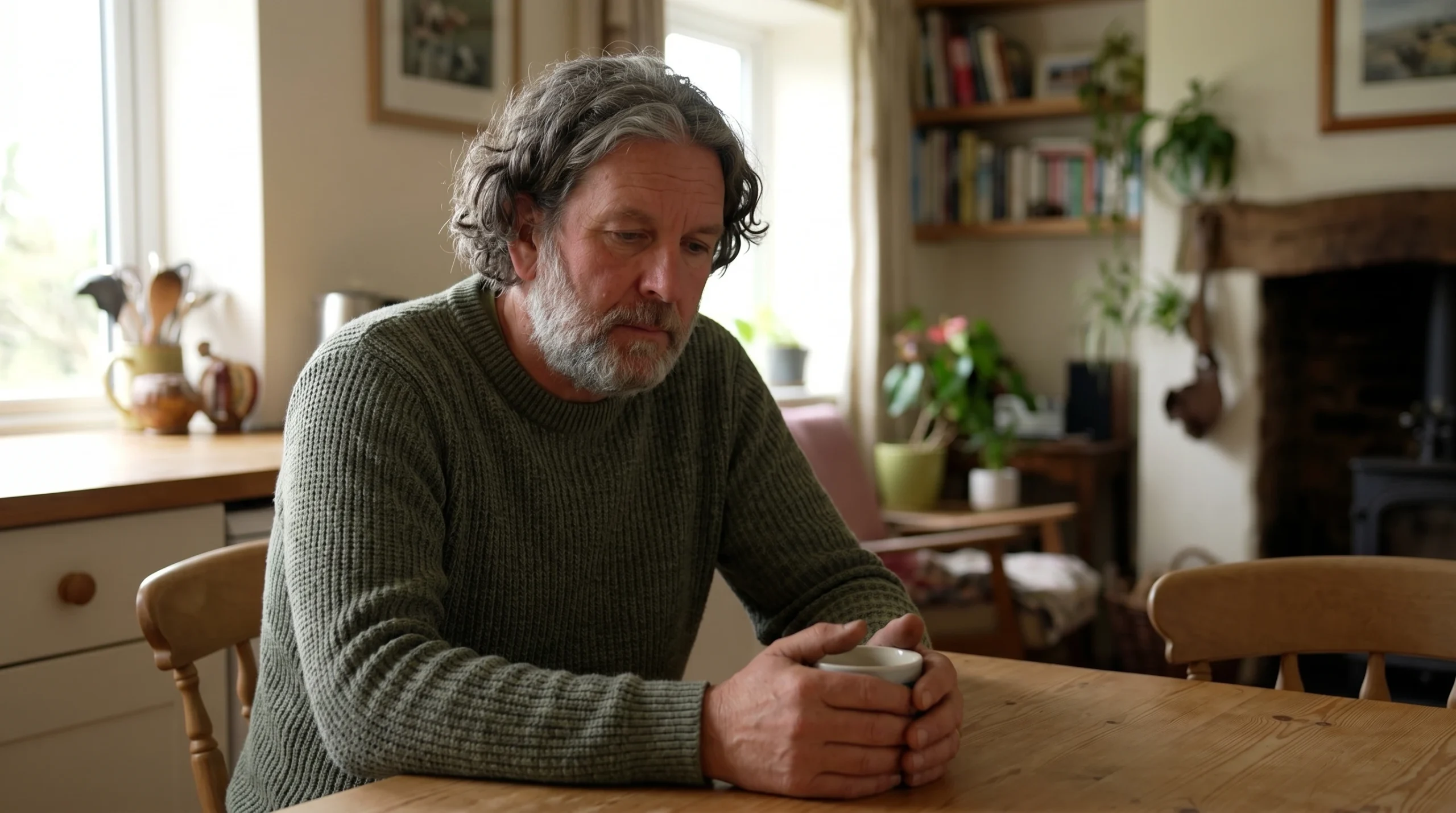
Sam Lovegrove has never seemed like a man chasing the spotlight. On television, he came across as the person you wanted beside you in a cold workshop with a stubborn motorcycle, a questionable engine, and a deadline nobody fully believed in. Viewers knew him best as Henry Cole’s mechanically gifted companion on Shed & Buried, but the appeal was never just what he knew. It was the calm way he knew it, the dry humor, and the impression that he had spent a lifetime learning machines from the inside out.
That is why searches for “Sam Lovegrove illness” have become so persistent. Fans noticed that Lovegrove was less visible in newer Shed & Buried material and began asking whether he was ill, injured, retired, or simply working away from television. The truth is less dramatic than many search headlines suggest: there is no confirmed public evidence that Sam Lovegrove has a serious illness. What exists is a mix of genuine viewer concern, limited public information, and online speculation that has grown because Lovegrove has kept his private life private.
Who Is Sam Lovegrove?
Sam Lovegrove is a British motorcycle engineer, restorer, collector, and television personality best known for his work with Henry Cole. To many viewers, he became familiar through Shed & Buried, a factual entertainment series built around finding old motorcycles, cars, tractors, signs, tools, and other forgotten mechanical treasures. The format suited him because it did not require a glossy celebrity persona. It needed someone who could look at an object, understand what it was, judge whether it could be saved, and explain that judgment without making a performance of it.
Lovegrove’s reputation did not begin with television. In motorcycle circles, he has long been associated with specialist restoration work, especially rare and historic British machines. Brough Superior, one of the most revered names in British motorcycling, has publicly described him as an expert in restoring its motorcycles. That association matters because Brough Superior machines are not casual restoration projects; they require historical knowledge, practical skill, patience, and a strong instinct for what should and should not be changed.
His public image is also unusual for modern television. Lovegrove is not a presenter whose life is packaged on social media or fed through constant publicity. He has remained, first and foremost, a working engineer who happened to become a familiar face on screen. That combination has made him both admired and somewhat mysterious, especially to viewers who want updates but find few direct personal statements.
Early Life and Family Background
Very little about Sam Lovegrove’s early life has been confirmed in mainstream public sources. His exact birth date, childhood home, parents, schooling, and early family circumstances have not been widely reported in reliable detail. That absence is not unusual for someone whose fame came through specialist factual television rather than celebrity culture. It does mean that any biography of him must be careful not to fill the empty spaces with invented details.
What can be said with confidence is that Lovegrove’s career reflects a long immersion in mechanical work. People do not become trusted with rare motorcycles by accident or by television branding alone. His knowledge suggests years spent around engines, workshops, parts, tools, and older machines that require both memory and judgment. It also suggests a temperament suited to restoration, where rushing usually creates more problems than it solves.
His family life is also kept largely outside public view. There is no widely confirmed record of a spouse, children, or domestic biography that responsible writers can treat as settled fact. That privacy should not be mistaken for secrecy. Some public figures, especially those who come from trade, craft, and engineering backgrounds, simply do not treat personal disclosure as part of the job.
How He Built His Career in Motorcycles
Lovegrove’s authority comes from the world of restoration, where reputation is earned slowly. Restoring a motorcycle is not only a matter of cleaning metal and replacing parts. It means understanding how old designs worked, why they failed, what previous owners may have done, and how to balance originality with safety. The better the machine, the more serious the responsibility becomes.
Vintage motorcycles can be unforgiving teachers. A restorer may need to identify parts from memory, work around missing documentation, repair damage caused decades earlier, and make decisions that affect both value and usability. Lovegrove’s public reputation suggests a person who built his career through that kind of close work. His knowledge on television often felt practical because it was practical, not rehearsed.
That is a key reason viewers trusted him. He did not speak about old bikes as props or lifestyle accessories. He spoke as someone who understood why a neglected engine mattered, why a rare frame deserved care, and why some finds were worth the trouble even when they looked hopeless at first glance. His skill sat in the gap between engineering and historical preservation.
Television Breakthrough With Henry Cole
Lovegrove became widely known through his screen partnership with Henry Cole. Cole, a presenter, producer, and motorcycle enthusiast, brought energy and curiosity to shows about bikes, motoring history, and restoration. Lovegrove brought the quieter technical confidence that made the pair work. Their chemistry depended on contrast rather than polish.
On Shed & Buried, the two travelled around Britain looking through barns, lock-ups, outbuildings, sheds, and private collections. The appeal was simple but effective: they would find something neglected, decide whether it had life left in it, strike a deal, and try to turn it into a working or sellable piece. Lovegrove’s role was often to inject realism. He could see the work hidden beneath the excitement of a find.
That balance made the show feel grounded. Henry Cole could be enthusiastic about the chase, while Lovegrove assessed whether the machine was a treasure, a headache, or both. Viewers responded because the dynamic felt authentic. It was not just about buying and selling; it was about the pleasure of recognizing value where others might see rust and clutter.
The Appeal of Shed & Buried
Shed & Buried worked because it understood a deep British affection for sheds and forgotten things. The show was not only about motorcycles or vehicles. It was about the idea that somewhere behind a door, under a tarpaulin, or at the back of a farm building, there might be a piece of mechanical history waiting for someone who knew what they were seeing. Lovegrove fit that world naturally.
His manner helped give the show credibility. He was not loud, flashy, or eager to oversell a find. If something looked difficult, he said so. If a machine had potential, he could explain why without dressing it up in false excitement. That made his approval feel valuable.
The show also benefited from the sense that Cole and Lovegrove genuinely enjoyed the hunt. Their conversations had the rhythm of people who knew each other well enough to disagree without turning it into drama. That made viewers feel included rather than sold to. In a genre that can become staged or exaggerated, their partnership often felt refreshingly unforced.
Sam Lovegrove Illness Rumors Explained
The phrase “Sam Lovegrove illness” appears to have grown from viewer concern rather than confirmed reporting. Fans saw changes in his visibility and searched for an explanation. Since illness is one of the first possibilities people consider when a familiar public figure appears less often, the keyword began to circulate. Online publishers then repeated the phrase because it attracted attention.
There is no reliable public confirmation that Lovegrove has a serious illness. No widely accepted statement from Lovegrove, his representatives, Henry Cole, a broadcaster, or an official production source has established a diagnosis or health crisis. That is the central fact readers need first. Anything beyond that must be treated with caution.
The confusion has been fed by vague online articles that discuss “health updates” without presenting hard evidence. Some pieces imply that something happened while also admitting there is no confirmation. Others use dramatic wording that makes speculation sound more solid than it is. A careful reading shows that the claim is usually built on absence, not proof.
Why Viewers Became Concerned
Viewers became concerned because Lovegrove was closely identified with earlier Shed & Buried episodes. When a long-running show changes its visible team, audiences notice. They may not follow production announcements closely, but they do recognize a missing face. For many fans, Lovegrove’s absence felt personal because his presence had been part of the show’s comfort.
Newer Shed & Buried material has featured Henry Cole with other familiar motoring figures, including Fuzz Townshend, Guy Willison, and Allen Millyard. Those men bring their own expertise, but the change naturally raised questions among viewers who associated the original rhythm with Henry and Sam. A change in cast or format, though, is not the same as a medical explanation. Television changes for many reasons, including schedules, production choices, availability, and creative direction.
Lovegrove’s low public profile made the concern stronger. If he had posted frequent updates, given interviews, or explained his plans in detail, the rumor may have had less room to grow. Instead, his privacy left fans with little to go on. In that vacuum, search engines and entertainment blogs turned uncertainty into a story.
What Is Actually Known About His Health
What is actually known is limited. Sam Lovegrove has not publicly confirmed a serious illness in a way that reliable outlets can report as fact. There is no verified public medical timeline, no confirmed diagnosis, and no authoritative statement linking his reduced television visibility to health. That does not mean he has never had health issues, because nearly everyone does at some point. It only means the public record does not support the stronger claims attached to his name.
This distinction matters. Public curiosity does not erase medical privacy, and a person’s health should not be guessed at simply because they have appeared on television. For a presenter or craftsperson like Lovegrove, who is not constantly courting fame, privacy is part of the story. He has never built his public identity around personal confession.
The most responsible conclusion is simple: the illness rumors remain unconfirmed. Readers should be wary of articles that turn uncertainty into certainty. They should also avoid treating silence as evidence of a hidden crisis. Sometimes a person steps back from a show because life, work, and television schedules change.
Private Life, Marriage, and Family
Lovegrove’s private life is not widely documented in credible public sources. There is no settled public biography that confirms his marital status, children, or household details. That may frustrate some readers, but it is an important boundary. A biography should not invent family information to satisfy curiosity.
His reserved public presence fits the way many skilled tradespeople become known through television. They may gain fans, recognition, and search interest without adopting the habits of celebrity. Lovegrove’s appeal has always rested on competence rather than self-disclosure. That makes his private life less accessible, but it also helps explain why viewers find him authentic.
What people can fairly infer is that he values work and privacy. His public record centers on machines, restoration, friendship with Henry Cole on screen, and specialist knowledge. It does not center on red carpets, tabloid interviews, or public family branding. That is part of why the health rumors should be handled with extra care.
Net Worth and Income Sources
There is no credible, independently verified net worth figure for Sam Lovegrove. Some websites may publish estimates, but those figures should be treated with caution unless they are tied to financial records, business filings, or reliable reporting. For a person like Lovegrove, whose income likely comes from a mix of restoration work, television appearances, specialist projects, and private commissions, exact wealth is difficult to verify. Publishing a precise number would create a false sense of certainty.
His income sources are easier to describe in broad terms. Television work would have provided public exposure and likely paid fees for appearances. Restoration and engineering work, especially around rare motorcycles, can also be valuable, though income depends on reputation, workload, clients, and the nature of each project. Specialist expertise can be financially meaningful without producing celebrity-level wealth.
The better way to understand Lovegrove’s standing is through professional value rather than a guessed bank balance. In his world, credibility is built through trusted work, successful restorations, and long-term respect from enthusiasts. That kind of reputation may not translate cleanly into a net worth estimate, but it explains why his name carries weight among viewers and motorcycle people alike.
Public Image and Industry Standing
Sam Lovegrove’s public image is built on understatement. He became known not because he demanded attention, but because he seemed to know what he was doing. That is rarer on television than it sounds. Many factual entertainment shows depend on exaggerated reactions, but Lovegrove’s best moments often came when he looked closely, thought quietly, and gave a plain answer.
In the motorcycle world, his link to Brough Superior restoration gives him a particular kind of authority. Brough Superior machines are associated with engineering prestige, rarity, and serious collector interest. Being publicly recognized in that context says more than a general television credit. It places him in a tradition of people who preserve machines that carry cultural and mechanical history.
His screen presence also helped make older machinery feel accessible. Viewers who knew little about engines could still understand his reasoning because he explained things without condescension. That ability matters. The best specialists can speak to other experts, but the most useful ones can also bring newcomers along without making them feel foolish.
Relationship With Henry Cole
The working relationship between Sam Lovegrove and Henry Cole is central to his public story. Their on-screen partnership gave Shed & Buried much of its original appeal. Cole brought the appetite for discovery, while Lovegrove brought the technical eye that kept the excitement grounded. Their friendship, or at least the easy familiarity shown on screen, gave the programme its warmth.
Public descriptions of the show have often framed Lovegrove as Cole’s close companion in the hunt for neglected machines. That framing helped viewers see them as more than presenter and expert. The two appeared to share a language built around old bikes, odd finds, risk, value, and the strange pleasure of dragging something forgotten back into use. It was a pairing that made sense because both men clearly cared about the objects they found.
There is no reliable evidence of a feud between them. Rumors about strained relationships often appear whenever a television partnership changes, but speculation is not evidence. The more careful explanation is that shows evolve and people’s roles change. Without a direct statement saying otherwise, claims of a falling-out should be avoided.
Why His Absence Became a Mystery
Lovegrove’s reduced visibility became a mystery because he is not the kind of public figure who narrates his own career in real time. Some personalities manage audience expectations through interviews, social media updates, podcasts, and public announcements. Lovegrove has not operated that way. His silence created space for fans to wonder and for search-driven sites to guess.
The mystery is also tied to the nature of Shed & Buried. The show depends on familiarity and routine. Viewers get used to the van, the conversations, the search, the workshop, and the sense of two people chasing the same odd reward. When one part of that pattern changes, the absence feels louder than it might on another programme.
But here’s the thing. A missing television presence does not automatically point to illness, conflict, or crisis. It may point to private work, different priorities, production changes, or the simple fact that not everyone wants to remain on screen indefinitely. Lovegrove’s case should be read through that wider lens.
What Sam Lovegrove Is Doing Now
Lovegrove’s exact current work is not fully documented in public, but his public identity remains tied to motorcycle engineering and restoration. He is still remembered by viewers for Shed & Buried and still respected for his specialist knowledge. The strongest available public information continues to connect him with rare motorcycle restoration rather than any confirmed medical story. That distinction should shape how readers understand his current status.
He may not be as visible in newer Shed & Buried episodes, but visibility is not the same as relevance. Skilled restorers often do their most important work outside television. Workshops, private collections, specialist networks, and individual machines can matter more than screen time. For someone like Lovegrove, that quieter world may be closer to the center of his career than television ever was.
The truth is, television made him more widely known, but it did not create his expertise. He had to know the machines before the cameras arrived. That is why his reputation has lasted beyond any single series lineup. People remember not only that he was on screen, but that he seemed to belong in the work.
How to Read Claims About His Illness
Readers should apply a simple test to any claim about Sam Lovegrove’s health. Does the article cite a direct statement from Lovegrove, an official representative, a broadcaster, Henry Cole, or a reliable interview? If it does not, the claim should be treated as unconfirmed. A headline alone is not evidence.
This is especially important because illness content can be exploitative. Search traffic rewards dramatic phrasing, and some sites build entire articles around questions they cannot answer. They may repeat words such as “health scare” or “what happened” while offering no new reporting. That pattern is common in celebrity and television coverage, and it can mislead readers who are only trying to find the truth.
A respectful article does not need to pretend certainty. It can say plainly that Lovegrove’s health has become a subject of online speculation, while also saying there is no verified illness report. That is not evasive. It is the difference between journalism and rumor.
Why Sam Lovegrove Still Matters
Sam Lovegrove matters because he represents a kind of expertise that television does not always know how to value properly. He is not famous for scandal, confession, or spectacle. He is known because he could stand in front of a neglected machine and make viewers believe it still had a story. That is a rarer talent than many glossy profiles recognize.
His importance also lies in the way he helped make mechanical heritage feel alive. Old motorcycles can seem distant or intimidating to people outside the hobby. Through shows like Shed & Buried, Lovegrove made them feel understandable, touchable, and worth saving. He showed that restoration is not just nostalgia; it is a practical conversation with the past.
For fans, his appeal remains personal because it feels unforced. He did not come across as someone playing a character. He seemed like a skilled man allowing cameras into a world he already inhabited. That is why people still search for him, worry about him, and want to know whether he is well.
Frequently Asked Questions
Is Sam Lovegrove ill?
There is no confirmed public evidence that Sam Lovegrove has a serious illness. Searches for “Sam Lovegrove illness” appear to come from viewer concern after his reduced visibility in newer Shed & Buried material. Without a direct statement from Lovegrove or a reliable official source, illness claims should be treated as speculation.
What happened to Sam Lovegrove on Shed & Buried?
Sam Lovegrove was strongly associated with earlier Shed & Buried episodes alongside Henry Cole. Newer versions of the show have featured other motoring figures, including Fuzz Townshend, Guy Willison, and Allen Millyard. The public record shows a change in the programme’s visible team, but it does not confirm that illness caused Lovegrove’s reduced role.
Did Sam Lovegrove and Henry Cole fall out?
There is no reliable public evidence that Sam Lovegrove and Henry Cole fell out. Their on-screen partnership was a major part of the early appeal of Shed & Buried, and public descriptions of the show have presented them as close collaborators. Claims of a feud should not be treated as fact unless supported by a direct and credible source.
Is Sam Lovegrove married?
Sam Lovegrove’s marital status is not widely confirmed in reliable public sources. He has kept his private life away from the kind of publicity that surrounds more conventional celebrities. Because of that, responsible coverage should avoid making firm claims about his spouse, children, or family life unless those details are publicly verified.
What is Sam Lovegrove’s net worth?
There is no credible verified net worth figure for Sam Lovegrove. Online estimates, if they appear, should be treated carefully because they are rarely tied to reliable financial evidence. His income has likely come from motorcycle restoration, specialist engineering work, television appearances, and related projects, but exact figures are not public.
What is Sam Lovegrove known for?
Sam Lovegrove is known as a motorcycle engineer, restorer, collector, and television personality. He became widely recognized through Shed & Buried with Henry Cole, where his mechanical knowledge and dry, understated presence made him a viewer favorite. He is also associated with expert restoration work on rare British motorcycles, including Brough Superior machines.
Where is Sam Lovegrove now?
Sam Lovegrove’s exact current day-to-day work is not fully public. He appears to have kept a lower media profile while remaining associated with motorcycle restoration and engineering. The lack of constant public updates should not be read as proof of illness or crisis, because his career has always been rooted more in workshop expertise than celebrity exposure.
Conclusion
The story behind “Sam Lovegrove illness” is really a story about uncertainty, privacy, and the affection viewers develop for people who feel genuine on screen. Lovegrove’s reduced visibility naturally led fans to ask questions, but the available public record does not confirm a serious health problem. The most honest answer is also the most careful one: the rumors remain unverified.
What is clearer is the shape of Lovegrove’s public life. He is a skilled motorcycle engineer and restorer whose television work gave a wider audience access to a specialist world. His partnership with Henry Cole helped make Shed & Buried feel warm, practical, and believable. His value was never just that he appeared on television; it was that he brought real knowledge with him.
There is dignity in the way Lovegrove has kept much of his life private. In an age when public figures are often expected to explain everything, he has remained defined by craft rather than confession. That may leave some questions unanswered, but it also protects the boundary between a person’s work and his private health.
For readers, the fair approach is to remember what can be known and resist dressing speculation as fact. Sam Lovegrove’s lasting place is not in rumor, but in the workshop, among old machines, hard-won skill, and the quiet authority that made viewers trust him in the first place.
