
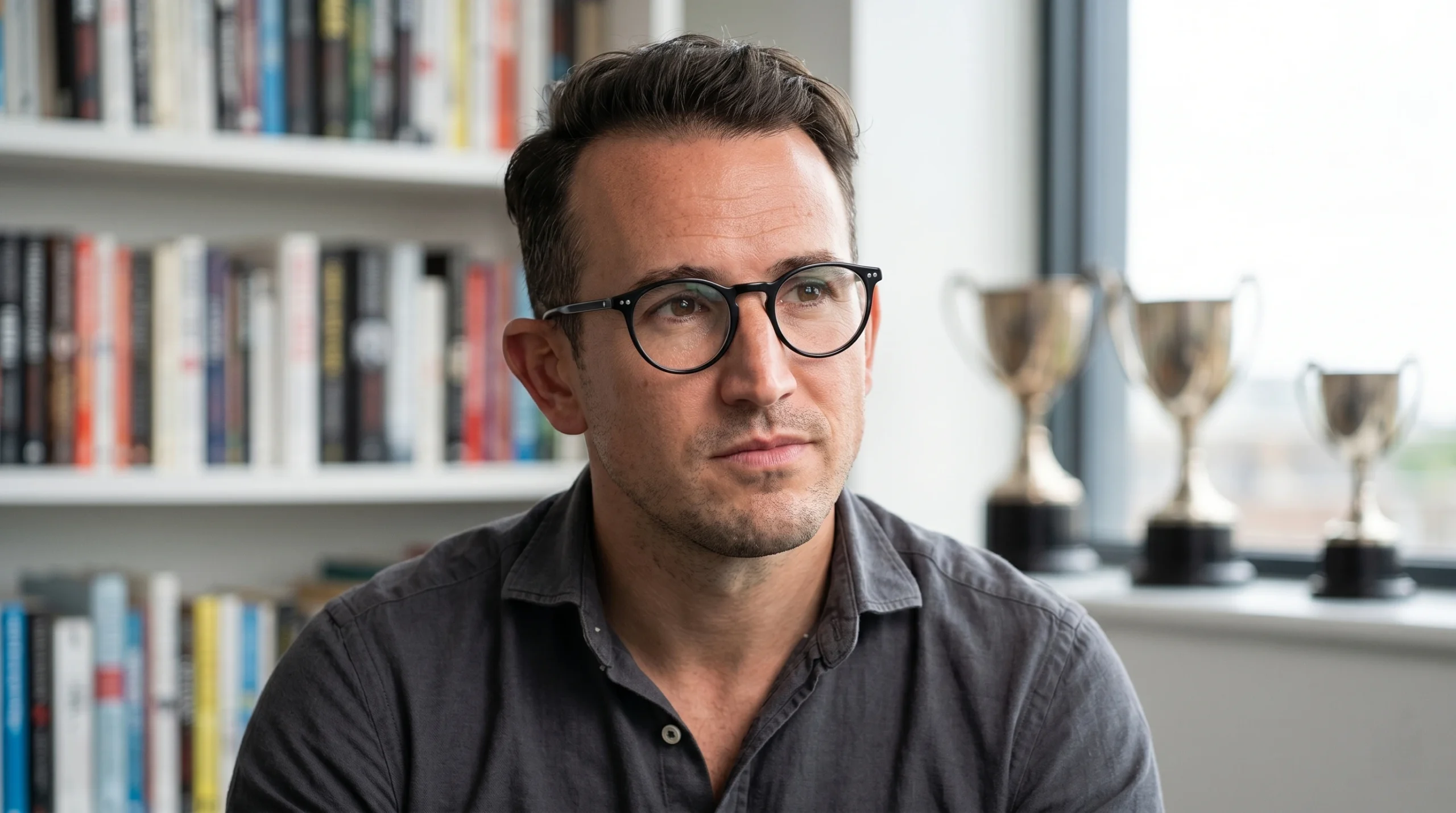
Hugo Bachega became familiar to many viewers in a moment that no reporter would choose for himself. On October 10, 2022, while reporting live for the BBC from Kyiv, the sound of a missile cut through his broadcast, followed by an explosion that forced him and his crew to take cover. The clip traveled quickly because it captured the danger of war reporting in its plainest form: a journalist trying to explain history while history was still exploding nearby.
But Bachega’s career is not defined only by that viral moment. He is a BBC correspondent whose reporting has taken him across major international stories, including the war in Ukraine and the continuing conflict and political tension in the Middle East. His public profile is unusual because his work is widely seen, yet his personal life remains largely private. That makes a careful biography more useful than the recycled fact boxes that often appear around public figures.
Who Is Hugo Bachega?
Hugo Bachega is a journalist and BBC correspondent known for international reporting from conflict zones and politically sensitive regions. He has appeared across BBC platforms as a field reporter and has written from places where the facts are often contested, fast-moving, and difficult to verify. His recent public work has been strongly associated with the Middle East, including Lebanon and Israel-related coverage.
For many viewers, he represents the modern foreign correspondent: mobile, multilingual in professional reach, and expected to report across television, digital, and live formats. He is not a celebrity journalist in the old television-anchor sense. His public identity has been shaped by assignments, datelines, and moments of pressure rather than by personal branding.
That distinction matters because much of the online curiosity around Bachega focuses on private details that are not firmly documented. Readers search for his age, nationality, wife, salary, and family background, but reliable public information on those subjects is limited. The most solid record is his professional one: a BBC journalist who has reported from major international stories and become recognizable through serious field work.
Early Life and Family Background
Publicly verified details about Hugo Bachega’s early life are limited. Many online profiles describe him as Brazilian or Brazilian-born, and some accounts place the beginning of his journalism career in Brazil. Those claims appear widely, but they should be treated with care unless tied to direct confirmation from Bachega, the BBC, or another primary source.
What can be said safely is that Bachega’s career has the shape of a journalist with international training and cross-cultural fluency. His name, accent, and reported professional history have led many viewers to associate him with Brazil and Portuguese-speaking media circles. Still, accent and name alone are not evidence of nationality, citizenship, or birthplace.
There is also no strong public record confirming details about his parents, siblings, childhood home, or school years. That absence should not be filled with guesswork. In responsible biography, the line between public record and private life matters, especially for journalists who work in security-sensitive environments.
Education and First Steps in Journalism
Bachega has not made a detailed education history widely available in the public record. Some biography pages mention universities or early training, but those claims are not consistently sourced. Without clear evidence, it would be misleading to present a precise degree, graduation year, or academic institution as fact.
His professional path suggests the discipline of a reporter trained in hard news rather than commentary. Foreign correspondents working at his level usually build their careers through reporting, editing, verification, live production, and repeated exposure to difficult assignments. Bachega’s work shows the habits of that background: measured language, careful attribution, and an ability to keep reporting under pressure.
The early stages of his career are often linked online to Reuters in São Paulo, where he is said to have worked before joining the BBC. That detail appears in several secondary profiles, but it is best described as widely reported rather than fully documented in official public material. What is clear is that by the time he became familiar to global BBC audiences, he had developed the poise required for international breaking news.
Career at the BBC
Hugo Bachega’s most visible professional home is the BBC, one of the world’s largest public-service broadcasters. As a correspondent, his role has involved reporting from the field, explaining fast-changing events, and translating local developments for an international audience. That work requires more than appearing on camera; it depends on sourcing, verification, judgment, and the ability to make complex events understandable without oversimplifying them.
His BBC work has been associated with major global stories, including Russia’s war in Ukraine and tensions across the Middle East. In recent years, he has reported from Lebanon and covered stories involving Hezbollah, Israeli military action, ceasefire pressure, civilian displacement, and regional diplomacy. Those assignments demand care because every word can carry political weight.
Bachega’s reporting style is calm and direct. He does not appear to rely on theatrical delivery, even when the story around him is dramatic. That restraint is part of what makes his work effective: he gives viewers a sense of what is happening without turning himself into the center of the story.
The Kyiv Broadcast That Made Him Widely Recognized
The moment that brought Bachega to wider public attention came during Russia’s war in Ukraine. On October 10, 2022, he was reporting live from Kyiv when a missile could be heard overhead. Seconds later, an explosion interrupted the broadcast, and Bachega moved out of frame as the BBC returned to the studio.
The clip spread quickly across news sites and social media. Viewers were struck by how suddenly the report changed from explanation to danger. It was a rare public glimpse of what correspondents and crews often face while working in war zones: the threat is not theoretical, and the safety margin can disappear in seconds.
The BBC later re-established contact with Bachega and the crew, who had taken shelter. The incident became a defining public moment not because it was polished, but because it was not. It showed the raw conditions of live war reporting and helped many viewers remember his name.
Reporting From Conflict Zones
Conflict reporting requires a mix of speed and restraint. A correspondent has to tell the audience what is happening while resisting the urge to state more than the evidence supports. Bachega’s work sits in that demanding space, especially in Ukraine and the Middle East, where claims often emerge from governments, military forces, local officials, armed groups, and civilians under extreme stress.
His reporting from Lebanon has placed him close to one of the region’s most sensitive stories. Coverage involving Hezbollah and Israel is never only a local matter; it touches Lebanese politics, Israeli security, Iranian influence, United States diplomacy, and the memory of previous wars. A correspondent working that beat must explain both the immediate event and the deeper forces behind it.
The human dimension is just as important. Reports from Lebanon and southern Lebanon have involved civilians returning to damaged areas, emergency workers facing danger, and families living with uncertainty after strikes and ceasefire announcements. That kind of reporting helps audiences understand the cost of conflict beyond official statements and battlefield language.
Public Image and Reporting Style
Bachega’s public image is built on seriousness rather than self-promotion. He is not known for personal interviews, lifestyle coverage, or a highly exposed private identity. Instead, viewers know him through live reports, datelines, and the authority he brings to difficult stories.
That may be why searches about him often feel incomplete. People recognize the face and voice but find little confirmed personal background. The gap between visibility and privacy can create frustration for readers, but it also reflects a professional choice shared by many foreign correspondents.
On camera, Bachega tends to speak in a controlled, steady manner. That does not mean the stories he covers are simple or emotionally distant. It means he uses the style of a reporter trained to keep the audience oriented when events are unclear, frightening, or still unfolding.
Nationality, Accent, and Identity
One of the most common questions about Hugo Bachega concerns his nationality. Many online references describe him as Brazilian, and his name and accent have led viewers to ask whether he is from Brazil. The claim may well reflect his background, but the strongest public record does not provide the full personal documentation that a careful profile would need.
This is a useful place to separate curiosity from fact. A journalist’s accent can become part of how audiences recognize him, especially on a global network like the BBC. But accent does not confirm citizenship, birthplace, ethnicity, or family history.
The most responsible answer is that Bachega is widely described online as having Brazilian roots, while his exact nationality and full background are not thoroughly confirmed in public primary sources. That may sound cautious, but caution is the difference between biography and speculation. For a working correspondent, especially one covering conflict, that distinction is not just editorial; it can be personal and practical.
Marriage, Partner, and Private Life
There is no reliable public confirmation of Hugo Bachega’s marriage, partner, or children. Some websites make claims about his relationship status, but they do not provide strong evidence. Because of that, those claims should not be repeated as fact.
This is especially important with journalists who cover war, terrorism, diplomacy, or political violence. Personal details can become security concerns, and many correspondents keep family information private for good reason. A lack of public information does not mean there is a hidden story; it often means the subject has chosen a normal boundary.
Readers may be curious, but a respectful biography should not confuse curiosity with entitlement. Bachega’s public importance comes from his work, not from whether his private life can be turned into searchable trivia. Unless he chooses to discuss family matters publicly, the honest answer is that those details are not confirmed.
Salary, Income, and Net Worth
There is no credible public estimate of Hugo Bachega’s net worth. Any exact figure attached to his name online should be treated with skepticism unless it comes from a reliable financial disclosure, verified interview, or reputable salary reporting tied directly to him. Most net worth pages use loose formulas and rarely have access to personal finances.
His known income source is journalism, primarily through his work as a BBC correspondent. BBC pay can vary widely depending on role, seniority, contract type, location, and whether the journalist is staff or freelance. Without confirmed details of his employment terms, it would be irresponsible to assign a salary figure to him.
The same applies to wealth. There is no public evidence that Bachega has major business ventures, investment holdings, book deals, or speaking fees that would allow a grounded estimate. A fair biography should say plainly that his net worth is not publicly known.
Awards and Professional Standing
There is no widely publicized individual awards record attached to Hugo Bachega in the public material most readers encounter. That does not weaken his standing as a correspondent. Many respected field reporters are valued inside newsrooms and by audiences without having a public list of prizes attached to their names.
His professional standing is best measured through the assignments he has handled. Reporting live from Kyiv during Russian strikes and covering Lebanon during periods of renewed conflict are not junior or low-stakes assignments. They require editorial trust, experience, and the ability to perform under pressure.
The BBC’s global platform also gives his work weight. Correspondents on that stage help shape how millions of viewers understand conflict, diplomacy, and human suffering. That influence brings responsibility, and Bachega’s public work shows a career spent in stories where accuracy matters deeply.
Why Hugo Bachega Matters
Bachega matters because he reports from places where public understanding is fragile. In war and regional conflict, misinformation spreads quickly, official accounts compete, and ordinary people can disappear behind political language. A correspondent’s job is to slow that down enough for audiences to see what is actually known.
His work also reminds readers that journalism is a physical profession, not only an intellectual one. The Kyiv broadcast made that visible, but it was only one example. Foreign correspondents travel, wait, verify, cross checkpoints, speak to frightened people, and make decisions in conditions most audiences never experience.
There is another reason his profile resonates. Bachega appears to belong to a generation of international journalists whose identities do not fit the old idea of a foreign correspondent as a British or American voice explaining the world. His presence on the BBC reflects a more global newsroom, where authority can come through experience, language, movement, and lived international perspective.
Lesser-Known Details and Common Misunderstandings
One lesser-known truth about Bachega’s public profile is that much of what people search for is not publicly settled. His professional record is visible, but his personal biography is not neatly packaged. That gap has encouraged thin online profiles that often repeat each other without adding proof.
Another misunderstanding is that the Kyiv missile incident was the whole story of his career. It was the moment that made him more recognizable, but it was not the beginning or end of his work. His later reporting from the Middle East shows a correspondent continuing to cover difficult stories long after the viral clip faded.
A third misunderstanding is that privacy means mystery. In reality, many journalists keep their lives outside work separate from their public assignments. For Bachega, the available record points to a journalist who lets the reporting lead, even when public curiosity turns toward the person behind the microphone.
Where Hugo Bachega Is Now
Hugo Bachega continues to be publicly associated with BBC international reporting. Recent records place him in Middle East coverage, including Lebanon-related stories. That remains one of the most urgent and sensitive assignments in global news, especially as conflict involving Israel, Hezbollah, and regional actors continues to affect civilians and diplomacy.
His current role appears to be that of a field correspondent rather than a studio-based personality. That means his work may shift by assignment, and his location can change depending on the story. For readers tracking his career, the best guide is not an unofficial biography page but his latest BBC reports and broadcast appearances.
Bachega’s public status today is that of a working journalist still active in major international coverage. He is not a retired figure being assessed from a distance. His biography is still being written through the stories he covers, the places he reports from, and the care he brings to moments when facts are hardest to secure.
Frequently Asked Questions
Who is Hugo Bachega?
Hugo Bachega is a BBC correspondent known for international reporting, especially from conflict-affected regions. He has reported from Ukraine and the Middle East and became widely recognized after a live report from Kyiv was interrupted by a missile strike in October 2022.
His work is focused on public events rather than personal publicity. That is why his professional record is much easier to verify than details about his family, relationships, or finances.
What is Hugo Bachega famous for?
He is best known to many viewers for his live BBC report from Kyiv on October 10, 2022. During the broadcast, a missile could be heard overhead before an explosion forced him and his crew to take cover.
Beyond that moment, he is known for BBC reporting on international conflict and Middle East affairs. His recent work has included coverage connected to Lebanon, Hezbollah, Israeli strikes, and ceasefire tensions.
Is Hugo Bachega Brazilian?
Many online sources describe Hugo Bachega as Brazilian or having Brazilian roots. That description appears often, and it may reflect his background, but the most careful answer is that his exact nationality is not fully confirmed in widely available primary sources.
A responsible biography should not treat repeated online claims as proof. What is clearly established is his professional identity as a BBC correspondent with an international reporting profile.
Is Hugo Bachega married?
There is no reliable public confirmation of Hugo Bachega’s marital status. Some websites claim details about a wife or partner, but those claims are not well supported by strong sourcing.
Because he works in sensitive reporting areas, it is reasonable that private family information would not be public. Unless he confirms those details himself, they should remain outside a factual biography.
What is Hugo Bachega’s net worth?
Hugo Bachega’s net worth is not publicly known. Exact figures found on low-quality celebrity finance sites should not be treated as reliable because they usually do not have access to private financial records.
His known career income comes from journalism, especially his BBC work. Without confirmed salary details, assets, contracts, or outside ventures, any specific estimate would be guesswork.
Where does Hugo Bachega work now?
Hugo Bachega works as a BBC correspondent and is publicly associated with international and Middle East reporting. Recent public records connect him with coverage from Lebanon and the wider region.
His assignments may change depending on the news cycle. Like many foreign correspondents, his professional location is best understood through current datelines and BBC appearances rather than a fixed public address.
Why did Hugo Bachega go viral?
Bachega went viral because viewers saw him react in real time to danger during a live report from Kyiv. The moment was brief, frightening, and memorable because it showed the reality of reporting from a city under attack.
The clip also stood out because he had been calmly explaining the situation before the threat became immediate. That contrast helped audiences understand the risks faced by correspondents and crews in war zones.
Conclusion
Hugo Bachega’s story is the story of a journalist whose public life is built through assignments rather than self-display. He became widely recognized because of a dramatic live moment in Kyiv, but the more lasting measure of his career is the steady work that came before and after it. His reporting has placed him near some of the most difficult international stories of recent years.
The absence of a full public personal biography should not be mistaken for a lack of substance. In Bachega’s case, the restraint around private details may be part of the professional boundary that allows the work to remain central. His career shows how much a correspondent can become known while still keeping much of his life properly outside the frame.
For readers, the most useful way to understand Hugo Bachega is to follow the reporting rather than chase unsupported claims. His value lies in what he helps audiences see: the human cost of conflict, the uncertainty behind official accounts, and the discipline required to report clearly when the world is anything but clear.
