
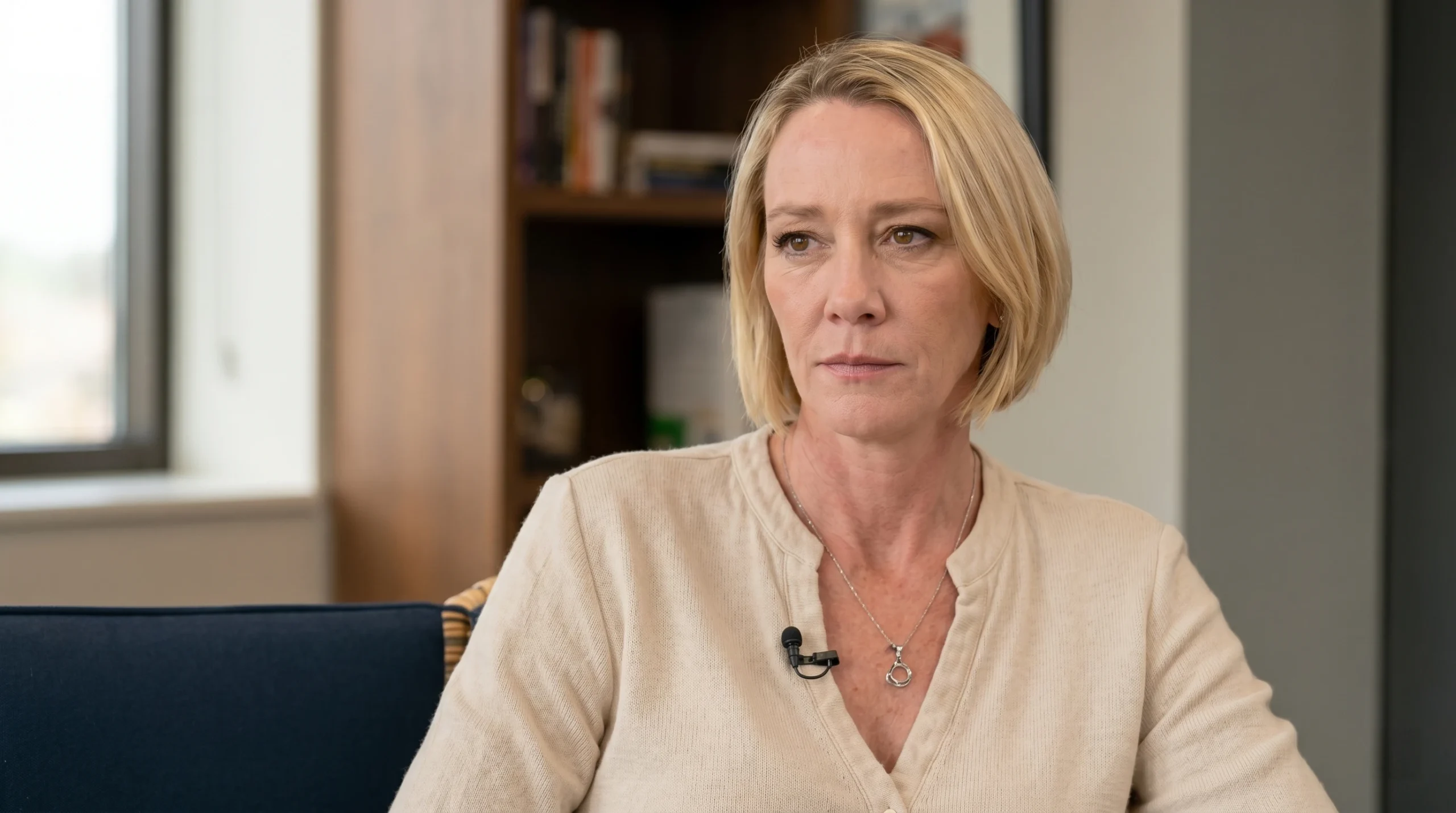
Claire Pearsall built her public reputation from the side of politics that most voters rarely see. Before she became a familiar television commentator, she spent years inside Westminster, working with MPs, handling the pressures of parliamentary life, and watching government decisions move from promise to practice. Her name now appears most often in connection with UK political panels, immigration debates, and Conservative analysis.
For viewers who encounter her on Sky News, GB News, BBC programmes, LBC, or other political shows, Pearsall can seem like a broadcaster first. The fuller story is more layered. She is a former Home Office special adviser, a former Sevenoaks district councillor, a long-serving parliamentary staffer, and a Conservative voice who speaks with the confidence of someone who knows how political offices work under pressure.
That background explains why people search for her. Some want to know whether she is a journalist or politician. Others are curious about her marriage to political journalist Nigel Nelson, her work on immigration policy, or her time in local government. The most reliable portrait is not built from online guesses about age or wealth, but from the public record of a woman whose career has moved through Parliament, Whitehall, local councils, and national media.
Early Life and Family Background
Claire Pearsall has kept much of her early life outside the public spotlight. Unlike many television personalities, she has not built her profile around childhood anecdotes, family branding, or personal storytelling. Public records and reliable biographies focus mainly on her professional life, particularly her work in Westminster, the Home Office, local government, and political broadcasting.
That privacy matters because online profiles sometimes try to fill the gaps with unsupported claims. Her exact date of birth, childhood hometown, parents’ names, and school history are not firmly established in widely reliable public material. A responsible biography should say that clearly rather than turn guesswork into fact.
What can be said with confidence is that Pearsall’s adult life has been closely tied to British public affairs. Her career shows a long-standing interest in politics, administration, public service, and communication. By the time she became a known media commentator, she had already spent many years working behind the scenes in institutions that shape national and local government.
Education and Early Ambitions
There is limited verified public information about Claire Pearsall’s formal education. Some online sources make claims about her academic background, but those details are not consistently backed by primary records or strong public documentation. For that reason, they should be treated carefully unless Pearsall herself or a reliable institutional source confirms them.
Her career path, though, gives a clear picture of her professional abilities. Parliamentary work requires political judgment, written communication, discretion, speed, and the ability to manage competing demands from MPs, officials, journalists, campaigners, and constituents. Pearsall’s later roles suggest that she developed those skills early and applied them steadily over many years.
What stands out is not a single public “breakthrough” moment, but a gradual rise through practical political work. She appears to have built her career from the inside out, first by learning how Parliament functions and then by moving into advisory, local government, and media roles. That route is common in Westminster, where influence often begins in offices rather than on platforms.
Building a Career in Westminster
Pearsall’s Westminster experience is one of the strongest pillars of her public identity. A public biographical note has described her as having 19 years of experience in Parliament and as serving for many years as chief of staff to a senior Conservative MP. That is not a minor detail in British politics, where senior parliamentary staff often act as the operational backbone of an MP’s work.
A chief of staff role can involve managing office priorities, preparing briefings, coordinating with stakeholders, responding to constituents, and helping an MP navigate political pressure. It is not an elected job, but it demands a close understanding of elected politics. The person in that position often knows the rhythms of Parliament, the needs of the media, and the pressures that shape an MP’s public decisions.
That experience helps explain Pearsall’s television style. She often talks less like an outside observer and more like someone who understands how decisions are made, delayed, defended, or abandoned. Her analysis tends to focus on process, delivery, political risk, and whether a policy can survive contact with institutions and public expectations.
Work as a Home Office Special Adviser
One of Pearsall’s most important career chapters came at the Home Office, where she served as a special adviser to the Minister for Immigration. Public biographical material says she spent 18 months in the role during the Brexit transition. That placed her close to one of the most sensitive policy areas in British politics.
Special advisers, often called SpAds, are political appointees who work with ministers inside government. They are not permanent civil servants, and they are not elected officials. Their job is to provide political advice, help ministers understand the political effect of policy choices, and connect departmental work with the government’s priorities.
Pearsall’s Home Office work reportedly included the EU Settlement Scheme and future borders and immigration planning. Those were demanding issues because Brexit required the UK to rethink its immigration system after leaving the European Union. The EU Settlement Scheme alone affected millions of EU citizens and their families who needed a legal route to remain in Britain.
Brexit, Immigration and Policy Experience
Pearsall’s work during the Brexit transition gave her a direct connection to an issue that still drives British politics. Immigration policy is not only about law or numbers. It also involves public trust, border operations, digital systems, legal challenges, diplomatic relationships, and the credibility of government promises.
That background has shaped how Pearsall is understood as a commentator. On television, she is often asked to speak about migration, asylum policy, small boat crossings, removals, and whether government plans can work in practice. Her comments usually reflect a Conservative concern with enforcement, deterrence, administrative capacity, and public confidence.
It would be wrong to suggest that Pearsall alone designed immigration policy during that period. Government programmes are built by ministers, civil servants, lawyers, operational teams, advisers, and outside partners. Her role is best understood as part of the political advisory structure around ministers at a time when immigration was central to the government’s post-Brexit agenda.
Sevenoaks District Council
Pearsall also served in local government as a Conservative councillor on Sevenoaks District Council. Official election records show that she was elected in 2015 for Ash and New Ash Green and re-elected in 2019. Her council service ran until May 2023, giving her eight years of experience in local public life.
Local government can be less glamorous than Westminster, but it often puts politicians closer to residents’ daily frustrations. Councillors deal with planning, local services, governance, community concerns, elections, and the practical limits of budgets. For someone who later comments on national politics, that kind of experience can be grounding.
Pearsall’s public biography says she served as vice chair of governance while on the council. Governance work is not usually headline-grabbing, but it is central to how councils maintain standards, oversee processes, and run elections properly. It also fits with the practical, rules-based side of her political career.
The End of Her Council Service
By the 2023 Sevenoaks District Council election, Pearsall was no longer returned as councillor for Ash and New Ash Green. The ward shifted away from the Conservatives, with Green Party candidates winning the seats. Her public biography states that her council service ended in May 2023.
That change reflected wider shifts in parts of local politics, where voters in some areas moved away from traditional Conservative control. It also marked the end of one chapter of Pearsall’s public service. After 2023, her profile was increasingly associated with political commentary rather than elected local office.
Her council years remain important because they show that her political background was not limited to Westminster offices. She had to engage with residents, local procedures, and the practical side of public accountability. That experience gave her another layer of political understanding beyond national party debate.
Television and Media Commentary
Claire Pearsall is now best known to many people through her media work. She has appeared on Sky News, BBC News Channel, Channel 5 News, GB News, LBC, BBC Radio 5 Live, and regional BBC radio. The House of Commons Register of Interests of Members’ Staff has also listed her occupation as a political commentator for several media organisations.
Her media role is important to define accurately. Pearsall is not primarily known as a traditional reporter or news correspondent. She is a political commentator, meaning she interprets events, debates policy, and offers analysis based on her experience and political perspective.
That distinction helps readers understand what they are watching. A reporter’s role is to gather and present verified information under editorial rules of independence. A commentator’s role is different: to explain, challenge, argue, and interpret. Pearsall’s value on panels comes from her Westminster and Home Office background, not from a claim to neutral detachment.
Public Image and Political Style
Pearsall’s public image is shaped by her directness. She tends to speak with the controlled confidence of someone used to political argument and the pressure of live broadcasting. Her style is more practical than theatrical, though she can be firm when discussing immigration, government delivery, or the gap between promises and outcomes.
She is usually framed as a Conservative voice, and that framing is accurate. She has worked for a senior Conservative MP, served as a Conservative councillor, and held a special adviser post under a Conservative government. Her commentary should be read with that background in mind.
That does not mean every point she makes is simply a party line. Former advisers often criticise their own side, especially on delivery, strategy, and competence. Pearsall’s strongest media identity lies in explaining how policies may work, fail, or be judged by voters who expect results.
Marriage to Nigel Nelson
Claire Pearsall is publicly reported to be married to Nigel Nelson, a veteran British political journalist and commentator. Nelson has been associated with national political journalism for many years and has appeared widely in broadcast media. Their marriage has drawn extra attention because both are connected to political commentary, often from different professional and political angles.
The pairing is interesting because it brings together two people who understand politics from distinct vantage points. Pearsall’s experience comes through Conservative politics, parliamentary work, local government, and ministerial advising. Nelson’s public career has been rooted in journalism, political reporting, and commentary.
Even so, Pearsall’s private life remains relatively private. There is no need to overstate what is publicly known about her family, home life, or personal routines. The public record supports the fact of the marriage, but it does not provide a full private biography, and responsible writing should respect that limit.
Children and Private Life
Questions about whether Claire Pearsall has children appear often in search interest, but reliable public information is limited. Some online sources make claims about her family life, yet those claims are not consistently supported by strong public records. Without clear confirmation, it is better to avoid presenting private family details as fact.
Pearsall appears to have made a deliberate choice to keep much of her personal world separate from her professional life. That is not unusual for people who work in politics but are not elected national figures. Parliamentary staff, advisers, councillors, and commentators may become publicly visible while still maintaining firm personal boundaries.
That privacy should not be mistaken for secrecy. It simply means that Pearsall’s public identity rests mainly on her work. Her career can be understood without turning unconfirmed personal details into biography.
Net Worth, Salary and Income Sources
There is no reliable public figure for Claire Pearsall’s net worth. Some websites may publish estimates, but those figures should be treated with caution because they rarely explain their methods or cite strong evidence. A serious biography should not repeat a net worth number simply because it appears online.
Her likely income sources are easier to describe in general terms. Pearsall has worked in Parliament, held a local council role, served as a government special adviser, and appeared as a political commentator across broadcast outlets. Some media commentary work may be paid, and the parliamentary register has recorded relevant media interests.
That said, income sources are not the same as net worth. Net worth would require verified knowledge of assets, savings, property, liabilities, investments, and private financial arrangements. Those details are not publicly confirmed, so any exact estimate would be speculative.
Controversies and Public Debate
Claire Pearsall is involved in public debate on some of the most contested issues in British politics, especially immigration. That means her comments can attract strong reactions from viewers, opponents, and supporters. Immigration debates in particular often become heated because they involve law, border control, human rights, public spending, local pressure, and national identity.
Her critics may see her as too closely aligned with Conservative enforcement arguments. Supporters may value her experience and her willingness to challenge policies she considers weak or unrealistic. Both reactions are part of the normal life of a political commentator.
There is no major public scandal that defines Pearsall’s career in the way some political biographies are shaped by a single rupture. Her public profile is better understood through steady exposure, professional experience, and debate over policy. The controversy around her is mostly the controversy of British politics itself.
Claire Pearsall’s Current Status
Claire Pearsall remains active as a political commentator and Westminster-linked political figure. Her profile continues to be tied to television and radio appearances, especially on subjects such as immigration, Parliament, Conservative politics, and government performance. She is also known through her long association with parliamentary work.
Her current public status is that of an experienced Conservative commentator rather than an elected official. She is no longer a Sevenoaks district councillor, based on the publicly available record of her service ending in 2023. Her work now appears more focused on political analysis, media discussion, and parliamentary life.
That position gives her an unusual combination of insider knowledge and public visibility. She is not a household name in the way party leaders are, but she is recognisable to viewers who follow UK political news closely. For that audience, she has become one of the voices explaining Conservative politics after Brexit and through a period of sharp public mistrust in government delivery.
Why Claire Pearsall Matters
Claire Pearsall matters because she represents a type of political figure who has become increasingly visible in British media. She is not an MP, not a full-time journalist, and not simply a campaign spokesperson. She is part of the class of advisers, staffers, former councillors, and political operators who help audiences understand what happens behind the podium.
That role has grown more important as politics has become more performance-driven. Voters see announcements, slogans, clashes, and interviews, but they rarely see the machinery that decides whether a policy can be delivered. Pearsall’s background gives her credibility when she talks about that machinery.
Her story is also a reminder that public influence does not always come from winning a parliamentary seat. Some people shape politics through advice, staffing, local government, media explanation, and long-term institutional memory. Pearsall’s career sits squarely in that less visible but important part of public life.
Frequently Asked Questions
Who is Claire Pearsall?
Claire Pearsall is a British Conservative political commentator, former Home Office special adviser, former Sevenoaks district councillor, and long-serving parliamentary staffer. She is known for appearing on UK news and current affairs programmes to discuss politics, immigration, government policy, and Conservative affairs. Her background gives her a strong connection to Westminster and local government.
Is Claire Pearsall a journalist?
Claire Pearsall is more accurately described as a political commentator than a traditional journalist. She appears on news programmes and offers analysis, but her public career is rooted in political advising, parliamentary work, and Conservative local government. That difference matters because commentators interpret events from a point of view, while reporters are expected to gather and present news independently.
Was Claire Pearsall a councillor?
Yes, Claire Pearsall served as a Conservative councillor on Sevenoaks District Council. She represented Ash and New Ash Green after being elected in 2015 and re-elected in 2019. Her council service ended in May 2023, according to public biographical information.
Did Claire Pearsall work at the Home Office?
Yes, Claire Pearsall served as a special adviser to the Minister for Immigration at the Home Office. Her work took place during the Brexit transition and involved immigration-related policy areas including the EU Settlement Scheme and future borders planning. That experience remains central to her authority on immigration debates.
Is Claire Pearsall married?
Claire Pearsall is publicly reported to be married to Nigel Nelson, a British political journalist and commentator. Their relationship attracts interest because both are connected to political media and public affairs. Pearsall has kept most details of her private life outside the public record.
What is Claire Pearsall’s net worth?
There is no reliable confirmed figure for Claire Pearsall’s net worth. Online estimates should be treated carefully because they are often not based on verified financial records. Her known professional income sources have included parliamentary work, public service roles, advisory work, and political commentary.
How old is Claire Pearsall?
Claire Pearsall’s exact age and date of birth are not clearly confirmed in reliable public sources. Some online biography pages may publish estimates, but those claims are not consistently supported by strong evidence. A careful account should avoid presenting an unverified age as fact.
Conclusion
Claire Pearsall’s life in public view is defined less by celebrity than by proximity to power. She has worked in Parliament, advised inside the Home Office, served in local government, and turned that experience into a media role. Her career shows how political influence often develops through long service rather than sudden fame.
What makes her interesting is the combination of practical experience and public argument. She understands the pressures of Westminster, the demands of local government, and the political weight of immigration policy. That gives her commentary a sharper edge than a purely outside view.
There is still much about Pearsall’s private life that remains outside the public record, and that boundary should be respected. The verified story is already substantial: a Conservative political operator who became a recognisable media commentator after years of work behind the scenes. In a period when British politics often struggles to turn promises into results, Claire Pearsall remains one of the voices explaining why delivery is harder than slogans suggest.
