
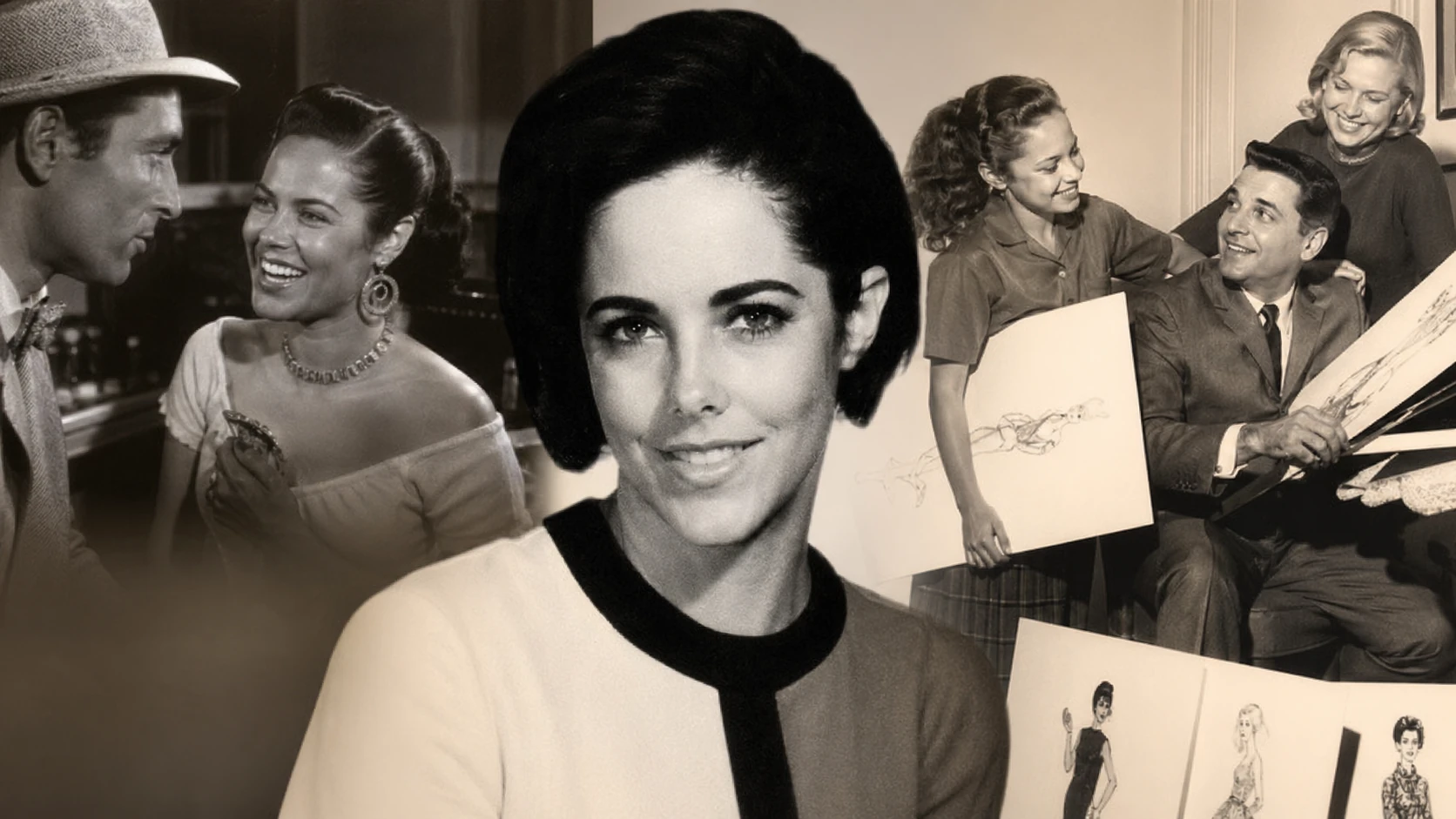
Nia Novella Travilla was born into a family that understood image better than most. Her father, William Travilla, helped design some of the most famous costumes in Hollywood history, including looks forever tied to Marilyn Monroe. Her mother, Dona Drake, was a singer, dancer, and actress whose own career reflected both the glamour and the pressures of the studio era. Yet Nia’s life did not become a simple extension of either parent’s fame.
She remains a figure of real curiosity because her name sits at the crossroads of classic Hollywood, family legacy, and private adulthood. Searchers often find fragments: a famous father, a performer mother, reports of veterinary work, a short life, and a handful of public-record details that do not always line up neatly. The truth is, Nia Novella Travilla was not a public celebrity in the usual sense. She was a woman whose story has to be told with care, because much of what people want to know about her sits outside the polished archive of Hollywood history.
Early Life and Family Background
Nia Novella Travilla was born on August 16, 1951, in California, most often identified in public records as Los Angeles. Her birth placed her inside a household already connected to film, performance, design, and the carefully managed world of mid-century celebrity. Her father, William Travilla, was known professionally simply as Travilla, a name that became familiar to costume historians and movie fans. Her mother, Dona Drake, had built a career as a screen performer under several stage names before and during the studio era.
Nia’s family background was unusual even by Hollywood standards. Travilla was a working artist in one of the most visual departments of filmmaking, where design could define how an actor was remembered. Drake’s career carried a different kind of complexity, shaped by music, dance, film roles, and public identity in an era when studios often controlled how performers were marketed. Their daughter inherited not only a famous surname, but also the complicated story of a family built around talent, presentation, and reinvention.
The middle name Novella has drawn attention because it echoes names associated with Dona Drake’s own career. Drake was known at different points as Una Novella and Rita Novella, among other names, before becoming widely known as Dona Drake. While there is no confirmed public statement explaining why Nia received that middle name, the connection is hard to miss. It gives her full name a direct link to her mother’s performing identity and to the family’s layered history with names.
The Father: William Travilla and Hollywood Costume History
William Travilla was one of the most recognizable costume designers connected to classic Hollywood glamour. He worked in film and television across decades, earning industry recognition and becoming best known for his association with Marilyn Monroe. His designs did more than clothe stars; they helped create images that stayed in public memory long after the films left theaters. For Nia, that meant growing up with a father whose work existed both at home and in the larger culture.
Travilla’s career included an Academy Award shared for costume design on The Adventures of Don Juan, a 1948 Warner Bros. swashbuckler starring Errol Flynn. His later fame became closely tied to Monroe, especially through costumes from films such as Gentlemen Prefer Blondes and The Seven Year Itch. The white halter dress from the subway-grate scene in The Seven Year Itch remains one of the most famous garments in movie history. Even people who do not know Travilla’s name often know the image he helped make.
That kind of fame can create a strange inheritance for a child. Nia did not simply grow up with a father who had a job in Hollywood; she grew up with a father whose work became part of American visual culture. Costume design is often treated as background craft, but Travilla’s work shows how much power clothing can have on screen. His career gave the Travilla name lasting weight, and that weight still shapes why readers search for Nia today.
The Mother: Dona Drake’s Career and Complicated Public Identity
Dona Drake, Nia’s mother, was a performer whose story deserves attention beyond her role as Travilla’s wife. She appeared in films during the 1930s, 1940s, and early 1950s, working as a dancer, singer, and actress. Her screen career included musical and dramatic parts, and she was often cast in roles shaped by Hollywood’s ideas about ethnicity and exotic appeal. Like many performers of her era, she navigated an industry that offered opportunity while also narrowing how she could be seen.
Drake was born Eunice Westmoreland, and her professional life included several names and identities. She was billed at different times as Rita Rio, Rita Novella, and Dona Drake, among others. The shifts were not just ordinary stage-name changes; they reflected the way studios and audiences categorized performers. Her public identity was shaped by a business that often preferred simplified labels over complicated personal truth.
For Nia, Dona Drake’s life created a second kind of legacy. If Travilla represented image-making through clothes, Drake represented performance and self-presentation under pressure. Nia’s parents both understood how public identity could be built, sold, and remembered. Her own relative privacy later in life stands in sharp contrast to that world.
Growing Up Near the Spotlight
Nia’s childhood unfolded near Hollywood, but public evidence does not show that she became a child star or a steady public personality. She appears in scattered references connected to her father and family, including accounts of her modeling his designs as a teenager. Those glimpses suggest a young woman familiar with cameras, clothes, and the social world around entertainment. They do not prove a sustained career in film or television.
One reported newspaper feature from the late 1960s described Travilla designing for his daughter and showed Nia in connection with his fashion work. Such an item makes sense in the context of her family: a famous designer father, a striking teenage daughter, and a newspaper audience interested in Hollywood style. It also hints that Nia may once have been imagined as someone who could enter performance or modeling. But the later public record does not support the idea that entertainment became the center of her adult life.
This distinction matters because Nia is sometimes treated online as though she simply chose between Hollywood fame and private virtue. Real lives are rarely that clean. She may have been close to the entertainment world when young, and she may also have moved away from it as an adult. What survives suggests proximity rather than stardom, and that is a more honest way to understand her early public presence.
Education and Early Ambitions
Publicly available information about Nia’s education is limited. Some later online accounts describe her as having studied veterinary medicine or pursued formal animal-related training, but the specific school records are not consistently shown in public sources. That does not mean the claims are false, only that they should be treated with caution unless backed by licensing records, alumni materials, or official documents. A serious biography has to resist filling in blanks simply because a narrative would read more smoothly.
What can be said is that Nia’s adult life is repeatedly linked to animals. Memorial and genealogy-style sources describe her as a veterinarian or someone known locally for veterinary work. Other references connect her to horse breeding and Schnauzers. Taken together, these details suggest that animals were not a casual interest but a meaningful part of her adult identity.
The move from a Hollywood household to animal work is striking, but it should not be turned into myth. It may have reflected personal preference, family experience, professional training, or a mix of all three. Some accounts mention a family environment that included animals, which would make her later path feel less surprising. Still, without Nia’s own words, the safest reading is that she built a life connected to animal care while keeping much of that life outside public view.
Work with Animals and Veterinary Reputation
Nia Novella Travilla is most often remembered outside her family name for animal-related work. Some records and memorial notes refer to her as a veterinarian, while others describe her as a breeder. A 1980s news item connected to a fraud case reportedly described her as a horse breeder from Los Angeles. Later community-history pages also connect her name to Schnauzer breeding.
These details do not all describe the same job, but they point in the same direction. Horses, dogs, veterinary care, and breeding all place Nia in a world far removed from costume fittings and movie premieres. That shift gives her biography its most human contrast. She came from a family known for shaping glamour, yet her own work appears to have centered on living creatures rather than public images.
Still, it is important not to overstate what the record proves. Some web biographies portray Nia as a major animal welfare advocate with formal programs or scholarships named after her. Those claims may have roots in real memorial efforts, but they are not always supported by clear public documentation. The strongest statement is that she was remembered in connection with animal work, and that this connection became a defining part of how later readers understand her.
Marriage, Name Changes, and Private Life
Nia’s personal life is not extensively documented in public sources. Some genealogy and community records connect her to a marriage to José L. Ariza in Los Angeles in 1971, with the marriage reportedly ending in divorce in 1973. These details appear in indexed public-record summaries and family-history-style entries, though they are not usually accompanied by full documents in casual search results. As with much of Nia’s life, the outline is visible while the deeper story remains private.
Later records also connect her with names such as Munday Bacon or Mundie Bacon, which can confuse readers trying to follow her biography. Name variations often happen through marriage, divorce, indexing errors, or informal usage, especially in public databases. In Nia’s case, the variations appear to point back to the same person born in 1951 and deceased in 2002. The shifting names are part of why her story can feel scattered online.
There is no widely confirmed public record establishing that Nia had children. Some websites state that she did not, but those claims are often presented without direct sourcing. The responsible approach is to say that no confirmed public information about children is available in the commonly cited records. Her private relationships should not be expanded beyond what the record can support.
Setbacks and Public Controversy
One of the more serious public items attached to Nia’s name is a 1982 fraud conviction reported in a UPI news item. The report identified Nia Travilla among people convicted of conspiracy and mail fraud in connection with a duplicate-billing scheme. It described her as a horse breeder and placed her within a case involving allegations that businesses were defrauded over several years. This is not a detail that should be sensationalized, but it is part of the public record often cited in biographical summaries.
The available summaries do not fully explain what happened after the conviction. They do not clearly establish sentencing details, long-term consequences, appeals, restitution, or how the case affected Nia’s later life. Without that information, the fair treatment is to acknowledge the report and avoid turning it into the entire frame of her biography. A person’s public record can include difficult episodes without reducing the whole life to them.
The case also shows why Nia’s biography requires careful handling. Because she was not a major celebrity, there is not a large body of reporting to place such an event in wider context. That can leave one legal item standing out more sharply than it might in a fuller archive. The answer is not to hide it, but to present it with proportion and restraint.
Money, Income, and Net Worth
There is no credible public estimate of Nia Novella Travilla’s net worth. Any exact figure attached to her name should be treated with skepticism unless it comes from probate records, financial filings, or a reliable estate report. She was connected to a famous family, but family fame does not automatically reveal personal wealth. Net worth claims around private figures are often guesswork dressed up as reporting.
Her likely income sources, based on public references, would have been tied to animal work, breeding, and possibly veterinary services if the descriptions of her profession are accurate. She may also have had family connections to property, inheritances, or assets, but those details are not publicly clear in the sources most readers encounter. William Travilla’s professional legacy had cultural value, but cultural value is not the same as a documented personal fortune for his daughter. A biography should avoid turning possibility into fact.
The more useful financial point is that Nia does not appear to have built a public brand around her family name. There is no clear record of her promoting herself through Hollywood memorabilia, fashion licensing, or entertainment publicity. If she benefited from family resources, the scale and structure remain private. Her public image is closer to that of a locally remembered professional than an heiress or celebrity business figure.
Relationship to the Travilla Legacy
Nia’s relationship to her father’s legacy is one of the most interesting parts of her story because it is mostly indirect. William Travilla’s designs continue to circulate through museum shows, auctions, books, film scholarship, and fashion retrospectives. His work with Marilyn Monroe has become a permanent part of Hollywood memory. Nia, as his daughter, is naturally pulled into that story by genealogy and curiosity.
Yet she does not seem to have become the main public steward of the Travilla brand. Later interest in Travilla’s work has often come through collectors, costume historians, entertainment archives, and Monroe scholarship. Nia’s name appears more in family context than in the commercial afterlife of his designs. That gap reinforces the idea that she maintained a relatively private adult identity.
There is something revealing in that distance. Many children of famous artists spend their lives managing archives, defending reputations, or building careers from inherited recognition. Nia’s public record suggests a different path, one that did not center on turning Hollywood heritage into a public role. She remains part of the Travilla story, but not because she tried to make herself its headline figure.
Public Image and Online Interest
Nia Novella Travilla’s public image today is shaped less by her own publicity than by search curiosity. Readers find her because they are tracing William Travilla, Dona Drake, Marilyn Monroe, or lesser-known Hollywood families. Her name has the texture of an old studio credit, which makes people assume there must be a hidden film story behind it. The answer is both simpler and more interesting.
The internet has a way of smoothing private lives into tidy profiles. In Nia’s case, many short biographies repeat similar claims about compassion, veterinary work, family fame, and early death. Some of those claims may be true, but repetition alone does not make them verified. Her real public image is built from a mix of confirmed facts, community memory, and unresolved questions.
That does not make her story less worthy. In fact, the uncertainty gives the biography a different kind of value. It reminds readers that not every life connected to Hollywood becomes fully archived, and not every person near fame chooses or receives public narration. Nia’s story asks for a slower, more careful reading than the quick celebrity profile format usually allows.
Death and Final Years
Nia Novella Travilla died on October 1, 2002, at the age of 51. Public memorial records list her death and identify her parents, but they do not provide a fully settled public account of her final illness or circumstances. Some records differ on whether her death is associated with Los Angeles or Oakland, which reflects the broader inconsistency in available public data. Her remains are listed as cremated in memorial records.
The absence of a clear public cause of death has led some online writers to fill in the gap with vague claims. That should be avoided. Unless an obituary, family statement, death certificate, or reliable archival source confirms the cause, the most accurate statement is that her cause of death has not been widely verified. Respect for privacy is especially important when a person did not live as a public figure.
Her death at 51 gives her story a sense of abruptness. She lived long enough to form an adult identity outside the family spotlight, but not long enough to leave the kind of late-life interviews or memoirs that often clarify a person’s path. What remains is a life seen through records, family context, and the traces left by others. That is enough to tell a meaningful story, but not enough to pretend that every question has an answer.
What Nia Novella Travilla Is Remembered For
Nia is remembered first as the daughter of William Travilla and Dona Drake, but that is not the whole of her identity. Her family connection explains why people search for her, while her own adult path gives the search its substance. She appears to have lived much of her life away from show business, with animals forming a central part of her work and reputation. That contrast gives her biography a quiet force.
Her story also reflects a larger truth about Hollywood families. Fame often preserves some people in high resolution while leaving others in fragments. William Travilla’s designs can be studied in photographs and films, and Dona Drake’s performances can be traced through screen credits. Nia’s life, by comparison, has to be reconstructed from scattered public records and careful restraint.
That does not make her secondary. It makes her human in a way that celebrity history sometimes forgets. She was born into a famous family, carried a name linked to film history, and appears to have chosen a life that was not built around applause. For many readers, that is exactly what makes her worth knowing.
Frequently Asked Questions
Who was Nia Novella Travilla?
Nia Novella Travilla was the daughter of Hollywood costume designer William Travilla and actress-singer Dona Drake. She was born on August 16, 1951, and died on October 1, 2002, at age 51. She is remembered through public records, family history, and references to animal-related work rather than through a major entertainment career of her own.
Why is Nia Novella Travilla famous?
Nia is mainly known because of her parents. Her father, William Travilla, designed some of Marilyn Monroe’s most famous costumes, while her mother, Dona Drake, worked as a film performer, dancer, and singer. Nia’s own life drew later interest because she seems to have lived more privately, away from the Hollywood identity that surrounded her family.
Was Nia Novella Travilla an actress?
There is no strong public evidence that Nia had a sustained acting career. A teenage newspaper reference reportedly connected her with modeling her father’s designs and suggested possible acting ambitions. The later record, however, does not show a significant film or television career, so it is more accurate to describe her as Hollywood-connected rather than as a confirmed actress.
Did Nia Novella Travilla become a veterinarian?
Several memorial and community-history sources describe Nia as a veterinarian or connect her with animal work. Other references describe her as a horse breeder or dog breeder, which supports the view that animals were central to her adult life. The exact details of her training and professional licensing are not clearly available in common public sources, so the claim should be presented with care.
Was Nia Novella Travilla married?
Public-record summaries and genealogy-style sources connect Nia to a reported marriage to José L. Ariza in 1971, with a divorce reported in 1973. Some later records also associate her with the names Munday Bacon or Mundie Bacon. Her private life is not extensively documented, and there is no widely confirmed public account of later marriages or children.
What was Nia Novella Travilla’s net worth?
There is no reliable public net worth figure for Nia Novella Travilla. Any exact amount found online should be treated as an estimate at best unless tied to probate documents or verified financial records. Her likely income sources were connected to animal work and breeding, but the scale of her assets remains private.
How did Nia Novella Travilla die?
Nia died on October 1, 2002, at age 51. Public memorial records confirm the date but do not establish a widely verified cause of death. Because available sources differ on some surrounding details, it is best to say that her cause of death has not been clearly confirmed in the public record.
Conclusion
Nia Novella Travilla’s life does not fit the usual celebrity-child story. She was born close to Hollywood glamour, but the strongest traces of her adult identity point toward animals, private work, and a life lived outside the main glare of public attention. That makes her story harder to tell, but also more interesting than a simple tale of inherited fame.
Her parents left behind vivid public legacies. William Travilla’s designs still shape how people remember Marilyn Monroe and classic Hollywood style, while Dona Drake’s career reveals the talent and pressures of studio-era performance. Nia inherited that history, but she did not become only a footnote to it. She carried the name while appearing to build a quieter life of her own.
The most respectful biography of Nia is one that accepts the limits of the record. It can name the facts, explain the family, include the difficult public moments, and leave private matters private. In doing so, it gives readers a fuller picture of a woman whose life was connected to fame but not defined by it.
Nia still matters because she reminds us that Hollywood history is not only made by stars, designers, and screen images. It is also carried by families, by people who step away, and by lives that remain partly hidden even when the surname is famous. Her story is a reminder that privacy can be as telling as publicity, and that a careful record is often more powerful than a polished myth.
