
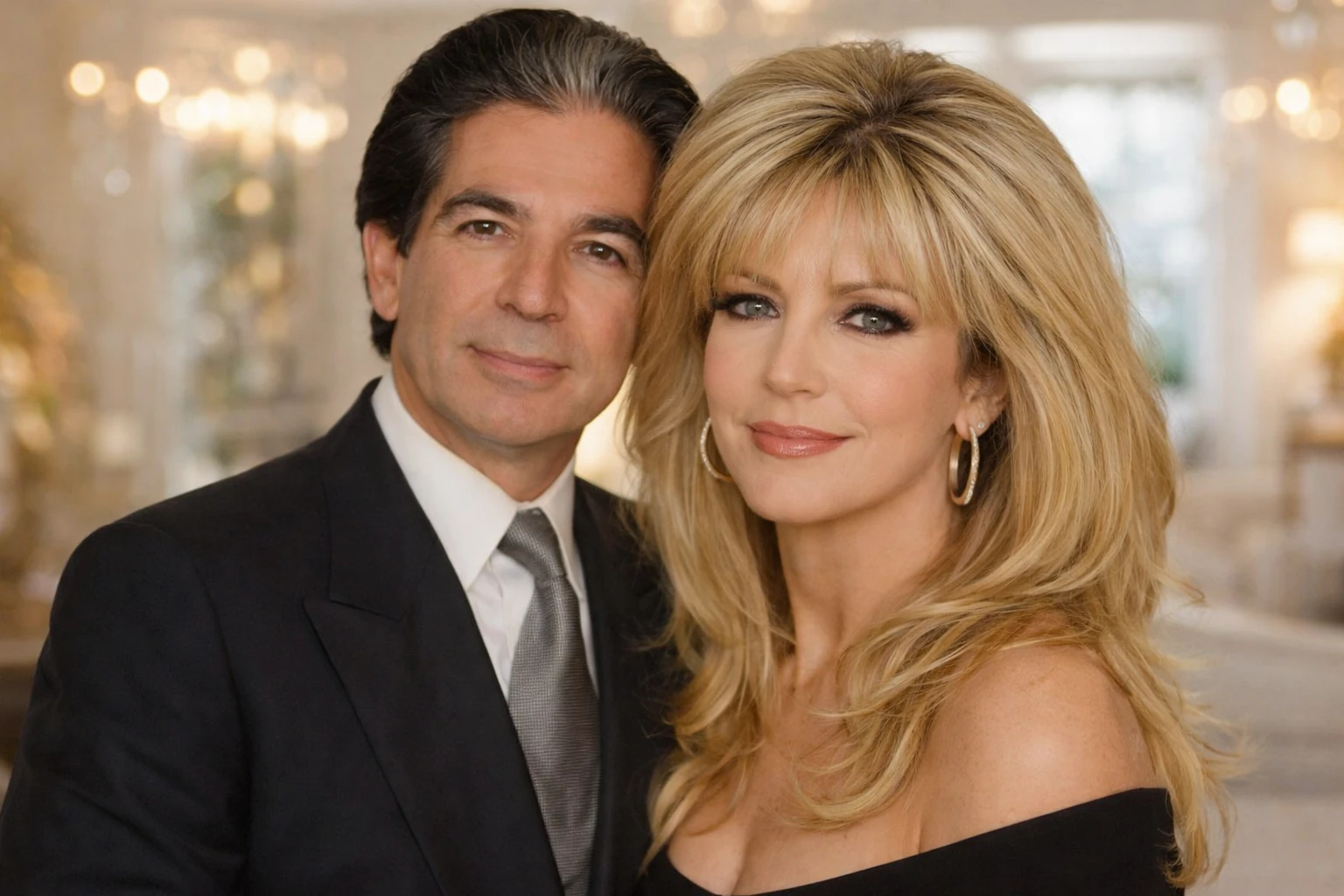
She entered the public record quietly and, for the most part, remained there. Jan Ashley was never a celebrity in the way the culture usually defines one, yet her name continues to circulate in connection with one of America’s most scrutinized families. For many readers, she appears as a brief footnote in the life of attorney Robert Kardashian Sr. But the fuller story of Jan Ashley—born Janice Lynn Glass—is less about proximity to fame and more about the ordinary rhythms of a life that occasionally intersected with extraordinary attention.
Her biography is not built from constant headlines or a catalog of public achievements. Instead, it rests on a handful of verified facts, scattered reports, and the kind of details that surface in memorial records rather than glossy profiles. To understand Jan Ashley is to accept the limits of what can be known and to read carefully between what is documented and what has been repeated over time.
Early Life and Family Background
Janice Lynn Glass was born in 1948 in Amarillo, Texas, though even that detail carries a small uncertainty. Some records list her birth date as August 1, while others say August 3, a minor discrepancy that reflects the broader challenge of reconstructing her life with precision. What is clearer is that her early childhood unfolded in Texas before her family relocated to Tulsa, Oklahoma, when she was still young.
She grew up in Tulsa, a city that, during the 1950s and 1960s, offered a mix of traditional values and emerging professional opportunity. Her father, James Douglas Glass, and her mother, Monnie Glass, raised her in what appears to have been a stable household, though little has been publicly recorded about their professions or social standing. That absence of detail is consistent with a life that was not lived under public scrutiny.
Ashley attended Will Rogers High School in Tulsa, where she completed her secondary education. There is no extensive record of her academic ambitions or extracurricular life, but one notable achievement stands out from this period. In 1966, she was crowned Miss Tulsa, a title that would have placed her in local public view, if only briefly, and suggested a degree of poise and community recognition.
Early Career and Professional Life
After high school, Ashley moved into the workforce rather than pursuing a widely documented higher education path. She worked as an executive secretary for “Boots” Adams, a prominent figure at Phillips Petroleum. The role suggests she operated in a professional environment that required organizational skill and discretion, traits that would later align with how little of her personal life became public.
This phase of her life rarely appears in online biographies, yet it provides important context. Ashley was not someone who arrived in adulthood through fame or media exposure. She built a career in a corporate setting, navigating the expectations of a mid-century American workplace. That grounding would remain part of her identity even as her life later intersected with more visible circles.
Not many people know this, but such positions often offered women of that era a stable and respected path, even if they rarely translated into public recognition. Ashley’s career, as far as the record shows, followed that pattern—steady, professional, and largely private.
Marriage to John Ashley
A significant chapter of Jan Ashley’s life began in 1978 when she married John Ashley, an actor and producer known for his work in film and television. The marriage marked her transition from Oklahoma to California, placing her in closer proximity to the entertainment industry, though not necessarily at its center.
John Ashley had a varied career that included acting roles in the 1950s and 1960s and later work as a producer. His projects often took him to international locations, and his professional life was more public-facing than Jan’s. Their marriage, which lasted nearly two decades, appears to have been stable and long-lasting compared to the brief relationships that would later define her public narrative.
During these years, Jan Ashley remained largely out of the spotlight. There are no widely circulated interviews, public statements, or independent media profiles that detail her perspective on life in California or her husband’s career. What can be inferred is that she lived within the orbit of the entertainment world without actively participating in its public machinery.
John Ashley died in 1997 while working on a film project in New York City. His death marked a turning point in Jan’s life. After years spent as part of a married partnership, she found herself navigating a new phase marked by loss and transition.
Relationship with Robert Kardashian Sr.
In 1998, Jan Ashley married Robert Kardashian Sr., the attorney best known for his role in the O.J. Simpson trial and, later, as the father of the Kardashian children who would become global media figures. The marriage placed Ashley, however briefly, into a much brighter spotlight than she had previously experienced.
The relationship, though, was short-lived. Reports indicate that the marriage was annulled within a year, with some accounts suggesting it lasted only a matter of months. The reasons for the annulment have not been fully documented in public records, and both parties remained relatively quiet about the details.
Here’s where it gets interesting. While the marriage itself was brief, its association with a now-famous family ensured that it would remain part of the public narrative long after it ended. Ashley’s name became linked to Robert Kardashian’s personal history, even though she was never integrated into the broader Kardashian family dynamic in a lasting way.
Unlike his earlier marriage to Kris Jenner, which produced four children and became central to a media empire, Kardashian’s marriage to Ashley left little enduring public trace beyond legal documentation and later commentary.
The 2012 Controversy
Jan Ashley’s name resurfaced prominently in 2012, years after her marriage to Robert Kardashian had ended. At that time, she gave an interview to a tabloid publication in which she claimed that Kardashian had confided that Khloé Kardashian was not his biological daughter. The statement quickly spread through media outlets, fueling speculation and controversy.
The claim was met with immediate pushback. Khloé Kardashian publicly dismissed the suggestion, and reports emerged citing Robert Kardashian’s own statements affirming that he considered all four of his children to be biologically his. In particular, a sworn declaration connected to his annulment proceedings indicated that he referred to having four biological children.
The truth is, the controversy said as much about the media environment as it did about Ashley herself. Tabloid culture has long thrived on sensational claims, especially when they involve well-known families. Ashley’s comments, whether taken out of context or presented accurately, became part of a narrative that extended far beyond her personal life.
For Ashley, the episode ensured that her name would remain searchable and associated with one of the most persistent rumors in celebrity culture. It also complicated her public image, reducing her in some accounts to a single claim rather than a full life story.
Later Life and Return to Oklahoma
After the end of her marriage to Robert Kardashian and the passing of her first husband, Ashley’s life appears to have moved back toward privacy. In 2012, she relocated from California to Oklahoma, returning to a place that had shaped her early years.
This move suggests a desire for familiarity and perhaps a quieter environment away from the public attention that had intermittently surrounded her. There is little public documentation of her activities during these final years, which is consistent with how she had lived most of her life.
She died on October 1, 2015. Her obituary describes a private family service and notes that she would be interred at Forest Lawn Memorial Park in California, beside John Ashley. The decision to be buried alongside her first husband underscores the lasting significance of that relationship in her life.
Public Image and Media Portrayal
Jan Ashley’s public image is unusual because it is shaped more by association than by direct visibility. She did not build a career in entertainment, politics, or any field that would naturally generate sustained media coverage. Instead, her name appears in connection with others—first her husband John Ashley, then Robert Kardashian, and later the Kardashian family narrative.
This kind of indirect visibility can distort how a person is remembered. In Ashley’s case, it has led to a patchwork of online biographies that often repeat the same limited set of facts while adding speculative or unverified details. The result is a portrait that can feel fuller than it actually is.
That said, there is a consistent thread running through the verifiable record: Ashley maintained a relatively private life despite her proximity to public figures. Even during periods when her name was circulating widely, she did not become a regular presence in interviews or televised appearances.
Financial Life and Net Worth
There is no widely verified public figure for Jan Ashley’s net worth. Some online sources attempt to assign estimates, but these figures are not supported by reliable documentation. What can be said is that her financial life likely included the stability of her professional work, her marriage to John Ashley, and later her association with Robert Kardashian.
Without access to detailed financial records or credible reporting, any specific net worth figure would be speculative. It is more accurate to describe her financial situation as private, with no confirmed public disclosures regarding assets or income.
This lack of transparency is not unusual for individuals who are not public figures in their own right. Ashley’s financial profile remained largely outside the scope of media reporting, reinforcing the broader theme of her life: present in the public record, but not defined by it.
Legacy and Cultural Context
Jan Ashley’s legacy is not measured in awards, major public achievements, or a lasting body of work. Instead, it exists in the quieter space of personal history and cultural curiosity. She is remembered primarily because of her connection to Robert Kardashian and the enduring interest in the Kardashian family.
But here’s the thing. That connection, while significant in terms of public attention, represents only a small portion of her life. The longer and more stable chapters—her upbringing in Oklahoma, her career, her marriage to John Ashley—offer a more balanced understanding of who she was.
Her story also highlights how easily individuals can be reduced to a single association when they intersect with fame. Ashley’s life reminds us that behind every name that appears in a headline, there is a fuller narrative that may never be entirely captured.
Where Jan Ashley Is Now
Jan Ashley passed away in 2015, and there is no ongoing public presence associated with her name. Unlike many figures connected to the Kardashian family, she did not leave behind a media footprint that continues to evolve.
Her memory persists primarily through archived records, occasional media references, and the continued public interest in the Kardashian family’s history. In that sense, her story has become part of a larger narrative, even as her individual life remains only partially documented.
For readers, this means that understanding Jan Ashley requires both attention to detail and a willingness to accept uncertainty. Not every life leaves a complete public record, and hers is one of them.
Frequently Asked Questions
Who was Jan Ashley?
Jan Ashley, born Janice Lynn Glass, was an American woman known primarily for her brief marriage to attorney Robert Kardashian Sr. She was also the longtime wife of actor-producer John Ashley and had a professional career as an executive secretary before her association with the entertainment world.
When was Jan Ashley born?
Most records place her birth in August 1948 in Amarillo, Texas, though there is a minor discrepancy about the exact date. Some sources list August 1, while others say August 3, reflecting small inconsistencies in available documentation.
How long was Jan Ashley married to Robert Kardashian?
Her marriage to Robert Kardashian took place in 1998 and was short-lived. Reports indicate that it was annulled within a year, with some accounts suggesting it lasted only a few months.
What did Jan Ashley do for a living?
She worked as an executive secretary for a senior figure at Phillips Petroleum. This role suggests she had a stable professional career prior to her marriages and maintained a largely private working life.
Was Jan Ashley involved in the Kardashian family after her marriage?
No, she was not a lasting part of the Kardashian family’s public or private life. Her marriage to Robert Kardashian ended quickly, and she did not maintain a visible connection to the family afterward.
What controversy is Jan Ashley known for?
In 2012, she made claims in a tabloid interview suggesting that Khloé Kardashian was not Robert Kardashian’s biological daughter. The claim was widely disputed and contradicted by other evidence, and it remains a point of media controversy rather than confirmed fact.
When did Jan Ashley die?
Jan Ashley died on October 1, 2015. Her obituary indicates that she spent her final years in Oklahoma and was laid to rest in California alongside her first husband, John Ashley.
Conclusion
Jan Ashley’s life does not fit neatly into the framework of modern celebrity biography. She was not a public figure in the traditional sense, and much of what can be known about her comes from records rather than interviews or personal accounts. That makes her story both harder to tell and, in some ways, more revealing.
Her brief marriage to Robert Kardashian ensured that her name would enter a global conversation, but it did not define her entire life. The longer chapters—her upbringing, her career, and her decades-long marriage to John Ashley—offer a quieter but more complete picture.
What remains is a portrait shaped by fragments, where certainty exists alongside gaps. For readers, the value lies not in filling those gaps with speculation, but in recognizing the limits of what can be known and respecting the life that unfolded beyond the headlines.
Jan Ashley’s story is a reminder that not every life connected to fame is meant to be fully public. Some remain, even in death, only partially visible—known just enough to be remembered, but not enough to be fully understood.
