
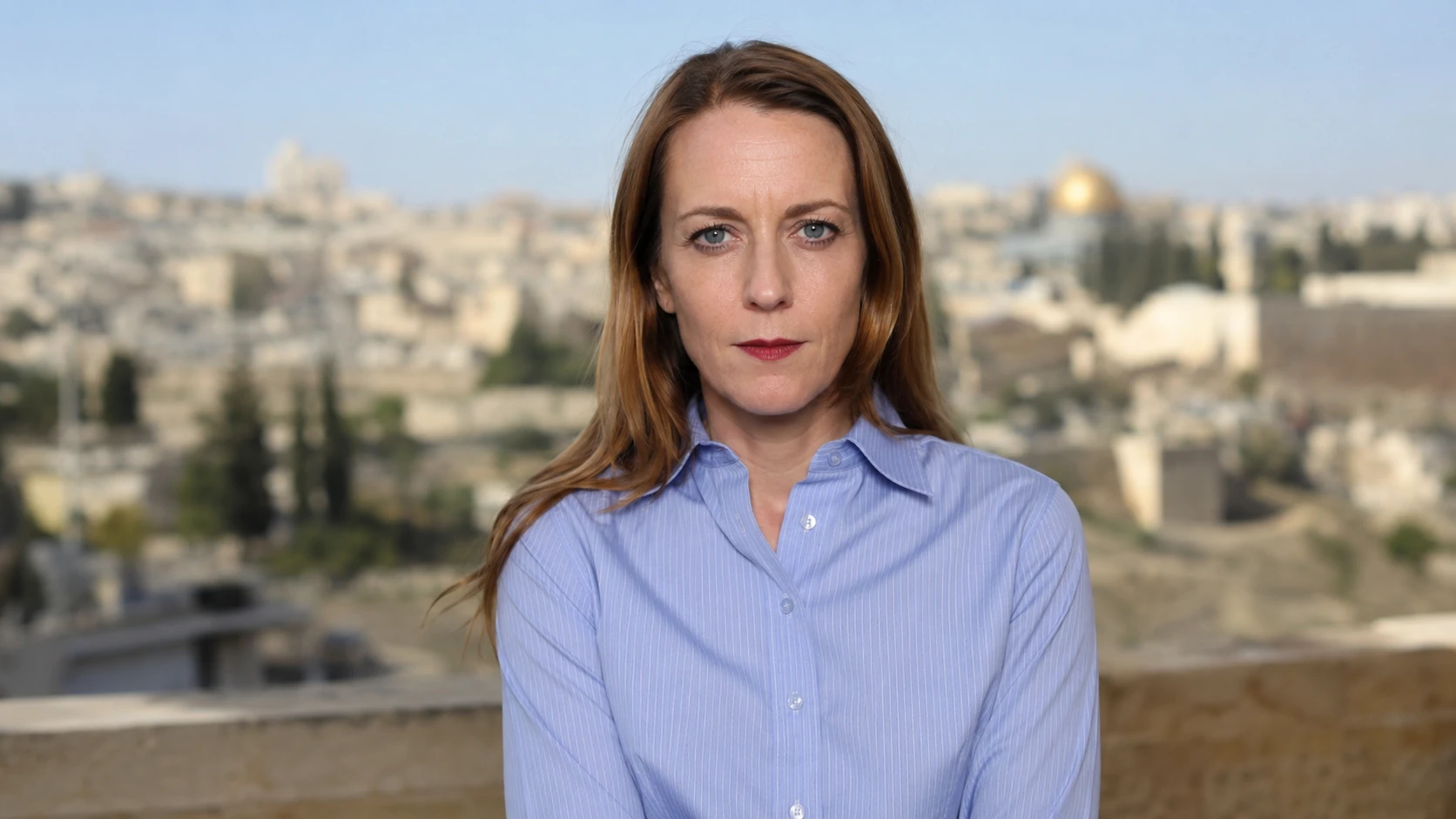
For millions of BBC viewers and readers, Yolande Knell is a familiar presence during some of the most difficult news events of the past decade. Her reports from Jerusalem, the West Bank, Gaza, and surrounding parts of the Middle East have appeared during wars, political crises, ceasefire negotiations, elections, protests, and humanitarian emergencies. She is not a celebrity journalist in the modern influencer sense. Instead, she belongs to an older tradition of foreign correspondence, where the work itself becomes the public identity.
That distinction explains why so many people search for Yolande Knell. Audiences see her standing outside government buildings in Jerusalem, reporting from tense streets in Ramallah, or explaining breaking developments tied to Israel and the Palestinians. They want to know who she is, where she comes from, how she built her career, and what kind of journalist she has become. Yet unlike entertainers or social-media personalities, Knell has kept much of her private life outside the spotlight. What remains public is her reporting, her bylines, and her reputation as one of the BBC’s established voices on one of the world’s most sensitive and politically charged beats.
Her career has unfolded during years when the Middle East has rarely left the global headlines for long. The Arab uprisings, conflicts in Gaza, tensions around Jerusalem, Israeli elections, shifts in Palestinian leadership, and international diplomatic disputes have all shaped the environment in which she works. Covering those stories requires persistence, caution, historical memory, and an ability to communicate complex realities clearly to a global audience. That has become the center of Yolande Knell’s professional life.
Early Life and Background
Compared with many public figures, relatively little verified personal information about Yolande Knell is widely available. Public records connected to her professional work identify her as a British journalist associated with BBC News and Middle East reporting, but detailed information about her early childhood, parents, siblings, or exact date of birth has not been extensively documented in major public biographies. That absence is important because many websites repeat unsourced claims about journalists simply to satisfy search traffic.
What appears more consistent across public reporting is that Knell developed a career path rooted in international journalism and foreign affairs reporting rather than celebrity media. Her professional profile reflects years of work focused on the Middle East, especially Israel and the Palestinian territories. Unlike television personalities whose fame depends partly on personal branding, Knell’s visibility has come largely through field reporting and newsroom credibility.
The truth is, foreign correspondents often become publicly recognizable without becoming fully public figures in their private lives. Journalists covering conflict zones sometimes choose that separation deliberately. Safety concerns, political tensions, and the nature of the work itself can encourage reporters to keep family details away from public discussion. In Knell’s case, the professional record is far clearer than the personal one.
Education and Early Journalism Interests
Reliable public information about Yolande Knell’s formal education remains limited, though her reporting career strongly suggests a background shaped by journalism, international affairs, or related humanities disciplines. Foreign correspondence at the BBC level typically demands not only reporting skills but also strong editorial judgment, historical understanding, and the ability to work under pressure in politically volatile environments.
Not many people know this, but many foreign correspondents begin their careers far from television studios. They often spend years working in local reporting, radio production, field assignments, or regional coverage before becoming recognizable on international broadcasts. The process tends to reward persistence rather than instant fame. Knell’s professional trajectory appears consistent with that pattern.
Her reporting style reflects a correspondent trained to explain events carefully rather than dramatically. BBC international reporting relies heavily on context, verification, and attribution, especially in disputed conflicts where competing narratives move quickly. That approach became central to Knell’s public reputation as her work increasingly focused on the Israeli-Palestinian conflict and broader Middle East affairs.
Building a Career at the BBC
Yolande Knell became widely known through her association with BBC News, particularly as a Middle East correspondent. Her work has appeared across BBC television, radio, and online coverage, often tied to major developments in Israel, Gaza, Jerusalem, and the Palestinian territories. Over time, her name became linked with some of the BBC’s most closely watched international reporting.
The BBC’s Middle East bureau has long carried global influence because events in the region shape international politics, security policy, humanitarian debates, and diplomatic relations. Correspondents working there face unusual scrutiny. Every phrase can be analyzed politically, and every omission may trigger criticism from audiences who already hold strong opinions about the conflict.
Knell emerged during a period when the Israeli-Palestinian issue remained central to global news. She reported on clashes in Jerusalem, political negotiations, military escalations, civilian casualties, international reactions, and changes within both Israeli and Palestinian leadership structures. Her reporting often blended immediate updates with broader context, helping viewers understand not just what happened, but why it mattered.
Here’s where it gets interesting. The role of a foreign correspondent has changed dramatically in the digital era. Reporters are no longer speaking only to television audiences waiting for scheduled broadcasts. Their work circulates instantly through clips, headlines, live blogs, social platforms, and global commentary. That environment increases pressure on correspondents because even brief remarks can spread internationally within minutes.
Reporting From Jerusalem
Jerusalem sits at the center of many of the stories Yolande Knell covers. It is a city where religion, politics, identity, diplomacy, and conflict intersect daily. Reporting from Jerusalem requires more than knowledge of current events. It demands historical understanding, geographic familiarity, and awareness of how language itself can become politically charged.
For international journalists, Jerusalem is also operationally difficult. Events can move rapidly between the Israeli government, Palestinian neighborhoods, diplomatic compounds, military briefings, religious sites, and civilian communities. Correspondents may shift from covering a security incident to a political negotiation within the same day. That rhythm shapes the work reporters like Knell produce.
Knell’s reports have often focused on how political decisions affect ordinary lives. Coverage of military operations, displacement, humanitarian conditions, and public anxiety has become especially visible during periods of heightened violence. Her work reflects the balancing act expected from BBC correspondents: presenting verified facts while acknowledging the emotional and political weight surrounding the region.
The audience for those reports extends far beyond Britain. BBC Middle East coverage reaches viewers in Europe, North America, the Middle East, Asia, and Africa. That global reach means correspondents must explain local realities to people with very different levels of historical knowledge and emotional investment in the conflict.
Coverage of Gaza and the Israeli-Palestinian Conflict
Yolande Knell’s name became especially prominent during periods of conflict involving Gaza. BBC correspondents covering Gaza-related stories work under difficult conditions because access, security, and verification can all become major obstacles during active military operations. Casualty figures, infrastructure damage, hostage situations, aid deliveries, and diplomatic negotiations often evolve hour by hour.
The period following the Hamas-led attacks on Israel on October 7, 2023, placed extraordinary attention on journalists covering the region. Knell appeared in BBC coverage explaining developments tied to Israeli military responses, hostage negotiations, humanitarian concerns, and regional political reactions. The intensity of international attention during this period increased scrutiny of nearly every major broadcaster covering the conflict.
That scrutiny also highlighted the challenge of language in conflict reporting. Terms tied to occupation, terrorism, self-defense, international law, civilian casualties, and humanitarian obligations carry political implications depending on who is listening. Journalists working in the region must constantly distinguish between verified facts, official claims, eyewitness testimony, and information that remains uncertain.
The truth is, audiences often expect conflict reporting to confirm their existing beliefs. When coverage instead attempts to reflect multiple realities at once, criticism becomes almost unavoidable. Knell’s reporting career exists inside that environment, where journalists are regularly accused of bias from opposing sides at the same time.
Public Scrutiny and Criticism
Few journalism beats attract more organized media criticism than coverage of Israel and the Palestinians. Yolande Knell, like many BBC correspondents working on the subject, has faced criticism from advocacy organizations and politically engaged media observers. Some pro-Israel monitoring groups have challenged aspects of BBC reporting connected to her work, arguing that certain reports lacked context or framed events unfairly.
At the same time, critics from pro-Palestinian perspectives have also accused Western broadcasters, including the BBC, of favoring official Israeli narratives or underrepresenting Palestinian suffering. That tension reflects the larger reality of international reporting on the conflict. Almost every major outlet covering the region faces accusations from multiple directions.
What’s surprising is how personal those criticisms can become. Foreign correspondents sometimes become symbols within broader political arguments, even though their work passes through editors, producers, legal review, and institutional standards. Public reactions can blur the line between disagreement with editorial framing and personal hostility toward reporters themselves.
Knell has largely maintained a professional public image despite that environment. Rather than engaging heavily in public political commentary, her role has remained centered on field reporting and BBC coverage. That consistency has helped define her reputation more than online debate surrounding individual reports.
Journalism Style and Reputation
Yolande Knell’s reporting style tends to emphasize measured explanation over dramatic presentation. BBC correspondents are trained to communicate carefully during breaking events, particularly when facts are incomplete or disputed. Her reports often include attribution language that clarifies where information originates and whether claims have been independently verified.
That may sound technical, but it matters enormously in conflict journalism. A correspondent who clearly distinguishes between official statements, eyewitness testimony, and confirmed reporting helps audiences understand the reliability of information during chaotic events. Knell’s work frequently reflects that approach, especially during military escalations and diplomatic crises.
Her reporting also shows attention to civilians affected by political decisions and armed conflict. Stories tied to displacement, infrastructure damage, grief, economic hardship, and fear have appeared regularly in BBC coverage connected to her bylines. That human dimension is central to modern foreign correspondence because audiences increasingly expect reporting to explain how policy and violence shape daily life.
There is also a practical side to her work that audiences rarely see. Correspondents in conflict regions often work with local producers, translators, camera crews, drivers, fixers, security advisers, and editors operating under considerable pressure. Reporting from the Middle East is rarely the work of a single person standing in front of a camera. It depends on large professional networks working behind the scenes.
Private Life and Family
One reason people search Yolande Knell’s name is curiosity about her personal life. Readers often want to know whether she is married, whether she has children, and what her life looks like away from television reporting. The available public information, however, remains limited and carefully separated from her professional work.
There is no widely confirmed public record detailing her marital status, husband, children, or extended family life. Some websites make claims about these topics without providing reliable sourcing, which makes those details difficult to verify responsibly. A serious profile should avoid presenting speculation as fact, especially when dealing with a journalist rather than an entertainment celebrity.
But here’s the thing. The absence of public personal details does not weaken her story. In many ways, it reinforces the kind of professional identity she has built. Knell’s visibility comes through reporting from difficult environments, not through lifestyle branding or personal publicity campaigns. Her work remains the main public record.
For journalists covering politically sensitive regions, privacy can also carry practical value. Public exposure sometimes increases security risks, online harassment, or unwanted attention. Many international correspondents choose to maintain clear boundaries between professional visibility and private life.
Career Influence and Industry Standing
Within BBC international coverage, Yolande Knell represents a category of journalist that still carries considerable institutional importance: the long-term regional correspondent. These reporters build expertise over years rather than moving rapidly between unrelated topics. Audiences come to associate them with certain regions because they repeatedly explain complicated events from the ground.
That continuity matters in Middle East reporting. Historical memory shapes nearly every major story involving Israel and the Palestinians. Understanding previous ceasefires, leadership changes, settlement disputes, diplomatic agreements, or security operations can influence how current events are interpreted. Correspondents with sustained regional experience are often better positioned to recognize patterns and shifts.
Knell’s reporting has contributed to international understanding of events that many viewers encounter only during moments of crisis. Her work exists alongside that of other BBC foreign correspondents who help translate regional developments into globally understandable reporting. While individual reporters rarely become the story themselves, their credibility becomes part of how audiences process international news.
Her professional standing is also reflected in the frequency with which she appears during major developments. News organizations tend to rely heavily on correspondents they trust during periods of uncertainty. The fact that Knell remains associated with major BBC Middle East coverage years into her career speaks to institutional confidence in her reporting abilities.
Net Worth and Financial Profile
Public interest in journalists often extends to questions about salary and net worth. In Yolande Knell’s case, reliable figures are not publicly confirmed. Various celebrity-style websites offer estimates, but these numbers are usually speculative and unsupported by financial disclosures or verified reporting.
As a senior BBC foreign correspondent, Knell likely earns a professional salary consistent with experienced international journalism roles at a major public broadcaster. Still, exact compensation figures are not publicly available. Any specific estimate about her wealth should therefore be treated cautiously unless confirmed through credible reporting or official disclosure.
Unlike entertainers or entrepreneurs, journalists typically build careers around institutional employment rather than personal commercial branding. Knell’s professional reputation appears rooted in reporting rather than business ventures, sponsorships, or celebrity partnerships. That makes public financial information especially limited.
The fascination with journalists’ earnings also reflects broader curiosity about television news careers. Audiences often assume visible correspondents enjoy celebrity-level wealth, but foreign reporting is usually more professionally demanding than financially glamorous. The work involves travel, risk, irregular schedules, and intense public scrutiny rather than the lifestyle associated with entertainment fame.
Where Yolande Knell Is Now
Yolande Knell continues to work as a BBC Middle East correspondent, remaining closely associated with coverage of Israel, Gaza, Jerusalem, and Palestinian political developments. Her recent reporting has addressed topics including Israeli government politics, Palestinian leadership tensions, humanitarian conditions, and international diplomatic reactions tied to the region.
The Middle East remains one of the world’s most volatile news environments, and correspondents based there continue to face extraordinary professional demands. Ceasefire negotiations, regional tensions, humanitarian concerns, and shifting political alliances ensure that the region remains central to global news coverage. Knell’s work therefore continues to carry international relevance.
Her reporting also arrives during a period of broader distrust toward media institutions. Audiences increasingly question sources, framing, and editorial decisions across the political spectrum. Foreign correspondents now work in an environment where every report can trigger instant global reaction online. That pressure has changed the profession significantly from earlier eras of broadcast journalism.
Still, correspondents like Knell remain important because audiences continue to need experienced reporting from difficult regions. Whatever criticism surrounds international media coverage, reliable field reporting remains one of the few ways global audiences can understand fast-moving crises beyond social-media fragments and political slogans.
Frequently Asked Questions
Who is Yolande Knell?
Yolande Knell is a British journalist best known for her work as a BBC Middle East correspondent. She has reported extensively on Israel, Gaza, Jerusalem, the West Bank, and wider regional political developments. Her work appears across BBC television, radio, and digital platforms.
What does Yolande Knell report on?
Her reporting focuses mainly on Middle East affairs, especially the Israeli-Palestinian conflict. She covers political developments, military escalations, humanitarian conditions, diplomacy, and public reactions connected to events in the region.
Is Yolande Knell married?
There is no widely confirmed public information about Yolande Knell’s marital status or private family life. While some websites make claims about relationships or children, reliable sourcing for those details remains limited.
Where is Yolande Knell based?
Knell is strongly associated with Jerusalem and BBC Middle East coverage. Much of her reporting has come from Israel, the Palestinian territories, and surrounding parts of the region.
Has Yolande Knell faced criticism for her reporting?
Yes. Like many journalists covering Israel and the Palestinians, she has faced criticism from advocacy groups and politically engaged audiences on different sides of the conflict. Such criticism reflects the highly contested nature of Middle East reporting.
What is Yolande Knell’s net worth?
No verified public figure confirms Yolande Knell’s net worth. Online estimates exist, but most are speculative. Her career appears centered on professional journalism rather than commercial celebrity ventures.
Why do people search for Yolande Knell?
Many people search for her after seeing her during BBC coverage of major Middle East events. Audiences often want to learn more about her background, journalism career, reporting style, and personal life.
Conclusion
Yolande Knell’s career reflects the demanding reality of modern foreign correspondence. She has spent years reporting from one of the world’s most politically sensitive regions, where every broadcast can become part of a larger international debate. Her professional identity has been shaped less by personal publicity and more by consistent field reporting during moments of crisis.
What stands out about her public image is its restraint. In an era when many public figures share every aspect of their lives online, Knell has remained defined mainly by her journalism. That separation between personal privacy and professional visibility has become increasingly rare in television news.
Her reporting career also shows how difficult Middle East journalism can be. Correspondents working in the region face pressure from governments, advocacy groups, audiences, and the emotional realities of conflict itself. Maintaining credibility under those conditions requires caution, persistence, and a willingness to work inside uncertainty.
For viewers and readers, Yolande Knell represents a form of journalism that still depends on being physically present where events unfold. That remains valuable. Even in a media environment dominated by instant reactions and fragmented information, experienced correspondents continue to shape how the world understands conflict, politics, and human consequences across the Middle East.
